
If you’ve been quietly Googling “hair transplant abroad” at midnight, you’re not alone. Thousands of people travel to Bangkok every year to address hair loss — and for good reason. Thailand has quietly become one of the most trusted destinations for hair transplantation, combining skilled surgeons, advanced techniques, and pricing that genuinely makes sense. In this guide, we’ll walk you through everything you need to know before getting a hair transplant in Thailand.
Key Takeaways
- Bangkok has become one of the world’s top destinations for hair restoration, offering FUE and FUT procedures at 50–70% less than what patients would pay in the US, UK, or Australia.
- Clinics in Thailand follow internationally recognized standards, with many surgeons trained across Europe and Asia to ensure treatments meet global benchmarks.
- Planning your hair transplant trip carefully — from choosing the right clinic to understanding post-procedure care — makes the difference between a satisfying result and a stressful experience.
Why Bangkok Has Become a Global Destination for Hair Transplants
Let’s be honest — hair loss is one of those things that can quietly chip away at your confidence. Whether it’s a receding hairline, thinning at the crown, or more advanced hair loss, more people are turning to hair transplant surgery as a long-term solution. And when they start researching their options, Bangkok keeps coming up.
Bangkok offers a rare combination that’s hard to find elsewhere: internationally trained surgeons, modern hair transplant clinics equipped with the latest technology, and a cost structure that allows patients to access high-quality care without the price tag they’d face back home. International patients can save anywhere from 50 to 70% on the same procedure compared to what they’d pay in the United States, the United Kingdom, or Australia.
Beyond the cost savings, Thailand’s medical tourism infrastructure is genuinely built for international patients. Many Bangkok clinics provide English-speaking coordinators, airport transfers, and pre-arrival online consultations. The moment you land, the experience is designed to be smooth — not stressful.
Free Assessment
Not Sure How Many Grafts You Need?
Get a personalized treatment plan from Dr. Top's team. Takes 2 minutes to complete — no cost, no obligation.
It also helps that Bangkok is simply a great city to be in. While your scalp heals, you’re surrounded by incredible food, cultural landmarks, and hospitality that Thailand is globally known for. Many patients turn their hair transplant trip into a full travel experience, and honestly, it works beautifully.
Understanding Hair Loss Before Considering a Transplant
Before diving into techniques and costs, it’s worth understanding what’s actually happening with your hair. Most people dealing with hair thinning or a receding hairline are experiencing androgenetic alopecia — commonly known as male or female pattern hair loss. This is the most common cause of hair loss worldwide, and it’s also the condition that hair transplant surgery addresses most effectively.
The pattern of hair loss matters a great deal when planning a transplant. Surgeons assess your hair loss pattern to determine how many grafts you’ll need, where the donor hair will come from, and which technique will give you the most natural results. The donor area — typically the back and sides of the scalp — contains healthy hair follicles that are genetically resistant to thinning. These follicles are extracted and transplanted to areas where hair is sparse or absent.
Not everyone is an ideal candidate on the first visit. If hair loss is still actively progressing, a surgeon may recommend waiting or combining surgery with other treatments to stabilize the situation. Having enough donor hair is essential for a successful hair transplant, and that’s something your consultation will help clarify.
Hair Transplant Techniques Available in Bangkok
One of the biggest reasons Bangkok has earned its reputation is the range of advanced hair transplant techniques available at its clinics. Here’s a breakdown of what you’ll typically encounter:
FUE (Follicular Unit Extraction)
FUE hair transplant is the most widely performed technique in Bangkok today. Individual hair follicles are extracted one by one from the donor area using a micro-punch tool, then carefully implanted into the recipient area. Because there’s no linear incision, the FUE procedure leaves no visible strip scar, making it ideal for patients who prefer to wear their hair short. Recovery is relatively quick, and the results look natural when performed by an experienced surgeon.
FUT (Follicular Unit Transplantation)
FUE and FUT are the two primary hair transplant methods, and FUT is the older of the two. A strip of scalp is removed from the donor area, dissected into individual grafts, then transplanted. While it does leave a linear scar, FUT can yield a higher number of grafts in a single session, making it worth considering for patients with advanced hair loss who need significant coverage. It also tends to be slightly less expensive per graft than FUE.
DHI (Direct Hair Implantation)
Direct Hair Implantation, or DHI, is a refined version of FUE that uses a specialized implanter pen to place hair follicles directly into the scalp without pre-made incisions. This technique allows for precise angle and direction control, which contributes to a more natural-looking hairline. Several Bangkok clinics offer DHI as a premium option, and it’s especially popular among patients who want maximum density with minimal downtime.
Choosing the Right Technique for You
The best hair transplant technique really depends on your hair loss pattern, the condition of your donor area, your lifestyle, and your goals. A thorough consultation with your surgeon is the only way to properly assess which approach suits your individual hair type and hair density needs. This is why choosing the right hair transplant center matters — not just the technique itself, but the team behind it.
Hair Transplant Costs in Thailand: What to Expect
Cost is, understandably, one of the first things people want to know. Hair transplant costs in Bangkok vary depending on the number of grafts needed, the technique used, and the clinic’s pricing model.
As a general reference point, FUE hair transplant procedures in Thailand are significantly more affordable compared to Western countries. For a typical session of around 2,500 grafts, the savings compared to the US or UK can amount to thousands of dollars — a meaningful difference for most patients. Many Bangkok clinics offer all-inclusive packages that cover the procedure itself, pre-operative blood work, medications, post-procedure scalp care, and sometimes even accommodation and airport transfers. This kind of transparent pricing makes it much easier to budget for your hair transplant journey in Thailand without unexpected surprises.
Here’s a rough breakdown to give you a clearer picture:
| Grafts Needed | Estimated Cost in Bangkok (USD) |
|---|---|
| ~1,000 grafts | $2,000 – $3,000 |
| ~2,000 grafts | $4,000 – $6,000 |
| ~3,000+ grafts | $6,000 – $9,000 |
It’s important to note that the number of grafts you need will depend entirely on your individual hair loss situation — which is why a proper consultation always comes first. Cost should never be the only factor guiding your decision; the quality of the surgical team and clinic standards matter just as much.
What to Know Before Getting a Hair Transplant in Bangkok
Going in prepared makes the entire experience smoother. Here’s what experienced patients and medical professionals consistently recommend:
Start with a proper consultation. Whether it’s an in-person visit or an online pre-arrival consultation, your surgeon needs to assess your scalp, donor hair quality, and hair loss pattern before recommending a treatment plan. A good clinic won’t skip this step.
Be realistic about the number of grafts. The number of grafts you need depends on the extent of your hair loss and the density you want to achieve. More grafts generally mean better coverage, but there’s a natural limit based on how much healthy donor hair you have available.
Understand the hair growth timeline. Transplanted hair doesn’t grow overnight. After the procedure, the transplanted hair follicles go through a shedding phase before new hair growth begins — typically around three to four months post-procedure. Full results are usually visible between nine and twelve months.
Plan your hair washing routine carefully post-op. Proper hair washing in the days following surgery is critical. Your clinic will give you specific instructions — usually involving gentle rinsing without rubbing — to protect the newly transplanted hair follicles while they settle into the scalp.
Give yourself enough recovery time before flying home. Most patients can travel within a week after the procedure, but it’s worth building in a few extra days to allow the initial healing phase to complete comfortably.
What to Look for When Choosing a Hair Transplant Center
Not all clinics are created equal, and this is especially true when you’re traveling internationally for a medical procedure. The quality of your results depends heavily on the experience of your surgical team, the standards the clinic operates under, and how well they communicate with patients from abroad. When evaluating your options, here’s what to look for:
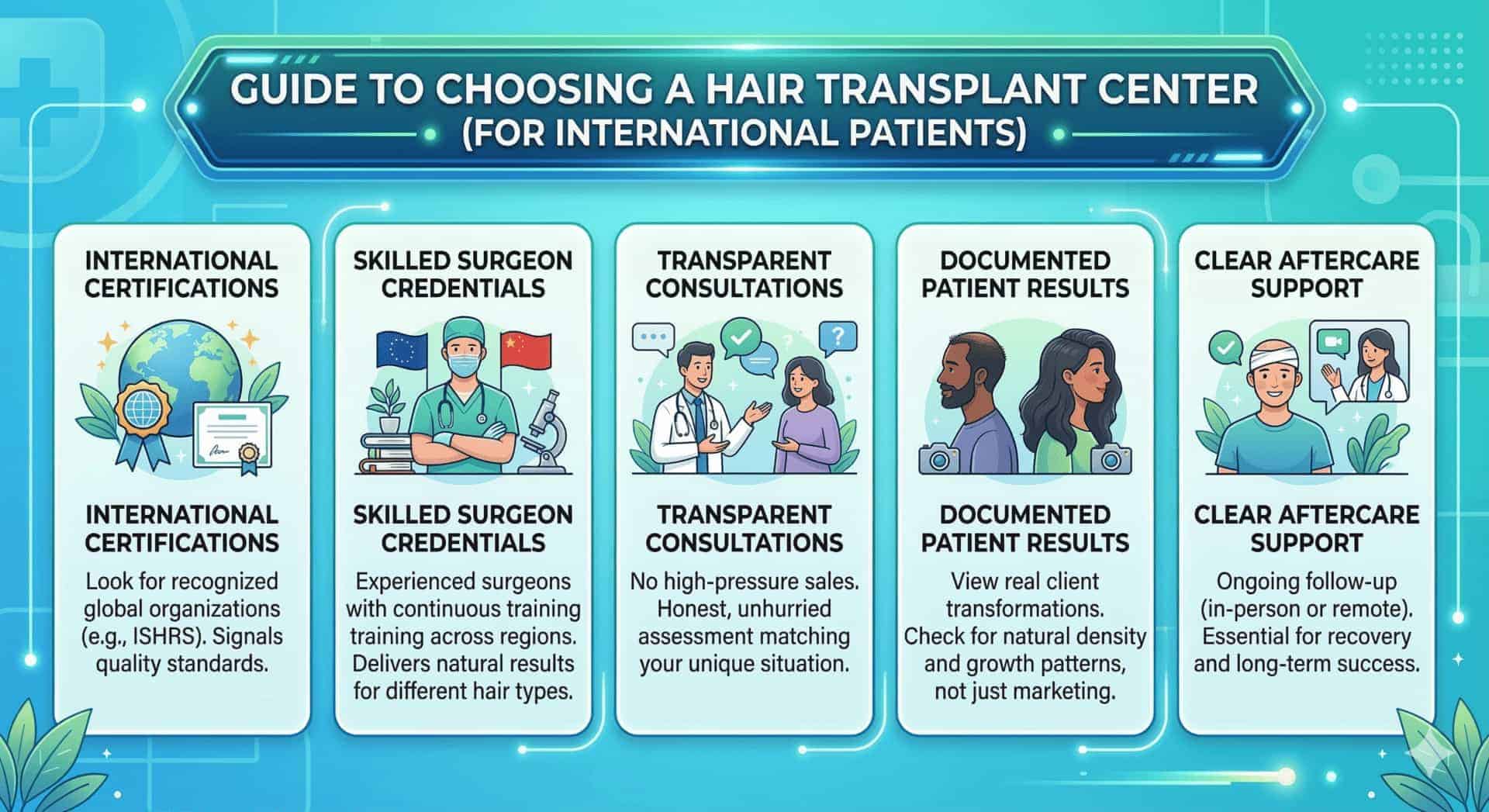
Internationally recognized certifications. Look for clinics or surgeons affiliated with organizations like the International Society of Hair Restoration Surgery (ISHRS). These certifications signal a genuine commitment to global standards and ongoing professional development.
Surgeon credentials and continuous training. Skilled hair transplant surgeons who keep their knowledge current — through training in both Europe and Asia — are better positioned to deliver consistent, natural results across different hair types and conditions. This is especially important because hair transplantation is as much an art as it is a science.
Transparent consultations. A trustworthy Bangkok clinic will never push you toward a technique or session size that doesn’t genuinely match your hair loss situation. If a clinic rushes your consultation or sidesteps your questions, that’s a red flag worth taking seriously.
Documented patient results. Before-and-after documentation from real hair transplant patients gives you insight into what a clinic’s work actually looks like — not just what their marketing promises. Look for results that show natural hair growth patterns and realistic density, not just cherry-picked cases.
Clear aftercare support. A good clinic doesn’t disappear after the procedure. Follow-up support — whether in-person or remote — is a sign that the team genuinely cares about your recovery and long-term hair growth results.
At Dr. Top Hair Hospital, our medical team undergoes continuous training in both Europe and Asia, and our quality is backed by globally recognized certifications. We work with both local and international patients, and our approach starts with a genuine consultation — not a sales pitch.
The Hair Transplant Experience: From Arrival to New Hair Growth
For most international patients, the Thailand hair transplant journey follows a fairly consistent flow. Here’s what to generally expect:
Pre-arrival: You’ll typically have an online consultation to discuss your hair loss, goals, and medical history. The clinic will outline your treatment plan and the number of grafts recommended before you even book your flights.
Day of the procedure: The transplant is performed under local anesthesia, meaning you’re awake but comfortable throughout. Depending on the number of grafts, a session can take anywhere from four to eight hours. The donor hair is extracted from the back or sides of your scalp, and the individual hair follicles are carefully implanted into the thinning or bald areas with precision.
First few days post-op: Mild swelling and redness around the scalp are normal. You’ll receive detailed instructions on hair washing and scalp care. Most patients feel well enough to move around the city within a day or two.
Weeks two through four: The transplanted hair will begin to shed. This is completely normal — it’s part of the hair follicle’s adjustment process and does not mean the transplant has failed. Many first-time patients are surprised by this phase, so it’s good to know in advance.
Months three to twelve: New hair growth begins gradually and becomes increasingly noticeable. By around nine to twelve months, you’ll see the fuller, natural results that made this journey worthwhile.
Managing Expectations: What Hair Transplantation Can and Cannot Do
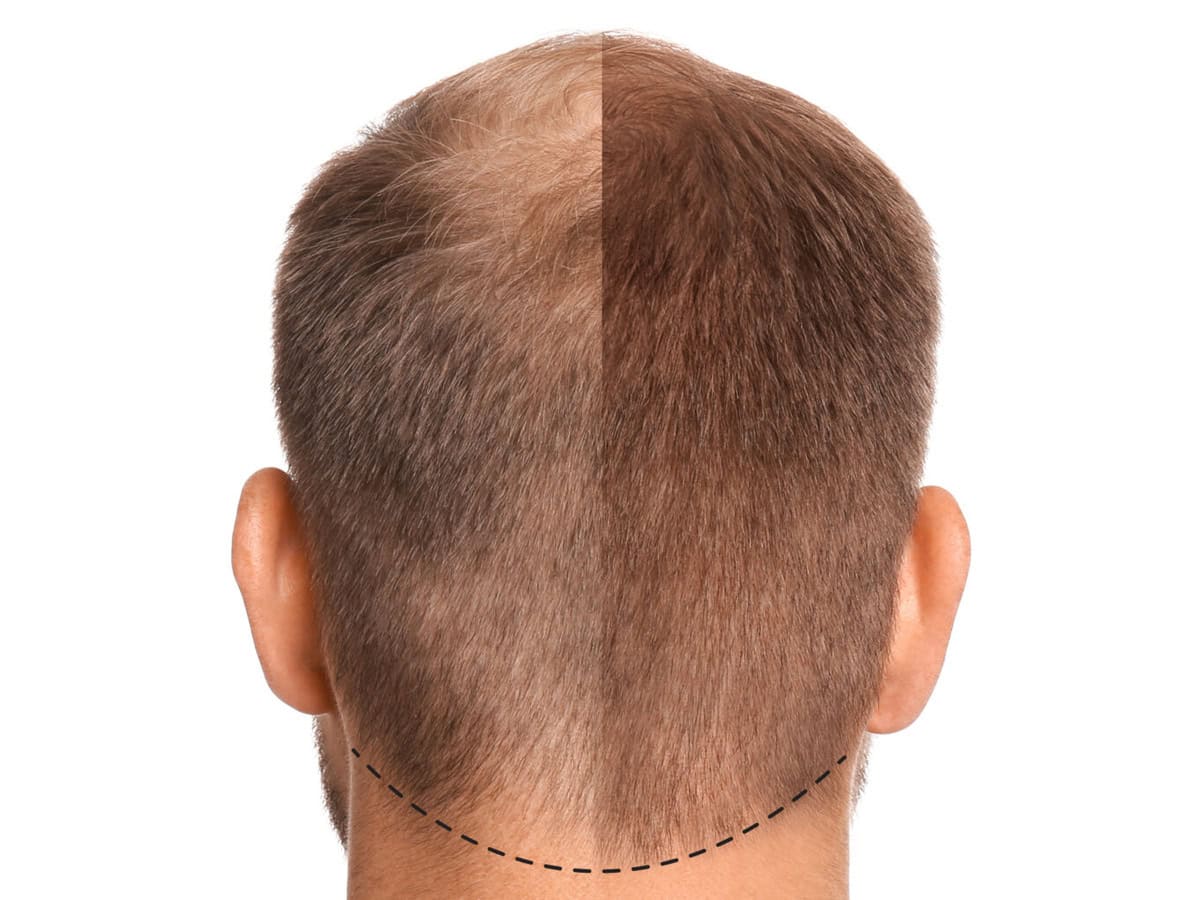
A hair transplant is one of the most effective and permanent solutions to hair loss available today — but it’s worth going in with clear, realistic expectations. Hair transplant surgery redistributes your existing healthy hair follicles from the donor area to areas of thinning or baldness. It does not create new hair follicles, and it cannot prevent the loss of surrounding hair that hasn’t yet been transplanted.
This is why long-term hair loss management often involves a combination of approaches. Your surgeon may recommend complementary treatments to protect your existing hair and slow the progression of hair loss alongside your transplant. Thinking of your transplant as one part of a broader hair restoration strategy — rather than a one-time fix — tends to lead to the best long-term outcomes.
It’s also worth noting that results depend on your individual hair characteristics: the texture, color, curl pattern, and density of both your donor hair and existing hair all influence how natural the final result looks. A skilled surgeon takes all of these factors into account when designing your hairline and planning graft placement.
Conclusion
Bangkok genuinely delivers when it comes to hair restoration — and if you’ve made it this far in this guide, you probably already have a sense of why thousands of people choose Thailand every year for their hair transplant journey. The combination of advanced techniques like FUE and DHI, internationally trained and certified surgeons, transparent pricing, and a patient experience that’s built around international visitors makes Bangkok one of the most compelling options available today.
If you have made it this far, you already know Bangkok is a serious option. The next step is finding out whether you are a good candidate and what a realistic treatment plan actually looks like for your hair.
That starts with a short personalized assessment with Dr. Top Hair Hospital. It takes about two minutes, covers the key factors that shape your candidacy, and gives you something far more useful than a general price quote: a clearer sense of what is actually possible for your hair before you book anything.
Wondering if you’re a good candidate? Take our free 2-minute assessment to find out — no obligation, and your details stay completely private.
Reviewed by Dr. Top, ABHRS-certified. Over 10,000 procedures performed across more than 20 years, with patients travelling from over 11 countries.