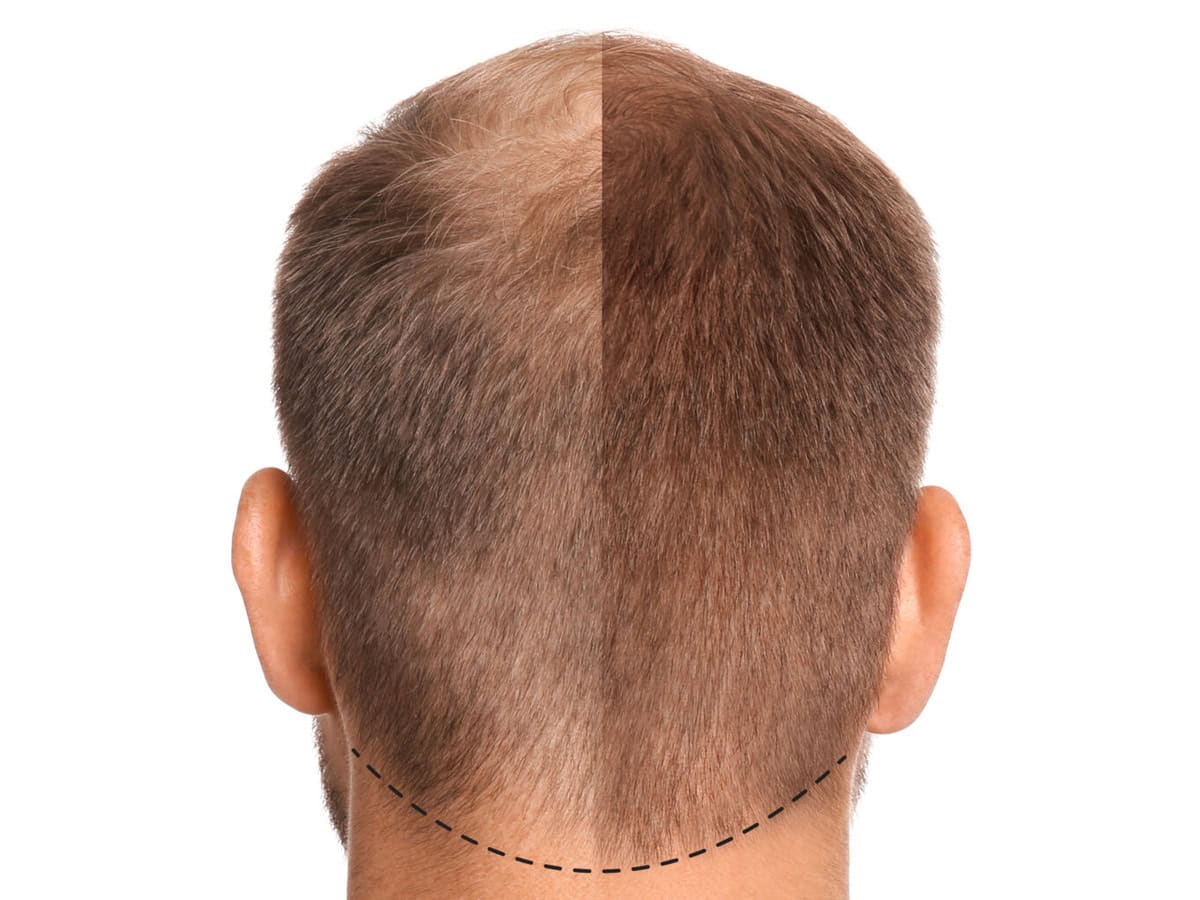
Before-and-after photos are often the first thing people look for when researching a hair transplant, and it’s easy to understand why. Seeing a visual result feels more concrete than reading about a procedure in the abstract. But photos can also be one of the most misleading parts of hair transplant marketing if they aren’t reviewed carefully. This guide explains what to look for, what questions to ask, and why even a strong result in one case says very little about what another person can expect.
Key takeaways:
- A single before-and-after image is not a guarantee, and it cannot determine whether a procedure is suitable for someone else’s hair loss
- Context matters more than the image itself, including documented consent, a stated timeline, and relevant clinical details
- The only way to understand what’s realistic for an individual case is a direct, in-person consultation
Why Context Matters in Any Before-and-After Case
An image on its own tells an incomplete story. What actually makes a before-and-after case meaningful is the context around it. Was a general timeline provided, indicating roughly how much time passed between the two photos? Is there any indication that the patient documented consent for their images to be shared publicly? Is the lighting, angle, and styling reasonably consistent between the two photos, or has one been altered in a way that makes comparison difficult?
Cases presented with this kind of context are far more trustworthy than a dramatic-looking pair of images with no explanation at all. A responsible clinic will be upfront about these details rather than leaving them for a prospective patient to guess at.
Free Assessment
Not Sure How Many Grafts You Need?
Get a personalized treatment plan from Dr. Top's team. Takes 2 minutes to complete — no cost, no obligation.
Questions to Ask When Reviewing a Case
When looking at any before-and-after example, whether on a clinic’s website, social media, or in person during a consultation, a few direct questions are worth asking. Did the patient provide documented consent for their images and story to be shared? What was the approximate timeline between the two photos, and does that timeline reflect realistic healing and growth patterns rather than an unusually accelerated result?
It’s also worth asking about the care plan behind the result, including whether the patient followed a specific aftercare routine or attended follow-up visits, since these details are part of the full picture even though they aren’t visible in a photo. Finally, it’s reasonable to ask who was involved in the patient’s care, since a documented, transparent process behind a result adds credibility that the image alone can’t provide.
What a Photo Cannot Tell You
Even a well-documented before-and-after image has real limitations. It cannot show a person’s individual biology, including how their body responds to treatment, how their hair grows over time, or how their donor supply compares to someone else’s. It cannot demonstrate clinical suitability, meaning whether the same approach that worked for one patient is appropriate for another person’s hair loss pattern, scalp health, or medical history.
A photo also can’t capture the long-term plan behind a result, including any follow-up treatments, ongoing care, or adjustments made along the way. And it certainly can’t show what happens outside the frame, whether that’s the quality of the consultation process, how questions were answered, or how the patient felt supported throughout their experience. None of this is visible in a single image, which is exactly why photos should inform curiosity rather than serve as the sole basis for a decision.
How to Prepare for Your Own Consultation
Rather than trying to find a before-and-after photo that looks similar to a personal situation, it’s more productive to prepare for an actual consultation. This means being ready to discuss a clear history of hair loss, including when it started and how it has progressed, along with specific goals for treatment. It also means being ready to share relevant medical information, including medications, prior treatments, and any conditions that might be relevant to a clinician’s assessment.
Bringing a list of questions is worthwhile too, not just about expected outcomes, but about the process itself, including who will be involved in treatment, how the plan will be documented, and what follow-up looks like. A consultation built around this kind of preparation tends to be far more productive than one centered on comparing photos.
Responsible Image Use and Patient Privacy
Patient privacy deserves serious consideration in any discussion of before-and-after content. Images should never be used without documented consent, and any case presented publicly should reflect accurate, unaltered representation rather than editing that exaggerates a result. No single case, however impressive, should be presented as typical or guaranteed, since individual results vary considerably based on factors unique to each patient.
At Dr. Top Hair Hospital, any patient case shared publicly is done only with documented consent and appropriate context, and no case is presented as a guaranteed or typical outcome for prospective patients.
Why a Personal Assessment Is the Only Reliable Next Step
It can be tempting to treat a strong before-and-after case as a kind of promise, especially when researching online feels overwhelming and a clear image seems like solid evidence. But the most honest thing any clinic can say is that a photo, however well documented, cannot replace an actual evaluation. Donor supply, hair characteristics, scalp health, and overall goals all vary from person to person, and a responsible clinician will always explain a plan based on individual assessment rather than pointing back to someone else’s result.
Approaching hair transplant research this way, treating before-and-after photos as a starting point for curiosity rather than a guarantee, tends to lead to more realistic expectations and a more informed decision overall.
About Dr. Top
Dr. Top is a Diplomate of the American Board of Hair Restoration Surgery (ABHRS), with 22 years of experience and more than 10,000 procedures performed. He was recognised for Best Hair Restoration at AMWC 2025 in Monaco, and he developed the Combination Technique, pairing hair transplantation with ALMI Nano Fat therapy to support graft survival and healing in appropriate cases. Dr. Top Hair Hospital currently operates as a specialist clinic, with a dedicated hospital facility opening in early 2027.
Conclusion
Photos can only tell part of the story. Book a Free Hair Assessment with Dr. Top to talk through hair loss history, goals, and what a realistic, individually documented plan could look like for your specific situation.