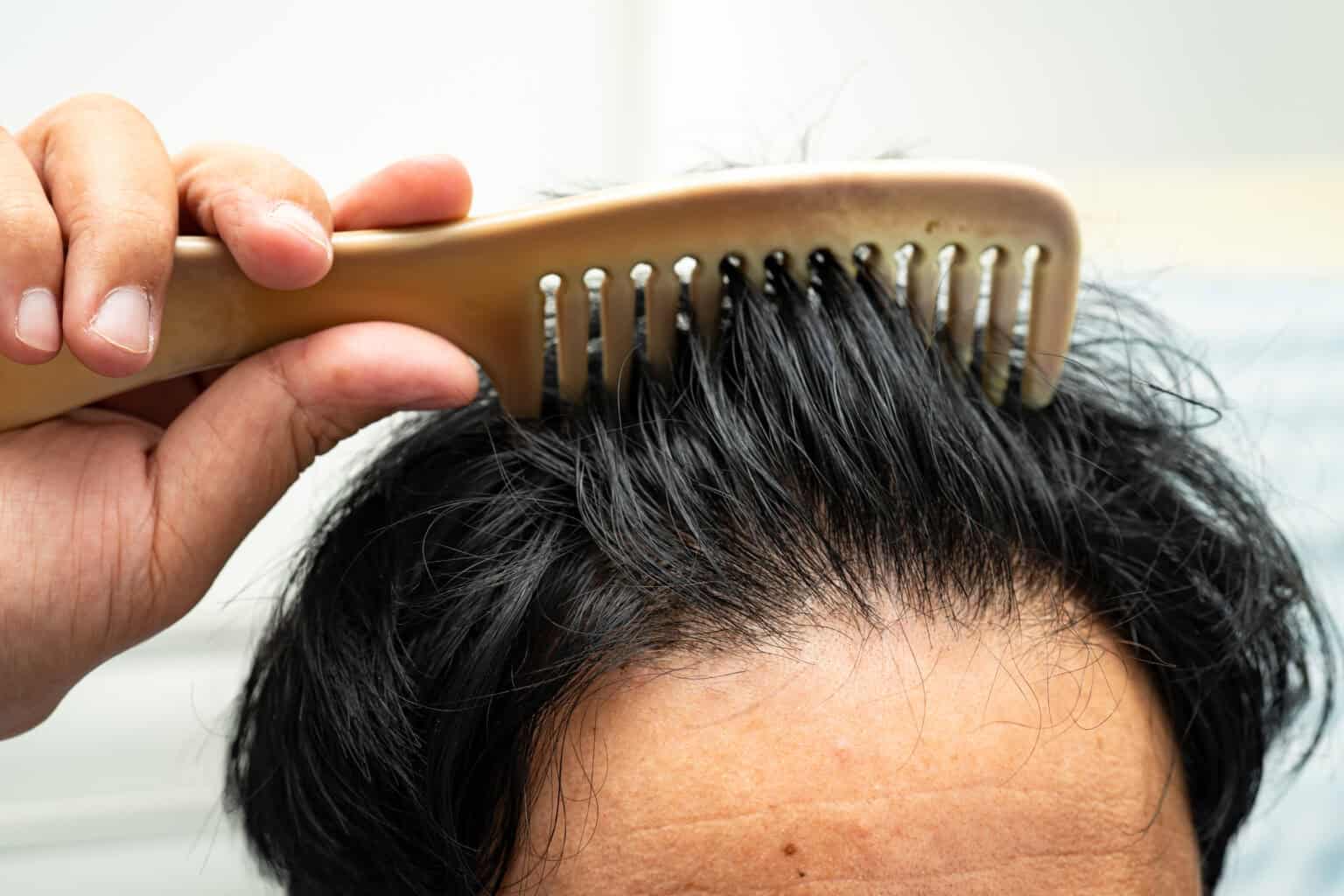

The crown, sometimes called the vertex, is one of the areas people notice changing gradually, often through a photo taken from behind or a comment from a hairdresser rather than a moment in the mirror. Anyone exploring a crown or vertex hair transplant in Bangkok deserves a clear picture of what a consultation actually involves before booking anything. This guide walks through what gets assessed, why crown planning differs from frontal planning, and the honest questions worth asking about coverage and cost.
Key takeaways:
- Crown and vertex hair loss is assessed differently from frontal thinning, since the growth pattern at the back of the head follows its own natural direction
- Coverage planning for the crown depends on donor supply, existing hair, and how far the pattern has progressed, not a fixed formula
- A personalised quote reflects the complexity of the plan, not a number that applies the same way to every patient
What Do “Crown” and “Vertex” Actually Mean?
The crown, or vertex, refers to the area at the back and top of the head, roughly where hair naturally forms a whorl or spiral pattern. It’s a distinct region from the frontal hairline or the temples, both structurally and in how hair loss tends to progress there. Some people notice thinning at the crown before anywhere else, while others develop it alongside a receding hairline. Because the terminology can be confusing, a consultation is the right place to clarify exactly which area is being discussed and how it relates to the rest of the scalp.
What a Crown Consultation May Assess
A thorough crown consultation starts with understanding the pattern and stability of the hair loss. Has thinning been gradual over several years, or has it changed more noticeably in a shorter period? Is there a family history of crown thinning specifically, since it doesn’t always follow the same pattern as frontal hair loss? The clinician will also look at what hair remains in the area, including its thickness and density, since crown restoration often works with existing hair rather than starting from a completely bare scalp.
Free Assessment
Not Sure How Many Grafts You Need?
Get a personalized treatment plan from Dr. Top's team. Takes 2 minutes to complete — no cost, no obligation.
Donor area characteristics are assessed closely as well, including the density and quality of hair at the back and sides of the head, since this supply needs to support both crown coverage and any other areas being treated. Scalp condition, relevant medical history, and any previous treatments are reviewed too. Finally, the conversation turns to coverage goals. Is the aim to slow the visual progression, add density to soften the appearance, or address a specific area that has become more noticeable? Each of these goals shapes the plan differently.
Why Crown Planning May Differ From Frontal-Area Planning
Crown and vertex restoration involves some different considerations compared to planning around the frontal hairline. The natural whorl pattern at the crown means hair grows in multiple directions from a central point, which affects how grafts need to be placed to look consistent with surrounding hair. The crown is also an area where hair loss can potentially continue to progress over time, which is part of why a clinician considers long-term planning rather than only addressing what’s visible today.
Donor supply plays an especially important role in crown planning, since covering this area, particularly if it’s larger or has progressed further, can require careful management of limited donor hair alongside any other areas being treated. This is exactly why a plan built around a photo or general description falls short of what an in-person assessment can offer. A clinician needs to see the actual pattern, density, and donor characteristics to build a plan that makes sense long term.
What May Affect a Personalised Quote

There’s no fixed price that applies to every crown or vertex case, and it would be misleading to suggest otherwise. Several factors shape a personalised quote. The size and extent of the coverage goal is one of the most significant, since a smaller area of early thinning involves a different scope than more extensive coverage. Donor area characteristics matter too, including how much healthy hair is realistically available without compromising other areas of the scalp.
The complexity of the individual treatment plan, including the technique recommended and how the crown’s natural growth pattern is addressed, also plays a role. Aftercare and follow-up are part of a responsible quote as well, since ongoing monitoring after a procedure is a meaningful part of the overall plan rather than something separate from it. Because these factors vary so much between patients, a fair and accurate quote can only come after an actual consultation, not from a general price range found online.
DHI and FUE Questions Worth Asking
Crown and vertex cases are sometimes discussed in the context of specific techniques, including follicular unit extraction, known as FUE, or direct hair implantation, known as DHI. Rather than treating either technique as universally better for crown work, it’s worth asking a clinician directly which approach they’d recommend for a specific case and why. Questions worth raising include how the crown’s natural direction of growth factors into technique selection, and what trade-offs exist between the options being discussed. For a deeper look at how each technique works in general, DrTop’s dedicated DHI and FUE pages cover those details further.
Work, Recovery and Travel-Planning Questions
Recovery experiences vary from person to person, and crown-area healing can look somewhat different from frontal-area healing simply due to its location on the head. Rather than relying on a general timeline, it’s worth asking a clinician directly what the days and weeks following a crown procedure might involve, and how that could affect work or daily routines.
For patients travelling to Bangkok specifically for their procedure, which is common, it’s worth asking how a stay should be planned around the treatment and any follow-up needs. These are practical, individual questions that deserve a clinic-specific answer rather than a generic estimate applied to every patient regardless of their case.
About Dr. Top
Dr. Top is a Diplomate of the American Board of Hair Restoration Surgery (ABHRS), with 22 years of experience and more than 10,000 procedures performed. He was recognised for Best Hair Restoration at AMWC 2025 in Monaco, and he developed the Combination Technique, which pairs hair transplantation with ALMI Nano Fat therapy to support graft survival and healing in appropriate cases. Dr. Top Hair Hospital currently operates as a specialist clinic, with a dedicated hospital facility set to open in early 2027.
Conclusion
Crown and vertex planning depends entirely on an individual assessment, not a general description of what “crown thinning” typically looks like. Book a Free Hair Assessment with Dr. Top to talk through your specific pattern, donor supply, and coverage goals, with no assumptions made before that conversation happens.