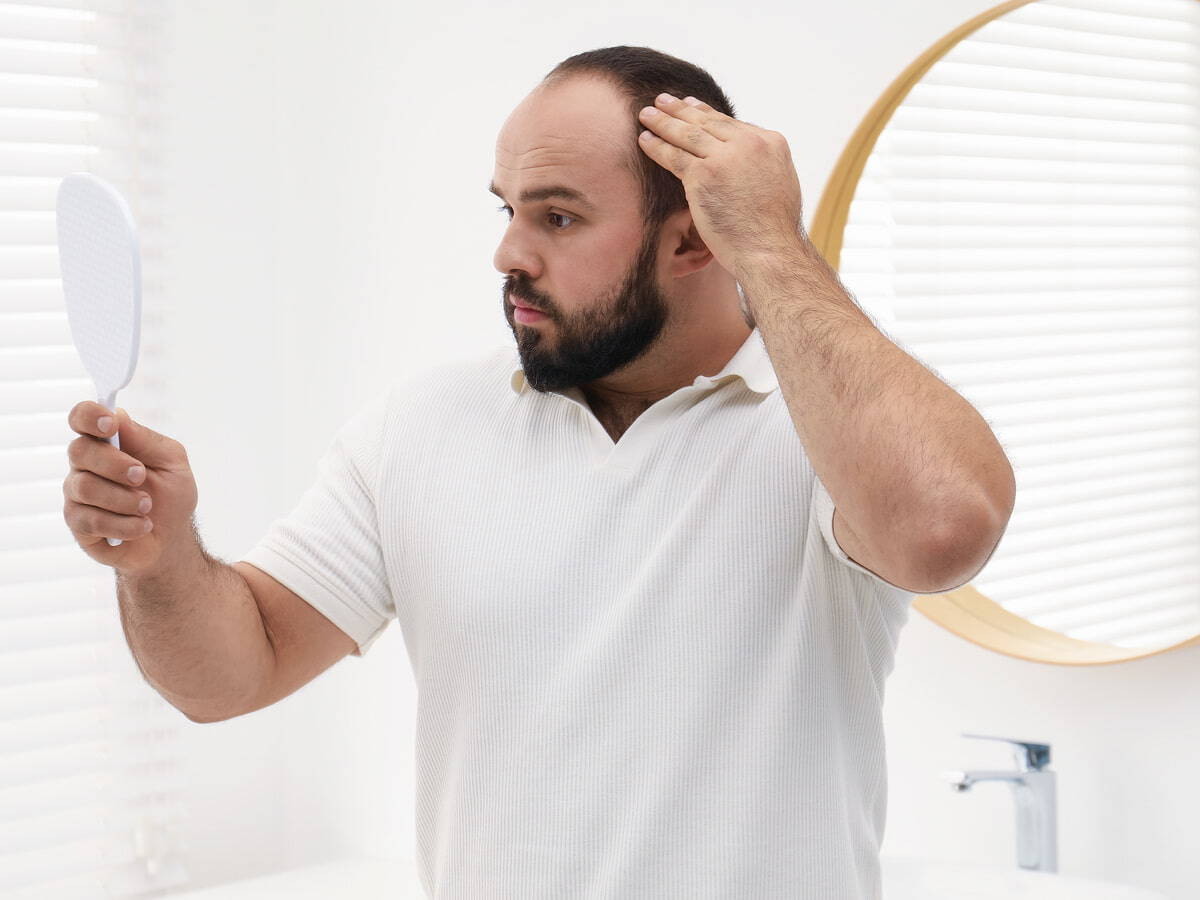

If you’re exploring a hair transplant but have reservations about taking finasteride, you’re far from alone. Many prospective patients want to know whether medication is a hard requirement or just one option among several. The short answer is that some patients can have a hair transplant without finasteride, but the fuller picture depends on your hair loss pattern, your donor area, and your long-term goals. This article breaks down what a proper consultation should cover, what alternatives exist, and the questions worth asking before you commit to anything.
Key Takeaways
- Finasteride is not a mandatory part of a hair transplant. Whether it belongs in your plan depends on your hair loss pattern, donor supply, and how much you want to slow future loss.
- Patients who prefer to avoid oral medication have other paths to explore, including topical treatments, PRP therapy, low-level laser therapy, and simply monitoring hair loss over time.
- A proper hair loss assessment looks at five things before any recommendation is made: the cause of your hair loss, your donor area, your future loss risk, your personal goals, and which alternatives suit you.
What Finasteride Actually Does
Finasteride is an oral medication that works by blocking 5-alpha reductase, the enzyme responsible for converting testosterone into dihydrotestosterone, better known as DHT. DHT is the hormone most closely tied to androgenetic alopecia, the medical term for male pattern hair loss. By lowering DHT levels in the scalp, finasteride is intended to slow the gradual miniaturization process that shrinks hair follicles over time in people who are genetically prone to hair thinning.
Donor follicles are selected because they are relatively resistant to the process causing patterned loss. That resistance is not absolute, and transplantation does not stop loss of surrounding native hair. A clinician should assess donor stability and discuss whether medication is useful for the overall long-term plan.
So, Do You Actually Need Finasteride for a Hair Transplant?
This is one of the most common questions prospective patients raise, often because they’ve read about potential side effects or simply prefer not to commit to a daily tablet indefinitely. The honest answer is that finasteride is not a prerequisite for surgery to proceed or for grafts to survive.
Free Assessment
Not Sure How Many Grafts You Need?
Get a personalized treatment plan from Dr. Top's team. Takes 2 minutes to complete — no cost, no obligation.
That said, “not required” is different from “irrelevant.” For some patients, particularly those with early or actively progressing hair loss surrounding the planned transplant area, skipping medication altogether may mean that native hair keeps thinning while the transplanted grafts stay stable. For others, especially those with a more stable pattern or who have already lost most of the hair they were ever going to lose in a given zone, the calculation looks different. This is exactly why a one-size-fits-all answer doesn’t serve patients well, and why the decision belongs in a real consultation rather than a blanket clinic policy.
What a Real Hair Loss Assessment Should Cover
A meaningful hair assessment goes well beyond counting how much hair you’ve lost. Before any treatment plan, medication or otherwise, is put on the table, five areas deserve a proper look.
1. The cause of your hair loss. Not all hair loss is androgenetic alopecia. Thyroid conditions, iron deficiency, alopecia areata, scarring alopecia, and even certain medications can produce a pattern that looks similar to genetic hair loss but responds to a completely different approach. Establishing the actual cause matters, because finasteride, which targets DHT specifically, is only relevant if DHT-driven miniaturization is genuinely part of the picture.
2. Your donor area. The donor zone supplies the grafts used in a hair transplant. Its density, elasticity, and overall health determine how many grafts can realistically be harvested, both now and in any future session. A thorough donor evaluation also considers how finasteride use, or the lack of it, might influence the long-term appearance of the donor zone itself.
3. Your future hair loss risk. Because a hair transplant redistributes existing hair rather than creating brand-new follicles, understanding how much further loss is likely helps shape a plan that still looks natural years down the line. Someone in their twenties with an aggressive family history of baldness faces a very different long-term picture than someone in their fifties whose hair loss has largely plateaued. This forward-looking view is where the finasteride conversation usually resurfaces, since ongoing loss in native hair can eventually change the look of a transplant that once felt finished.
4. Your treatment goals. Some patients want maximum density regardless of how many sessions it takes. Others prioritize a natural, lower-maintenance look and are comfortable with a more conservative hairline. Your goals directly shape how a surgeon plans graft distribution, and they also influence whether medication is a sensible companion to surgery or an unnecessary addition in your particular case.
5. Appropriate alternatives. If finasteride isn’t the right fit, whether for medical reasons, personal preference, or simply an informed choice to avoid it, the conversation should move toward alternatives rather than stop there. A responsible clinician lays these options out clearly rather than treating medication as a take-it-or-leave-it checkbox.
Alternatives to Finasteride Worth Discussing
Patients who’d rather not take an oral DHT blocker still have several paths worth exploring, and many can be used alongside a hair transplant rather than instead of one.
Minoxidil may be an option for some forms of patterned hair loss. It has its own side effects and suitability limits and usually requires continued use to maintain benefit. Ask about the appropriate formulation and whether it is suitable for your health history.
PRP uses a preparation from the patient’s blood. Evidence, protocols, maintenance needs and response vary. Ask what benefit is realistic for your diagnosis and whether it adds value to your plan; it is not automatically equivalent to a DHT-targeting medicine.
Low-level light devices may be discussed for some patients, but results and evidence vary by device. Ask about the strength of evidence, risks, cost and realistic benefit. Avoid assuming every device is equally effective or risk-free.
Do not assume newer regenerative procedures are established substitutes for finasteride. If one is proposed, ask about evidence for your diagnosis, regulatory status, risks and cost. A clinic offering a treatment does not establish its effectiveness.
Simple monitoring is also a legitimate strategy for some patients, particularly those whose hair loss has been stable for a long stretch of time. Not every case calls for active intervention beyond the transplant itself.
None of these alternatives is presented here as a direct swap for finasteride in every case. They’re simply part of the fuller conversation that should happen once your hair loss pattern, donor area, and goals are properly understood.
Why the Donor Area Matters More Than the Medication
A stable, adequate donor area is essential, but no single factor guarantees a successful transplant. Diagnosis, planning, surgical technique, healing and continuing hair loss all matter. Discuss the medicine decision as part of that broader picture.
Graft handling and placement influence surgical outcomes. Medicines address a different part of the plan: managing ongoing hair loss in suitable patients. Their role should be assessed rather than described as having no possible relevance to transplanted hair.
What Happens If You Skip Finasteride Entirely
Proceeding without finasteride does not automatically mean a transplant will fail, but neither graft growth nor long-term density can be guaranteed. Untreated hair may continue to thin, and the overall result can change. Ask whether a conservative design, monitoring or postponing surgery would be more appropriate for your risk profile.
For patients with a mild or already-stable pattern, this may never become a visible issue. For patients with a stronger genetic predisposition or earlier-onset hair loss, it’s a factor worth discussing honestly during planning, ideally alongside a realistic look at how a future session might factor into a long-term plan if that native thinning does progress. This isn’t meant to alarm anyone. It’s simply the kind of detail that separates a rushed consultation from a thorough one.
Combining a Hair Transplant With Finasteride: What That Can Look Like
For patients who are open to medication, finasteride is sometimes used as a complementary step rather than the main event. Some clinicians suggest starting it before surgery to help stabilize the surrounding native hair, while others introduce it afterward depending on the case. The point isn’t that combining the two is automatically “better.” It’s that both paths, with medication or without, can be reasonable depending on what your assessment reveals.
Questions to Ask During Your Consultation
Coming prepared with the right questions can make a real difference in how confident you feel about your decision. Consider asking:
- What is actually causing my hair loss, and how was that determined?
- What condition is my donor area in, and how many grafts could it realistically support, now and in a future session if needed?
- Based on my age, family history, and current pattern, what is my likely future hair loss risk?
- If I choose not to take finasteride, what changes in my long-term plan or expectations?
- What non-medication alternatives would you recommend for someone in my situation?
- How will my results be monitored over time, and what would prompt a follow-up conversation about medication later?
- Are there recovery timeline or outcome expectations specific to my case that I should understand before booking?
A clinician who welcomes these questions, rather than brushing past them, is generally a good sign that your case is being treated individually rather than as a standard package.
Side effects and an informed medicine decision
Finasteride can cause sexual side effects and has been associated with depression and suicidal thoughts. Sexual symptoms have been reported to persist after stopping. Discuss benefits, medical history and risks with the prescriber before starting. If taking 1 mg finasteride for hair loss and depression or suicidal thoughts develop, stop it and contact a doctor promptly; thoughts of self-harm require urgent help. Pregnancy-related precautions also need medical advice.
Conclusion
The finasteride question rarely has a one-line answer that applies across the board, and it shouldn’t. The most reliable way to find out what makes sense for you is a proper hair assessment that looks at your donor area, your hair loss pattern, and your goals side by side. From there, you and your clinician can decide together whether medication belongs in your plan or whether an alternative path suits you better. Ready to find out where you stand? Book your free hair assessment with Dr. Top’s team today.
Further reading: NHS: finasteride side effects and MHRA: finasteride safety update.