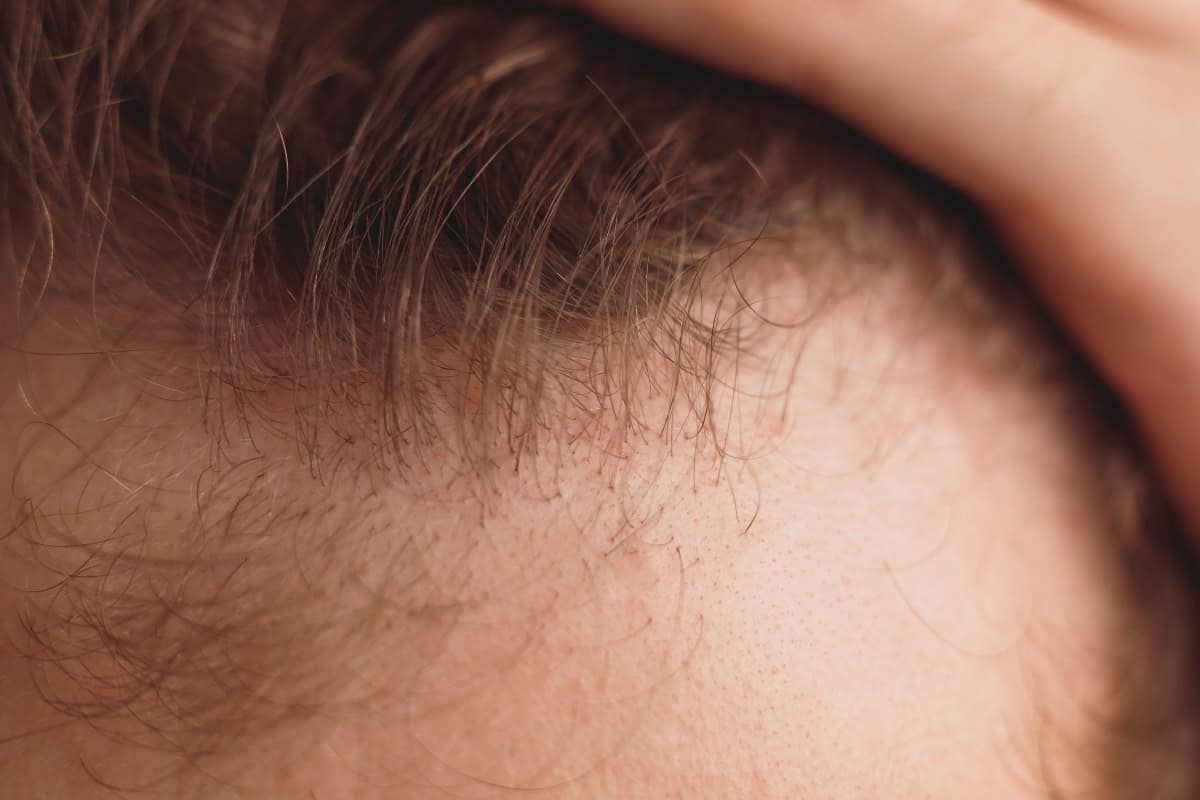

Thinning spread across a wide scalp area is often described as diffuse thinning. That description does not establish its cause. This article explains what an assessment should consider before deciding whether a transplant is appropriate.
Key Takeaways
- Diffuse thinning can occur with patterned hair loss or other conditions. Whether the donor area is affected is central to surgical planning.
- The single most important question an assessment needs to answer is whether the donor area itself is stable, since a transplant depends entirely on healthy hair being available to harvest.
- Diffuse thinning can have several underlying causes, so ruling out reversible factors is a necessary step before surgery is ever recommended.
What Makes Diffuse Thinning Different
Most people picture hair loss as a receding hairline or a bald spot at the crown, both of which follow a fairly predictable pattern. Diffuse thinning looks different. Instead of a defined bald zone, hair becomes finer and less dense across a wider area, often first noticed as a widening part line, more visible scalp under bright light, or reduced volume when styling.
This pattern is especially common in women, though it can affect men too. It matters for hair transplant planning because the entire logic of a transplant depends on moving hair from a stable, unaffected donor area to a thinning one. When thinning is spread more broadly, figuring out where the “stable” donor area actually ends becomes a much more careful process than it is with typical pattern baldness.
Free Assessment
Not Sure How Many Grafts You Need?
Get a personalized treatment plan from Dr. Top's team. Takes 2 minutes to complete — no cost, no obligation.
The Question That Comes Before Everything Else: Is the Donor Area Stable?
Before any discussion of grafts, technique, or timeline, an assessment needs to determine whether the donor zone, typically the back and sides of the scalp, is genuinely unaffected by the thinning process. In diffuse patterned cases, the donor area generally remains healthy and DHT-resistant even as the top of the scalp thins. In a less common but more complicated pattern, thinning extends into the donor zone itself, which removes the reliable reserve of hair a transplant depends on.
This distinction is the reason a photo-based online estimate is never enough for diffuse thinning cases. A hands-on examination, sometimes supported by trichoscopy or magnified scalp imaging, is needed to properly evaluate donor density and look for any early signs of thinning in that zone before committing to a graft number or even a “yes.”
Ruling Out Reversible Causes First
Not all diffuse thinning is androgenetic. Thyroid dysfunction, iron deficiency, hormonal shifts, and telogen effluvium, a temporary shedding phase often triggered by stress, illness, medication changes, or significant weight change, can all produce a similar diffuse pattern.
This matters enormously for treatment planning, because a transplant addresses permanent, pattern-based hair loss. It does not treat the underlying cause of temporary shedding, and moving forward with surgery before ruling out a temporary trigger can mean operating on a scalp that’s still actively shedding, which undermines the whole point of the procedure. A responsible assessment asks about recent health changes, medications, and family history before any surgical conversation begins in earnest.
Miniaturization: Reading What’s Actually Happening to Existing Hair
Diffuse thinning often means some hairs are lost completely while others are miniaturized, meaning they’ve shrunk and thinned but haven’t disappeared. Understanding the proportion of miniaturized hair in a given area helps a clinician judge how much of the existing hair might respond to medical treatment versus how much represents a genuine, permanent gap that a transplant could address.
This is also why diffuse cases often benefit from a more conservative surgical plan than patterned baldness. Placing grafts too aggressively into an area where a meaningful percentage of native hair is still miniaturized, rather than gone, can increase the risk of shock loss, shedding of surrounding hair triggered by surgery. It is often temporary, but severely miniaturized hairs may not fully recover.
Why Women’s Diffuse Thinning Gets Its Own Conversation
Diffuse thinning is the most common presentation of hair loss in women, and it often behaves differently than the patterned baldness typically seen in men. Many women retain an intact frontal hairline even as the crown and part line thin significantly, which changes how a surgeon approaches hairline design compared with typical male pattern cases. Pregnancy, menopause, thyroid conditions and other health factors can also influence both the cause and the stability of the thinning pattern.
Because of these differences, women considering surgery for diffuse thinning benefit from a dedicated evaluation rather than having their case assessed using assumptions built around male pattern baldness. You can learn more about the surgical approach for this population on the women’s hair transplant page.
What a Complete Assessment Should Include
Pulling all of this together, a proper diffuse thinning assessment should cover:
- Pattern mapping. Where exactly the thinning is concentrated, and whether the donor zone shows any early signs of involvement.
- Medical history. Recent health changes, medications, thyroid or iron-related concerns, and family history of hair loss.
- Stability over time. Whether the thinning has been steady for a meaningful period or is actively progressing, since active shedding usually needs to be addressed before surgery is considered.
- Miniaturization assessment. A closer look, often using magnification, at how much existing hair is thinning versus genuinely gone.
- Realistic goal-setting. An honest conversation about what a transplant can and can’t achieve for a diffuse pattern specifically, since the aim is usually improved density and coverage rather than a full restoration to pre-thinning volume.
This is exactly the kind of evaluation covered in a hair assessment, which looks at your case individually rather than applying a generic hair transplant approach to a pattern that genuinely needs its own evaluation.
Risks and limits to discuss
Hair transplantation involves surgery and can cause bleeding, infection, scarring or an unsatisfactory cosmetic result. Donor hair is finite, growth takes months, and further thinning can affect overall appearance. Ask about risks relevant to your case, aftercare and who to contact if a concern develops.
Conclusion
Diffuse thinning deserves a more careful look than a quick photo review can offer, since candidacy comes down to details a mirror simply can’t show you. The clearest next step is a proper assessment that looks at your donor area, your pattern, and any underlying causes before anything is recommended. Get your free assessment with Dr. Top’s team and find out what your case actually calls for.
Our online assessment form supports an initial enquiry. Diagnosis and final surgical planning require a qualified clinician’s assessment.
Further reading: ISHRS: assessing hair loss in women.