
If you’ve been researching hair loss solutions, you’ve almost certainly come across PRP. But between the glowing testimonials and the skeptical takes, it can be hard to know what to actually believe. So let’s cut through the noise and look at what the science genuinely says about PRP hair loss results, no fluff, no hype.
Key Takeaways
- PRP (platelet-rich plasma) therapy is a minimally invasive, non-surgical treatment that uses your body’s own growth factors to stimulate dormant hair follicles and promote natural hair growth.
- Clinical studies show PRP can significantly increase hair density and reduce shedding, especially in patients with early-stage androgenetic alopecia or thinning hair.
- While PRP delivers promising results, it works best as part of a comprehensive hair restoration plan, and outcomes vary based on individual factors like the stage of hair loss and treatment protocol.
What Is PRP Therapy, Exactly?
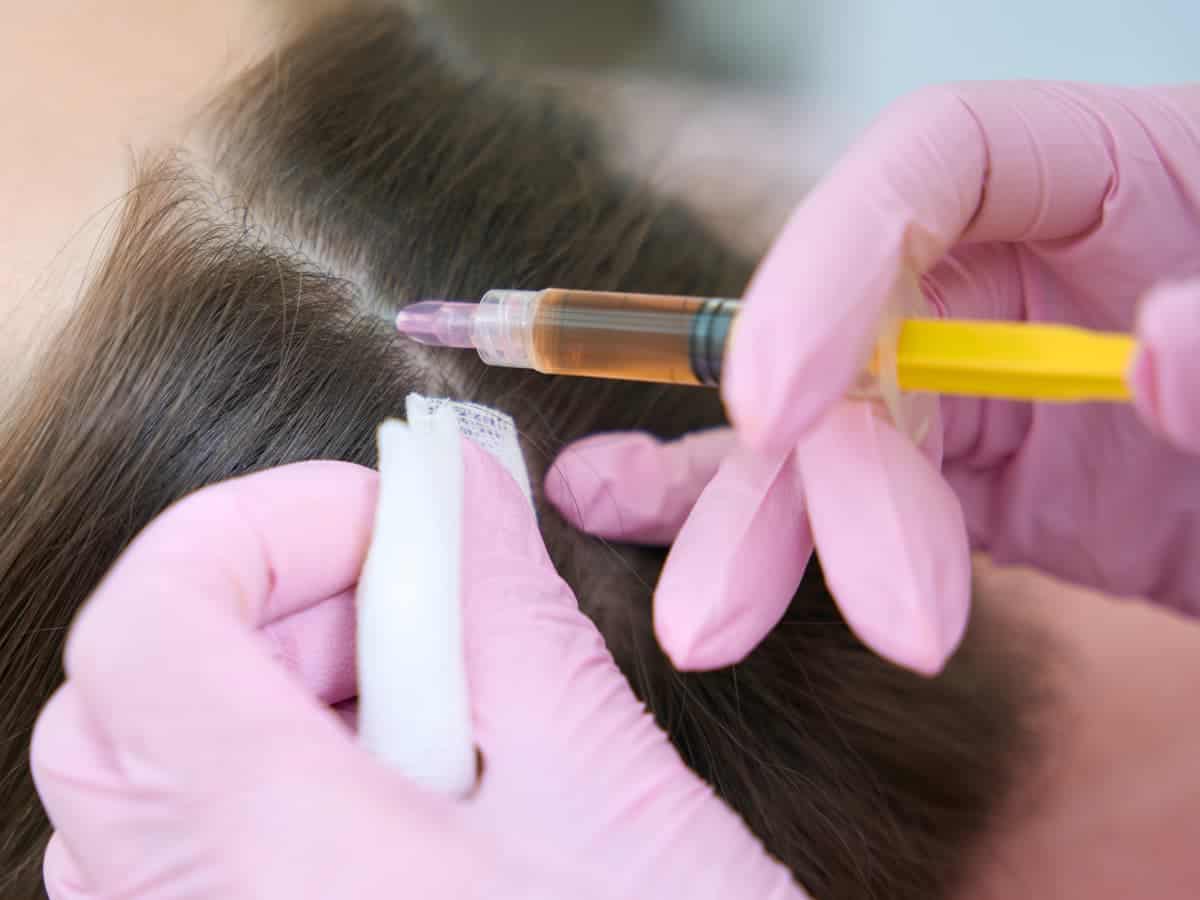
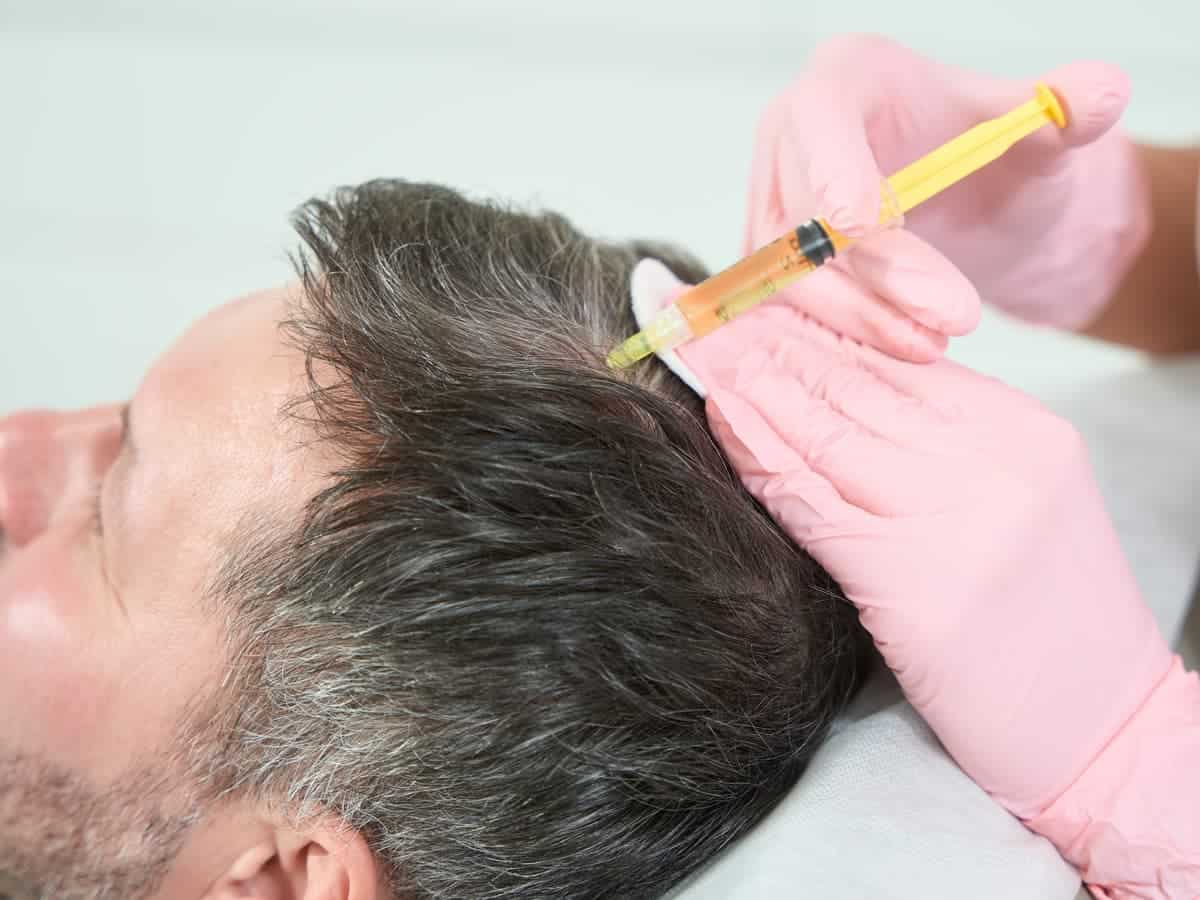
Platelet-rich plasma (PRP) is a treatment derived from your own blood. A small blood draw is taken, placed into a centrifuge to separate and concentrate the platelets, and then the resulting plasma, now packed with a high concentration of growth factors, is injected directly into the scalp.
Those growth factors include platelet-derived growth factor (PDGF), vascular endothelial growth factor (VEGF), and transforming growth factor-beta (TGF-beta). Together, they play a key role in cellular repair, tissue regeneration, and the stimulation of hair follicles that have gone dormant.
Because PRP uses the patient’s own blood, it is considered a safe and biocompatible option with a low risk of adverse reactions. It is non-surgical, requires no general anesthesia (typically just local anesthesia at the injection sites), and involves minimal downtime, making it an appealing treatment option for many people dealing with hair thinning.
Free Assessment
Not Sure How Many Grafts You Need?
Get a personalized treatment plan from Dr. Top's team. Takes 2 minutes to complete — no cost, no obligation.
Does PRP for Hair Loss Actually Work? What the Science Says
This is the real question. And the honest answer is: yes, with important nuances.
The Clinical Evidence
Multiple peer-reviewed studies and meta-analyses support PRP therapy as an effective approach for treating androgenetic alopecia, commonly known as male pattern baldness and female pattern hair loss.
A 2020 systematic review and meta-analysis analyzing 13 randomized controlled trials (RCTs) with participants aged 18 to 65 found that PRP injections led to a statistically significant increase in hair density per cm², with pooled data favoring the PRP group with a mean difference of 30.4 hairs per cm² compared to baseline.
A separate 2020 network meta-analysis of 40 RCTs involving 7,545 participants found that PRP injections were significantly more effective than most conventional treatments, including minoxidil and finasteride, for increasing hair density, though it noted the ongoing need for more high-quality standardized evidence.
For women specifically, a 2024 systematic review and meta-analysis encompassing 21 studies and 628 participants concluded that PRP therapy effectively enhances both hair density and thickness in women with hair loss, with a favorable safety profile.
A comprehensive 2025 PubMed review confirmed that PRP promotes follicular regeneration through angiogenesis and key signaling pathways, with clinical trials demonstrating improved hair density, thickness, and patient satisfaction, particularly when combined with minoxidil, microneedling, or laser therapy.
How PRP Stimulates Hair Growth
Here is a simplified breakdown of what happens at the biological level:
| Mechanism | What It Does |
|---|---|
| Activates dormant follicles | Wakes up hair follicles stuck in the resting (telogen) phase |
| Extends the growth cycle | Prolongs the active (anagen) phase so hair grows longer and thicker |
| Promotes angiogenesis | Improves blood supply to the scalp and follicles |
| Triggers cell proliferation | Encourages new cell growth through Wnt/beta-catenin signaling |
| Supports wound healing response | Mobilizes the body’s natural repair mechanisms in the target area |
This is why PRP therapy tends to work best in areas where there is still some follicular activity. It stimulates and strengthens what is already there. It does not, however, regenerate follicles that are completely gone.
What PRP Hair Loss Results Can You Realistically Expect?
Managing expectations is a big part of getting the most out of PRP hair treatment. Here is what the research and clinical experience generally point to:
What PRP can do:
- Increase hair density and hair count per cm²
- Reduce the rate of shedding
- Improve hair shaft thickness, making thinning hair appear fuller
- Reactivate dormant follicles and encourage new hair growth
- Support the overall health of the scalp
What PRP cannot do:
- Regrow hair in completely bald areas with no active follicles
- Permanently stop hair loss on its own
- Replace surgical hair restoration for advanced hair loss stages
Most patients who are good candidates begin to notice changes within a few months of starting treatment. The typical protocol involves approximately three treatments spaced about a month apart, followed by maintenance sessions. Results tend to build gradually, with noticeable improvements in hair density and texture becoming more visible after the second or third PRP injection.
PRP also works best as part of a broader hair health strategy. When combined with topical treatments like minoxidil, or used alongside or after a hair transplant, the results of PRP can be considerably more pronounced.
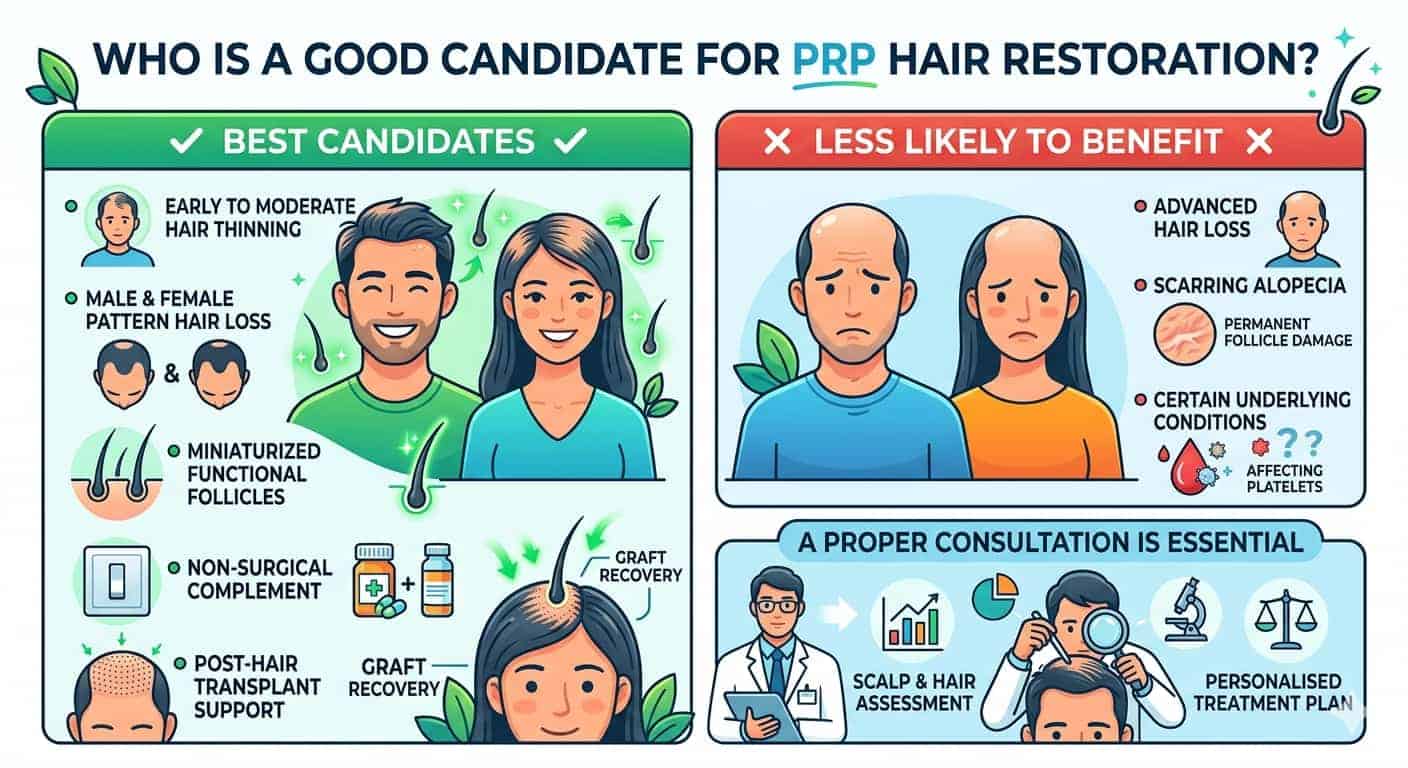
Who Is the Right Candidate for PRP Hair Restoration?
PRP therapy tends to deliver the strongest results for a specific type of patient. Understanding where you fall on the spectrum can help set realistic goals.
Best candidates for PRP:
- Those in the early to moderate stages of hair thinning
- Patients with androgenetic alopecia (male or female pattern hair loss)
- Individuals with miniaturized follicles that still retain some function
- Those looking for a non-surgical complement to other treatments
- Post-hair transplant patients looking to support graft recovery and new growth
Less likely to benefit from PRP alone:
- Patients with advanced hair loss and large areas of complete baldness
- Individuals with scarring alopecia where follicles are permanently damaged
- Those with certain underlying conditions that affect platelet function
A proper consultation and scalp assessment is essential before starting any PRP hair treatment. A good clinic will evaluate your hair loss pattern, stage, and overall scalp health before recommending a course of action.
The PRP Procedure: What to Expect Step by Step
Understanding the process can make the experience a lot less intimidating. Here is a typical PRP hair treatment session broken down:
- Blood draw: A small amount of blood is drawn from the arm, similar to a standard blood test.
- Centrifuge processing: The blood is placed in a centrifuge, which spins at high speed to separate and concentrate the platelet-rich plasma from the rest of the whole blood components.
- Preparation: The separated plasma, now containing a high concentration of platelets and growth factors, is prepared for injection.
- Scalp preparation: The target area is cleaned and local anesthesia is applied to minimize discomfort during the procedure.
- Injection: The PRP is injected into the scalp at multiple points across the areas of thinning, delivering growth factors directly to the hair follicles.
- Recovery: Most patients experience mild redness or sensitivity at the injection sites for 24 to 48 hours, with no significant downtime required.
The entire session typically takes under an hour, making it easy to fit into a busy schedule.
Is PRP Approved by the FDA for Hair Loss?
PRP is currently considered an off-label treatment for androgenetic alopecia and is not formally approved by the FDA specifically for hair loss.
That said, “off-label” does not mean unproven or unsafe. Many well-established cosmetic and medical treatments are used off-label. PRP has a strong body of published research supporting its use, a favorable safety profile backed by multiple meta-analyses, and is widely practiced by hair restoration specialists globally.
The key is ensuring the treatment is performed by qualified, experienced professionals using standardized protocols, since variability in centrifuge speed, platelet concentration, and injection technique can significantly affect outcomes.
PRP vs. Other Hair Loss Treatments
It helps to understand where PRP sits relative to other options, especially for anyone weighing their choices.
| Treatment | Type | Invasiveness | Best For |
|---|---|---|---|
| PRP therapy | Biological / regenerative | Minimally invasive | Early to moderate hair thinning |
| Minoxidil | Topical medication | Non-invasive | Mild to moderate hair loss |
| Finasteride | Oral medication | Non-invasive | Male pattern baldness |
| Hair transplant (FUE) | Surgical | Invasive | Moderate to advanced hair loss |
| PRP + Hair Transplant | Combined approach | Minimally invasive + surgical | Post-transplant recovery and density |
PRP therapy sits in a unique position as a bridge treatment. It is more active than topical treatments, yet non-surgical. For many patients, it is either a first-line approach when hair loss is caught early, or a complementary therapy layered alongside minoxidil, finasteride, or a hair transplant procedure.
Why Thailand Is a Growing Destination for PRP Hair Treatment
Thailand has steadily built a strong reputation as a destination for high-quality, internationally accredited hair restoration care. Bangkok, in particular, is home to clinics that combine medical expertise with globally recognized standards, attracting patients from across Europe, Asia, Australia, and beyond.
At Dr. Top Hair Hospital, PRP hair restoration is performed as part of a comprehensive approach to hair health. The medical team holds globally recognized certifications and undergoes continuous training in both Europe and Asia to stay at the forefront of hair restoration science. With over 20 years of clinical experience, more than 10,000 procedures performed, and patients from over 11 countries including the UK, Germany, Australia, and France, the clinic applies rigorous international standards to every PRP hair treatment and hair transplant procedure.
For patients considering combining PRP therapy with a hair transplant, Thailand offers an exceptional value proposition: world-class, internationally certified care at a fraction of the cost compared to clinics in Europe or North America, without compromise on technique or outcomes.
PRP is often included in Thailand transplant packages — if you’re interested, see pricing here.
Conclusion
If thinning hair has been on your mind, know that you are not out of options. At Dr. Top Hair Hospital, we take a personalized, science-backed approach to hair restoration, and PRP is just one of the tools we use to help patients, from early-stage hair thinning to advanced hair loss, get real, lasting results. Our team is ABHRS-certified, with over 20 years of experience and patients from more than 11 countries who have trusted us with their hair health.
Wondering if you’re a good candidate? Take our 2-minute hair assessment to find out what treatment is right for you. No obligation, and your details stay completely private.