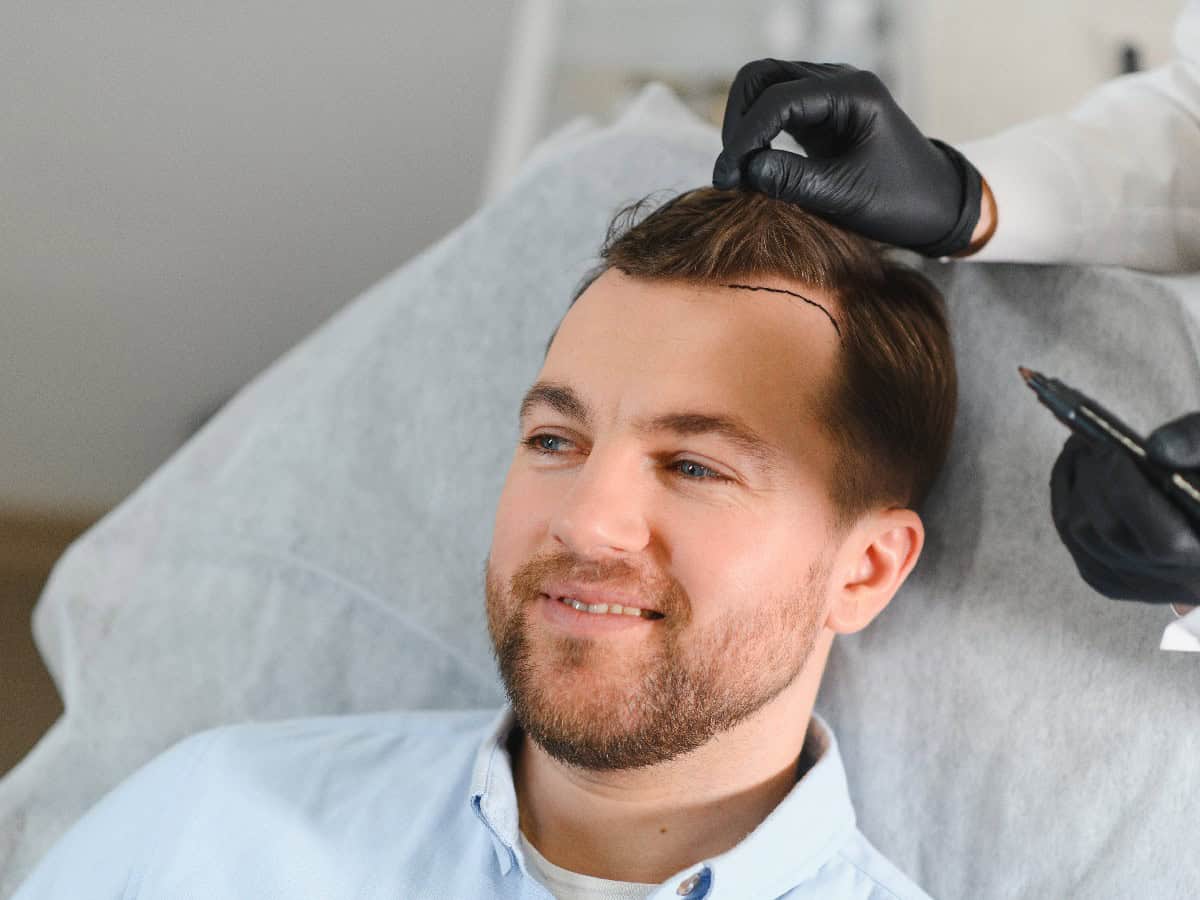

One of the most common questions I hear from patients reaching out to Dr. Top Hair Hospital is: “Will you actually understand what I want?” It is a fair question, and honestly, it is one of the most important ones you can ask before committing to a hair transplant abroad.
Having treated patients from over 11 countries, I have seen firsthand how communication shapes outcomes. Not just the technical results, but the entire experience: how safe you feel walking into the procedure, how clearly your concerns are addressed, and how supported you feel months into recovery. When comparing a hair transplant in Thailand vs Turkey, communication is not a side note. It is central to everything.
Key Takeaways
- Communication quality directly affects your hair transplant results, from the first consultation all the way through post-op recovery.
- Thailand offers a patient-centered communication experience backed by internationally trained surgeons and consistent English-language support throughout the entire process.
- Turkey is a globally popular destination for hair transplant surgery, but language barriers and high-volume clinic environments are commonly reported concerns among international patients.
Why Communication Shapes Your Hair Transplant Results

Hair transplantation is not a one-size-fits-all procedure. The number of hair grafts needed, the hairline design, the choice of hair transplant techniques, and the overall density goals all require detailed, back-and-forth conversations between the patient and the hair transplant surgeon. I always tell my patients: the hairline is the frame of your face. Getting that frame right starts with a conversation, not a template.
Misunderstandings at the consultation stage can lead to misaligned expectations or, worse, results that miss the mark entirely. When getting a hair transplant abroad, that communication layer becomes even more critical. You are in an unfamiliar environment, possibly relying on a translator, and you have a limited window of time to get everything right before the procedure begins. That is exactly why the communication infrastructure of your chosen destination matters just as much as the technical skills of the surgical team.
Free Assessment
Not Sure How Many Grafts You Need?
Get a personalized treatment plan from Dr. Top's team. Takes 2 minutes to complete — no cost, no obligation.
Hair Transplant Communication in Thailand
I understand the anxiety of trusting someone with your appearance in a foreign country. That concern is real, and it deserves a real answer.
Thailand has long been recognized as a leading destination for medical tourism, and much of that reputation is built on a genuine commitment to the patient experience. At Dr. Top Hair Hospital, the standard of communication goes well beyond having an English-speaking receptionist at the front desk. Our medical team, including our surgeons, communicates directly with international patients throughout every stage of care.
Our team has completed advanced training across institutions in Europe and Asia, including Mahidol University, Saint Louis University, and DHI-certified programs. This international training background means our surgeons are not just technically equipped. They are also accustomed to working with patients from diverse cultural backgrounds and communicating clearly across those differences.
Across approximately 10,000 procedures performed, we have learned that the most successful results come from the most honest conversations. Patients who feel heard during their consultation consistently have better experiences overall, and that starts well before anyone picks up a surgical instrument.
What the Consultation Experience Looks Like in Thailand
- A surgeon-led pre-op consultation that personally reviews your scalp and donor area
- A clear explanation of the recommended technique and the expected number of grafts
- A hairline design discussion where your input is actively encouraged and considered
- Written post-op care instructions provided in English
- Direct access to the medical team for questions both before and after the procedure
Hair Transplant Communication in Turkey
Turkey ranks among the most popular destinations for hair transplant surgery globally. Hair transplant costs in Turkey are often significantly lower compared to other countries, and the sheer volume of clinics means there is no shortage of options for international patients.
However, the communication experience in Turkey is notably different, and this is something worth factoring into your decision well before you book.
English proficiency varies widely across clinics in Turkey. While major clinics in Istanbul typically employ patient coordinators who speak English, the actual surgeons and technicians performing the procedure may communicate primarily in Turkish. In practice, this often means relying on a coordinator to relay information during the consultation and, in many cases, during the procedure itself.
I have spoken with many patients who came to us after procedures elsewhere, and a recurring theme is the feeling of not being fully informed during the process. A question about graft placement or hairline design asked in English may not always be communicated to the surgeon with full accuracy. That is not a hypothetical concern; it is something international patients report regularly.
Common Communication Challenges Reported in Turkey
- Instructions during surgery relayed through a third party rather than directly from the surgeon
- Limited pre-op consultation time due to high daily patient volumes
- Post-op care instructions that are sometimes brief or delivered without thorough explanation
- Difficulty getting detailed responses from the clinic after returning home
None of this is a blanket criticism of every clinic in Turkey. Many international patients have had positive experiences there. But the communication gap is a well-documented concern, and it deserves an honest place in any comparison of hair transplant in Thailand vs Turkey.
Comparing the Consultation: Thailand vs Turkey
The consultation is arguably the most important conversation in the entire hair transplant journey. It sets the foundation for everything: the design, the technique, the recovery plan, and your expectations.
| Consultation Factor | Thailand | Turkey |
|---|---|---|
| Surgeon-led consultation | Standard practice | Varies by clinic |
| English communication | Strong and direct | Often through a coordinator |
| Personalized hairline design | Patient-centered process | Sometimes template-based |
| Time allocated per patient | Generally generous | Can be limited |
| Written pre/post-op materials | Provided in English | Availability varies widely |
From a communication standpoint, Thailand offers a more thorough and transparent consultation process. Patients traveling to Thailand for hair restoration can expect to leave their consultation with a clear understanding of the procedure, the expected results, and a realistic recovery timeline.
During the Procedure: Real-Time Communication
One aspect of hair transplant communication that rarely gets enough attention is what happens during the procedure itself. A hair transplant surgery typically takes several hours, and during that time, the patient is awake and aware of everything happening around them.
I have had patients tell me they felt nervous about spending hours in a procedure room, uncertain about what was happening around them. That concern is completely valid. At Dr. Top Hair Hospital, our surgical team checks in throughout the procedure, explaining each phase as it progresses and making sure the patient is comfortable and informed. If something needs real-time adjustment, such as the angle of a graft or a slight shift in the hairline, that conversation happens directly between the patient and the surgeon.
In many clinics in Turkey, the procedure is often carried out by a team of technicians under the supervision of a surgeon who may be overseeing multiple patients at the same time. Communication during surgery in this setup can feel minimal, and the experience is sometimes described as fast-paced and impersonal.
This is not just a comfort issue. Real-time communication during a hair transplant procedure can directly influence the precision of the result. When a patient can clearly tell their surgeon they want the hairline adjusted slightly, and the surgeon can explain in return why a certain placement will give better long-term results, that exchange has a tangible impact on what they walk away with.
Post-Op Support and Follow-Up Communication
Hair transplant results do not happen overnight. The recovery process unfolds over months, and the quality of aftercare communication plays a large role in how well those results develop.
A patient who traveled to us from Europe once told me that the most anxious moment of their hair transplant journey was not the surgery itself. It was the weeks afterward, at home, watching the transplanted hairs shed and wondering if something had gone wrong. That is an incredibly common experience, and it is exactly why we maintain open communication with every patient long after they have returned home.
At Dr. Top Hair Hospital, we provide a clear post-op communication channel, whether that is direct messaging or scheduled follow-up calls with the medical team. Patients can reach us with questions and receive detailed, accurate responses at any stage of their recovery.
In Turkey, follow-up communication tends to be less structured. Some clinics do offer online support, but patients often find it difficult to get timely or detailed responses once they have left the country. For international patients managing their recovery from abroad, this can become a real source of anxiety, especially during the shedding phase when concerns naturally arise.
Cultural Communication Styles and What They Mean for You
Beyond language, cultural communication styles shape the hair transplant experience in ways that are hard to quantify but easy to feel.
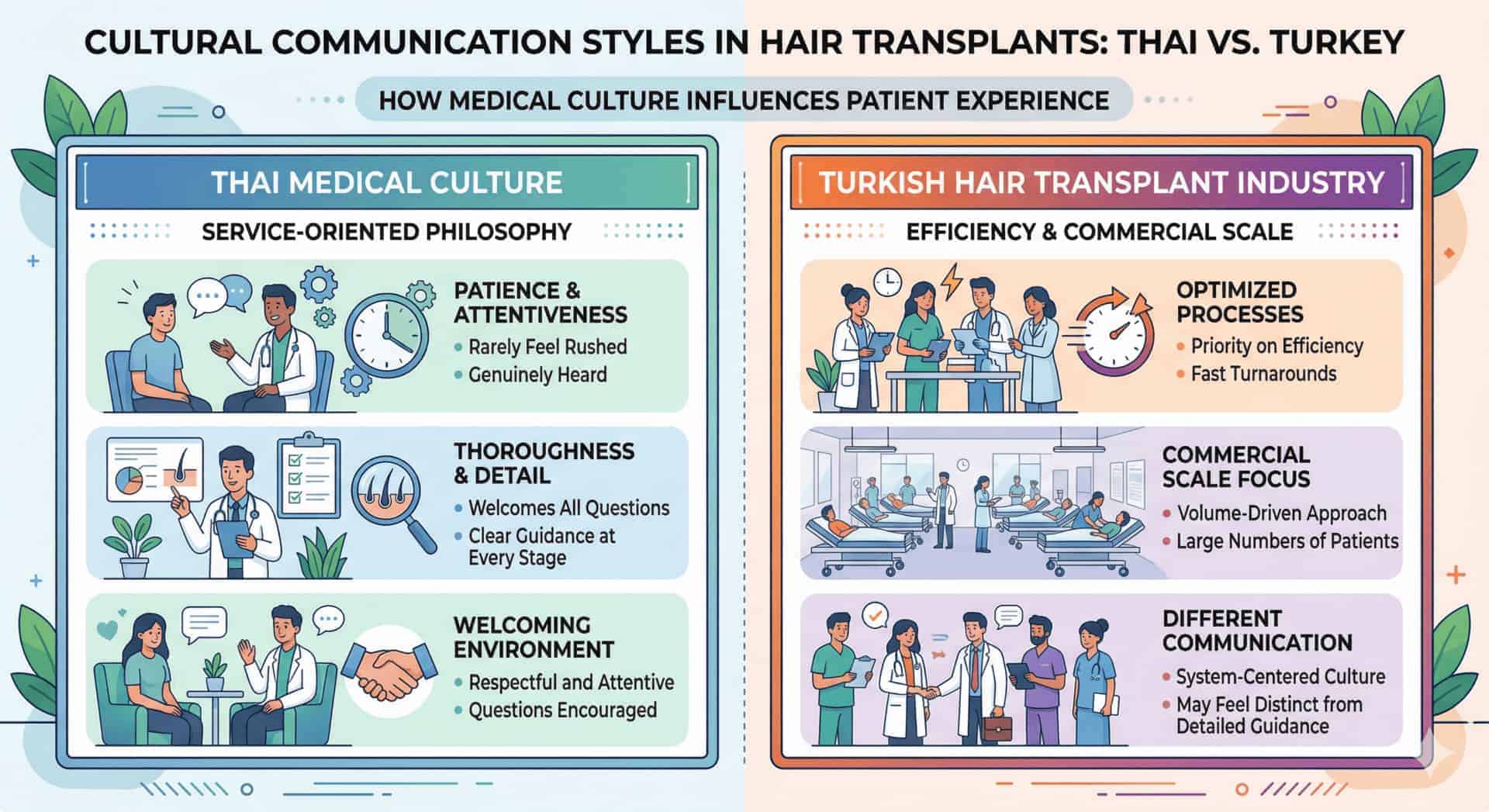
Thai medical culture is rooted in a service-oriented philosophy that values patience, attentiveness, and thoroughness. Patients are rarely made to feel rushed, and questions are welcomed at every stage. In my experience, that unhurried approach consistently leads to better outcomes, because a patient who feels genuinely heard is also a patient who follows their recovery instructions carefully, communicates early when something feels off, and trusts the process.
The commercial scale of the Turkish hair transplant industry means that efficiency often takes priority over individual patient experience. There are certainly excellent, patient-focused clinics in Turkey. But for patients who have never had a hair transplant before and need clear guidance throughout, the difference in communication culture can be a deciding factor.
Hair Transplant Safety and Communication
Communication is not just about comfort or clarity. It is a core component of hair transplant safety.
Clear pre-op communication ensures that the surgeon fully understands your medical history, your allergies, and any relevant risk factors before the procedure begins. It also ensures that you, as the patient, understand what to expect during recovery and when to seek medical attention if something seems off.
When communication breaks down, safety can be compromised. Patients who cannot clearly convey their medical background, or who leave the clinic without fully understanding their post-op instructions, face a higher risk of complications. This is one of the strongest practical arguments for choosing a clinic where communication standards are consistently upheld.
At Dr. Top Hair Hospital, our surgeons hold certification from the American Board of Hair Restoration Surgery (ABHRS), one of the most rigorous credentials in the field. That standard of training reflects a commitment to care that extends far beyond the operating room, including the quality of every conversation we have with our patients.
Questions Worth Asking Any Clinic Before You Book

Every case is different, and I always encourage patients to ask detailed questions before making any commitment. Whether you are comparing a hair transplant in Thailand vs Turkey or narrowing down clinics within a single country, these communication-related questions can help guide a more informed decision.
- Will I speak directly with the surgeon during my consultation, or with a coordinator?
- Will the surgeon performing my procedure be present for the entire session?
- Are post-op care instructions provided in writing, in English?
- Is there a dedicated channel for follow-up questions after I return home?
- How does the clinic handle complications or concerns raised remotely?
The answers will tell you a great deal about how seriously a clinic takes patient communication, and by extension, patient outcomes.
Conclusion
If there is one thing I have learned from treating patients from across the world, it is that the best hair transplant results begin long before the procedure starts. They begin with a conversation where you feel genuinely heard, where your concerns are taken seriously, and where the plan is built around your goals and not a template.
If you have questions about your hair loss, your options, or what to expect, our team at Dr. Top Hair Hospital is always happy to talk. Every consultation starts with listening, so book your free assessment today and let’s figure out the right path forward together. There is never any pressure, just honest guidance.
Every consultation at Dr. Top Hair Hospital begins with listening. That has not changed across more than 10,000 procedures and patients from over 11 countries.
Wondering if you’re a good candidate? Take our free 2-minute assessment to find out — no obligation, and your details stay completely private.
Reviewed by Dr. Top, ABHRS-certified, one of approximately 20 ABHRS-certified surgeons in Thailand and 300 globally. Patients treated from the UK, Germany, Australia, New Zealand, Italy, France, Spain, India, Kenya, Canada, and across Asia.
Your questions deserve real answers. Start here.