Feed What You've Planted: ALMI Nanofat
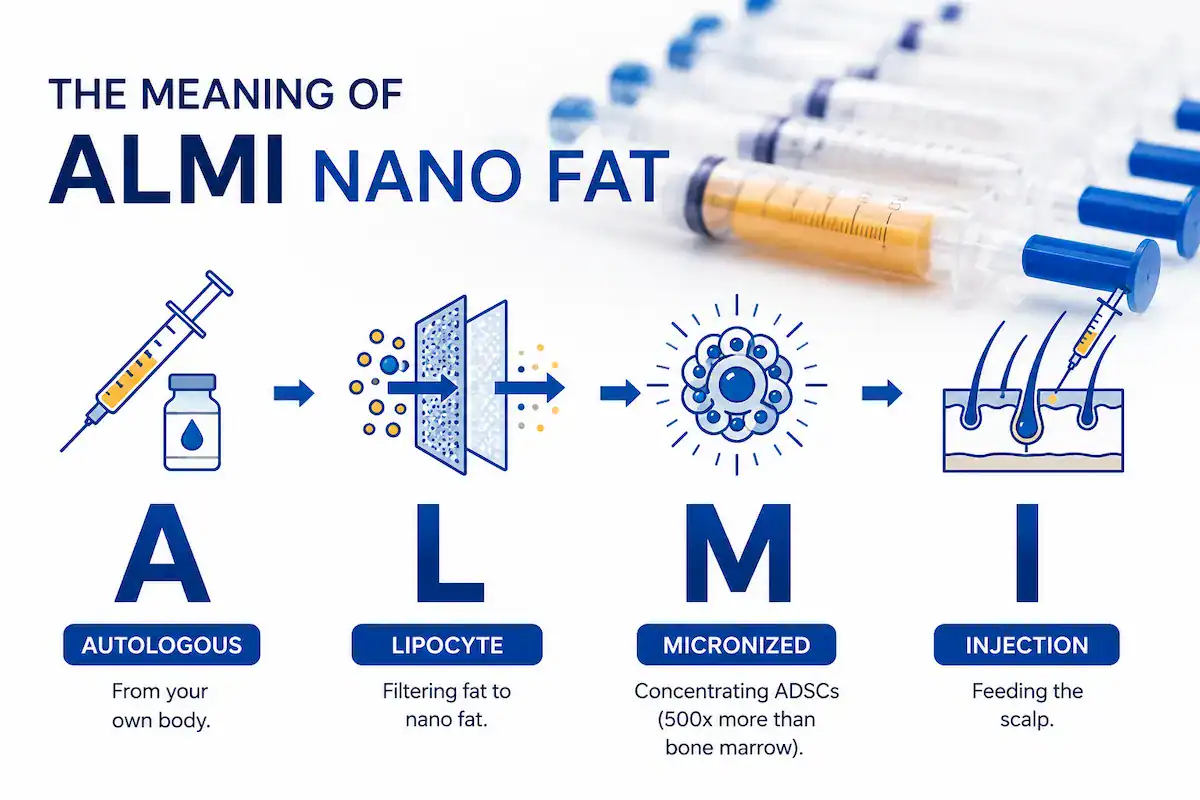
What is ALMI?
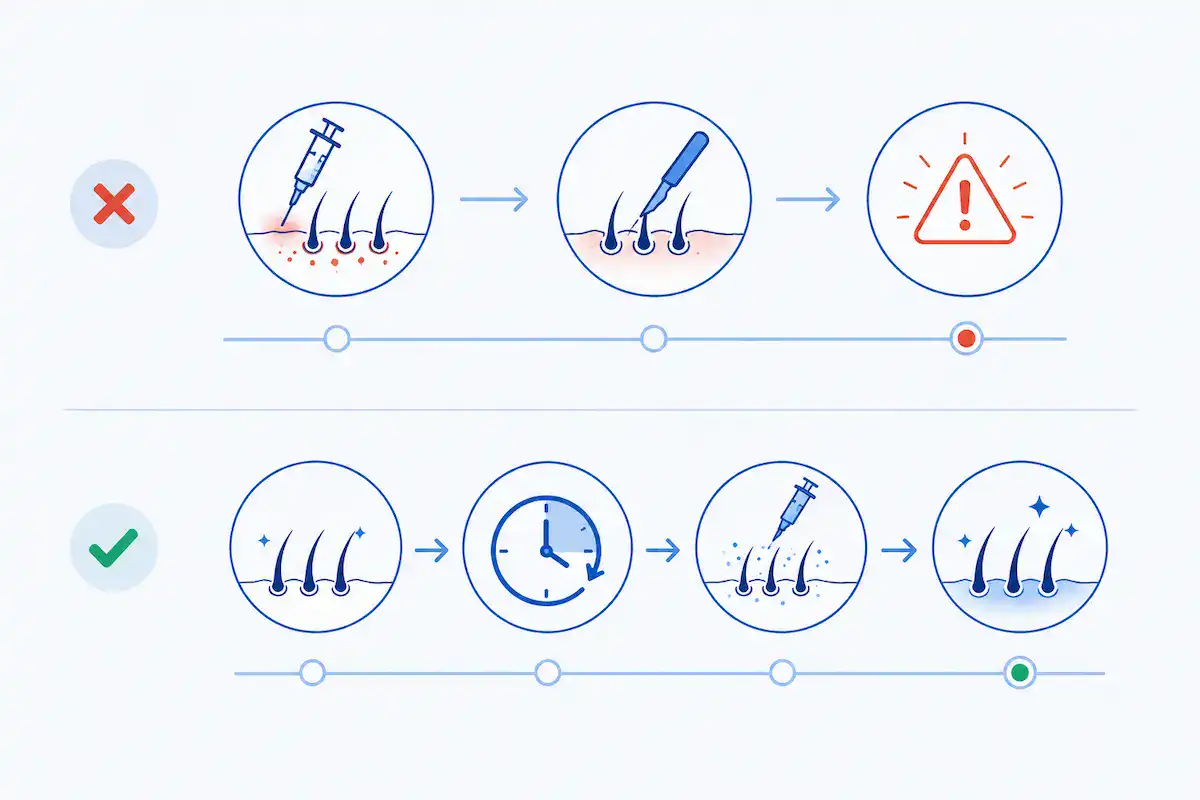
Why 48 hours after, not before
Three jobs, in the window that matters
Feeds new grafts
Protects existing hair
Rescues dormant follicles
Where the numbers come from
35% density, 25% thickness
33% graft circumference
~70% fat adherence
Dr. Top presents this technique internationally


Where ALMI Nanofat Transfer is offered
Your ALMI timeline
Surgery
The ALMI procedure
Active healing
Early visible response
Full benefit
Before and after, in Dr. Top's own cases


ALMI Nanofat, answered
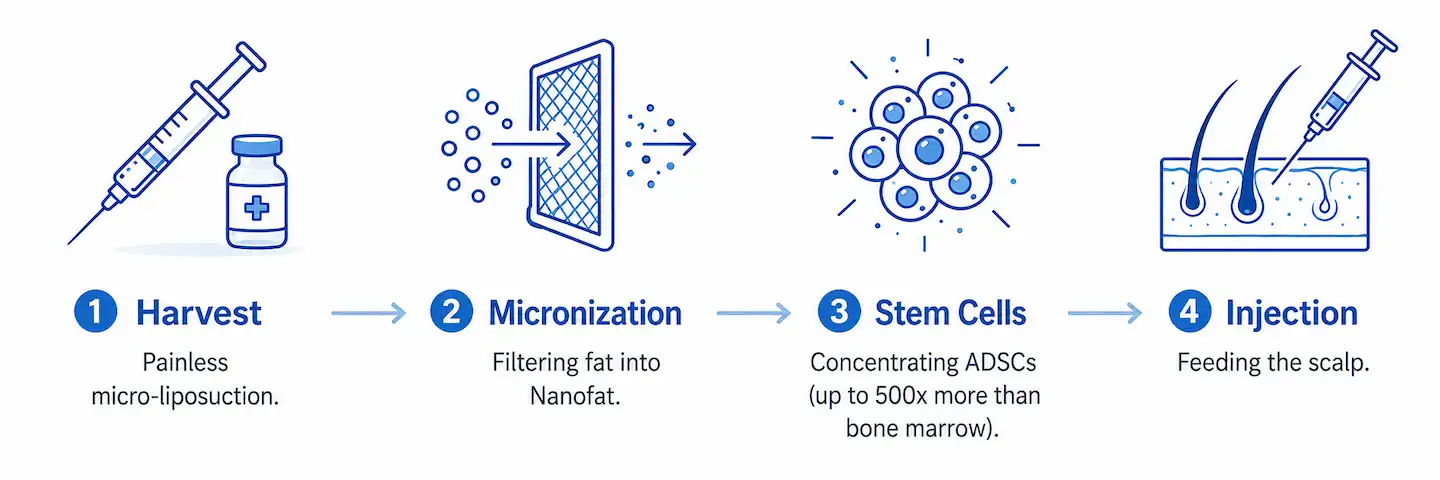
ALMI (Autologous Lipocyte Micronized Injection) is a regenerative treatment that uses your own fat-derived stem cells and growth factors, injected into the scalp to promote healing and hair growth. At Dr. Top Hair Hospital, ALMI is administered 48 hours after every hair transplant as part of Dr. Top’s Protocol. Clinical observations show approximately 33% increase in graft circumference at 12 months. This treatment is only available in select countries, including Thailand.
The fat harvest is done under local anesthetic, and most patients describe it as comfortable. A small amount of fat is taken from the inner thigh or abdomen through a tiny incision using gentle liposuction. The whole ALMI process – harvest, processing, and scalp injection – takes about 60 – 90 minutes.
The amount of fat needed for ALMI is very small – far less than cosmetic liposuction. Even patients with low body fat usually have enough tissue in the inner thigh or lower abdomen. Dr. Top will check your suitability during your pre-operative consultation.
Performing it before surgery would add inflammation to the scalp at the worst moment, when a calm surgical field matters most. Waiting 48 hours lets the transplant be done on an uninflamed scalp and then delivers the regenerative benefit just as grafts enter their critical settling phase. Across a 12-month recovery, 48 hours is negligible.
It is uncommon. ALMI is not a standard part of the high-volume model, which processes many patients with technician-led procedures and leaves little room for personalised, surgeon-performed post-operative treatment.
Density depends on graft count and the thickness of each hair. Studies of fat-derived regenerative treatments report increases in hair shaft thickness, which means each transplanted hair can fill more visual space. Your individual result depends on your own factors.
Shock loss is the temporary shedding of existing hairs around the recipient area after surgery, driven by the inflammatory response to surgical stress. ALMI’s anti-inflammatory effect and the cushioning fat layer can help reduce it. Dr. Top’s research presented at IMCAS 2024 Paris documented reduced shock loss in ALMI patients.
ALMI works mainly during the critical healing and establishment window after your transplant, supporting graft survival and reducing early shedding. The protective and regenerative effects are delivered in the first weeks, and the benefit to graft survival carries through to your final result at around 12 months. Effects on existing hair can continue as follicles recover, and Dr. Top will discuss whether any future top-up is useful for your case.
Fat-derived regenerative treatments are an active area of research, and Dr. Top has presented his own clinical findings on ALMI and shock loss at IMCAS 2024 in Paris. We keep peer-reviewed evidence separate from our in-clinic observations, and we are happy to discuss what the current research does and does not show at your consultation.
ALMI Nanofat Transfer is an autologous procedure, which means it uses your own fat tissue rather than a synthetic drug or foreign substance, so the risk of rejection is very low. We do not present it as an FDA-approved treatment for hair loss, and it is not a drug carrying hair-loss regulatory approval. It is offered on the basis of the clinical evidence and our own observed results, which we keep clearly separated. We are happy to explain exactly what it is and is not at your consultation.