

Getting a hair transplant is a big decision, emotionally and financially. But what happens when the results fall short? Whether it’s an unnatural hairline, poor graft survival, or visible scarring, revision and repair surgery is more common than people think. And unfortunately, it costs more too. Here’s everything you need to know about hair transplant revision repair cost, so you understand what you’re really paying for, and why getting it right the first time matters.
Key Takeaways
- Hair transplant revision and repair are often more complex and more expensive than the original procedure, especially when scar correction or graft redistribution is involved.
- The hair transplant revision repair cost depends on the number of grafts needed, the technique used, the extent of the damage, and the surgeon’s level of expertise.
- Choosing a qualified, experienced hair restoration surgeon from the start is the most effective way to avoid the financial and emotional burden of revision surgery.
Why Hair Transplant Revisions Happen

Hair loss can take a real toll on confidence, which is exactly why so many people turn to hair restoration as a solution. A well-executed hair transplant procedure can restore a natural-looking hairline and give you a genuinely fuller head of hair. But not every procedure delivers on that promise.
Revision surgery becomes necessary when the original transplant produces unsatisfactory or outright harmful results. This is more common than the industry often admits. Patients come in with complaints ranging from uneven density and misaligned hairlines to significant scar tissue left behind by poorly performed procedures. Others report that their transplanted hair simply didn’t grow, or grew in the wrong direction, creating an artificial and obvious appearance.
The hard truth is that a bad hair transplant doesn’t just affect how you look. It affects how much more you’ll need to spend to fix it.
Free Assessment
Not Sure How Many Grafts You Need?
Get a personalized treatment plan from Dr. Top's team. Takes 2 minutes to complete — no cost, no obligation.
What Goes Wrong in a Hair Transplant
Understanding what causes a failed procedure is the first step to understanding why hair transplant revision and repair carries such a high cost.
Surgeon Inexperience and Poor Technique
One of the most common causes of a failed hair transplant is the surgeon’s level of skill. Improper angulation of grafts, overharvesting the donor area, or failing to account for a patient’s natural hair growth pattern can lead to results that look pluggy, patchy, or unnatural. Even errors as subtle as incorrect graft angulation can cause transplanted hair to grow in the wrong direction, an issue that is very difficult to correct after the fact.
Graft Mishandling and Poor Survival
Hair follicles are delicate. During FUE (Follicular Unit Extraction), grafts need to be properly harvested, stored, and implanted within a specific time window. When clinics rush the process or allow grafts to dry out before implantation, the result is sparse coverage even after what seemed like a thorough procedure. Poor vascularization, where the scalp fails to establish adequate blood supply to the new follicles, is another reason grafts fail to produce new hair growth.
Hairline Design Errors
A natural-looking hairline isn’t just about placing hair in the right spots. It requires understanding facial structure, hair characteristics, and how hair direction and density naturally vary across different zones of the scalp. When hairline design is rushed or handled without proper artistic skill, the result can be a straight, harsh, or asymmetric hairline that looks nothing like natural growth and requires a full redesign as part of the repair process.
Scar Tissue from FUT Strip Procedures
FUT (Follicular Unit Transplantation) involves removing a strip of skin with hair follicles from the donor area. While the technique can yield a high number of grafts, a poorly sutured or healed donor site leaves behind a wide, visible scar. Correcting this kind of scarring requires its own specialized approach and adds meaningfully to the overall repair cost.
Types of Hair Transplant Repair Procedures
Not all revisions are the same. The type of repair you need will depend on the nature and extent of the original damage, and each type carries its own cost estimate.
Revision FUE
This is the most common repair approach. A surgeon extracts the poorly placed grafts and redistributes them more naturally. In some cases, additional grafts from the remaining donor area, or even body hair, are used to fill gaps and restore density. This is essentially a second hair transplant procedure, which means it carries a similar or higher cost than the original, especially when the donor area has already been partially depleted.
Scar Repair
For patients with visible linear scarring from FUT, micro-FUE techniques can be used to implant individual hair follicles directly into the scar tissue. This helps soften the scar and restore a more even appearance across the donor area. In more complex cases, microneedling or PRP (Platelet-Rich Plasma) therapy may be added to promote collagen repair and improve the scalp’s overall texture.
Hairline Redesign
When a hairline has been placed too low, too straight, or at the wrong density, a full redesign is necessary. The surgeon must extract unnatural grafts, correct the transition zone, and rebuild a natural-looking hairline from scratch. This is one of the most technically demanding types of revision surgery and typically requires a highly experienced specialist.
Non-Surgical Add-Ons
In cases where surgical repair alone isn’t sufficient, non-surgical options like Scalp Micropigmentation (SMP) or PRP therapy may be recommended alongside the procedure. While less invasive, these treatments are not free, and they contribute to the cumulative hair transplant revision repair cost over time.
What Drives Hair Transplant Revision Repair Cost
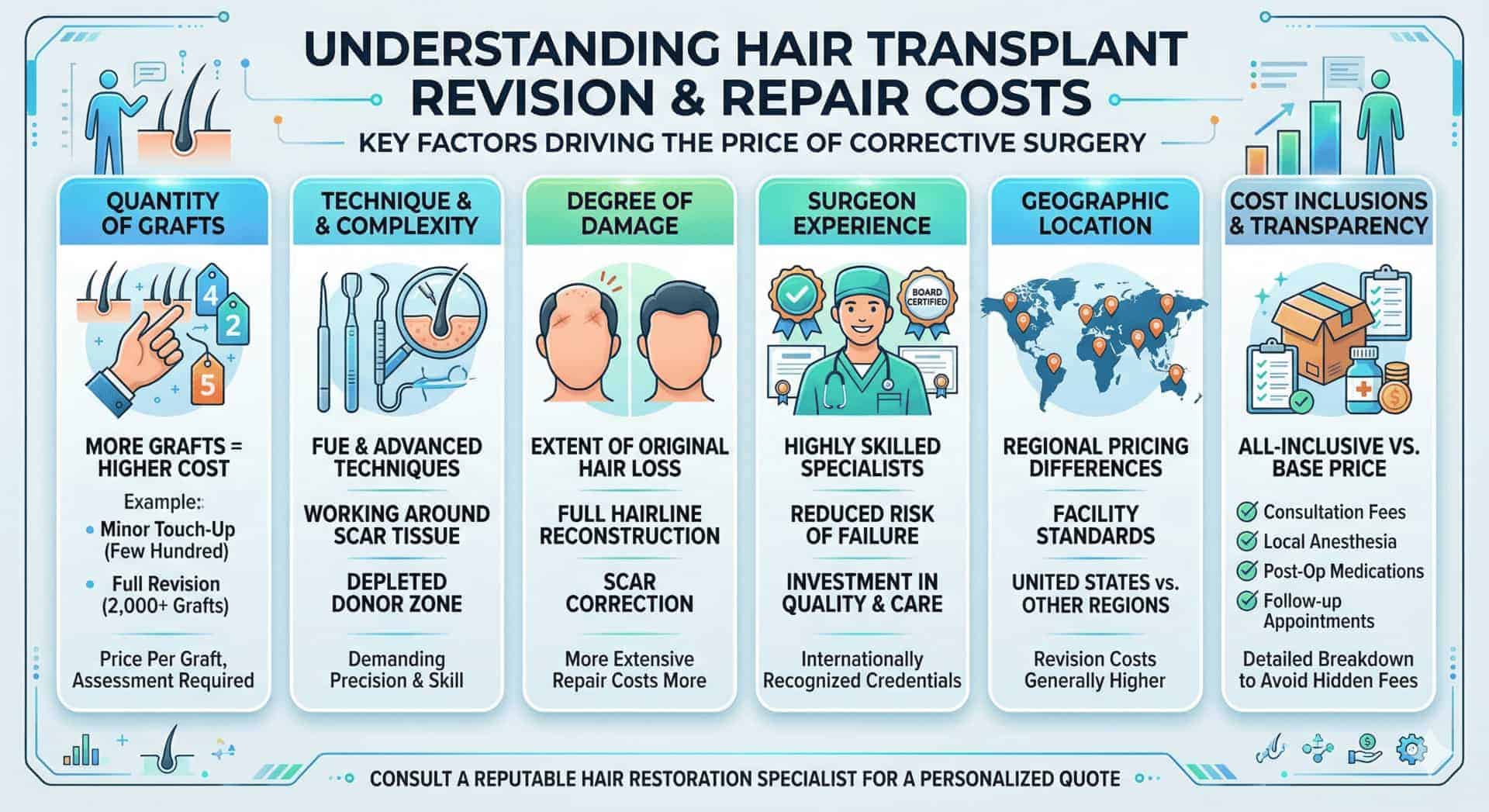
This is what most patients really want to understand. The cost of hair transplant revision and repair isn’t a flat rate; it varies based on several interconnected factors.
Number of Grafts Required
The number of grafts required to achieve the desired result is one of the biggest cost drivers. A minor touch-up might only need a few hundred grafts, while a full revision could require 2,000 or more. Many clinics price procedures per graft, so the more grafts you need, the higher the total cost. Your surgeon will assess your specific hair loss, evaluate your donor hair availability, and give you a realistic number of grafts required before any procedure begins.
Technique Used
The choice between FUE and other advanced hair restoration techniques affects pricing. FUE is generally more precise and less invasive than older methods, but the technical complexity of performing a revision, especially when working around scar tissue or a depleted donor zone, means the cost per graft typically runs higher than a first-time procedure. The additional time, skill, and precision required all factor into the final hair transplant pricing.
Extent of the Damage
The more damage there is to undo, the more expensive the repair. A patient with minor density issues will pay significantly less than someone who needs full hairline reconstruction, scar correction, and donor area restoration. The extent of your original hair loss pattern, combined with what was done to the scalp during the initial procedure, determines how complex and costly the revision will be.
Surgeon’s Expertise and Clinic Credentials
Revision surgery is not something you want to hand to a discount clinic. The skill gap between an inexperienced technician and an experienced hair restoration surgeon becomes even more consequential when correcting past mistakes. Clinics with internationally recognized credentials and continuously trained medical teams charge accordingly, but that cost reflects a higher standard of care, more precise technique, and a significantly lower risk of needing a third procedure.
Location and Facility Standards
Where the procedure is performed also influences the total cost of a hair transplant revision. In the United States, hair transplant surgery generally ranges from $8,000 to $15,000+, and revision procedures in that market often cost just as much, if not more. In Asia, including the Philippines, prices are more accessible, but even here, revision procedures carry higher costs than first-time transplants due to the additional complexity involved.
What’s Actually Included in the Cost
Always ask for a detailed breakdown of what is included in any cost estimate you receive. Some clinics quote a base price that excludes consultation fees, local anesthesia, post-op medications, follow-up appointments, or adjunct treatments like PRP that may be part of your recovery plan. Transparent, all-inclusive pricing is always a sign of a trustworthy hair restoration center.
The Hidden Costs of Getting It Wrong
Beyond the direct cost of revision surgery, there are costs that don’t show up on any invoice.
Donor area depletion is one of the most serious long-term consequences of a poor first procedure. The donor area has a finite number of healthy hair follicles. When those grafts are extracted carelessly or wasted during a botched procedure, there may not be enough donor hair left to achieve the results you originally wanted, even with the best revision surgeon in the world.
Emotional toll is real, even if it’s harder to quantify. Living with a visibly failed hair transplant while navigating the lengthy repair process can significantly affect confidence and quality of life. Many patients describe the experience as more distressing than the original hair loss itself.
Time is another often-overlooked cost. Hair growth following any transplant, first or revision, takes months to fully manifest. Most patients see new hair emerging around three to four months after the procedure, with stable, full results visible between 12 and 14 months. Going through this waiting period twice is a significant investment of patience and emotional energy.
How to Avoid Needing a Revision
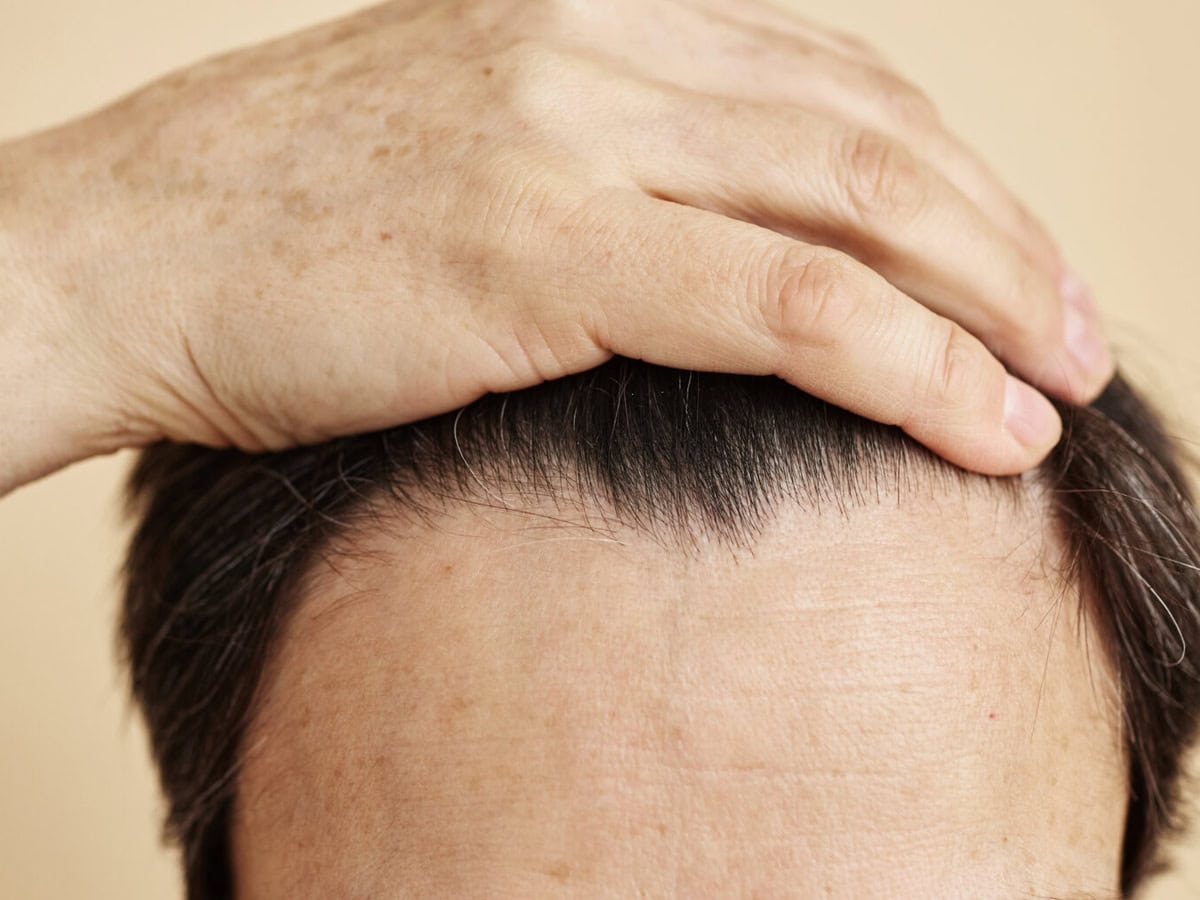
The most effective way to manage hair transplant revision repair cost is to avoid needing a revision in the first place. Here’s how to do that:
- Choose a qualified surgeon from the start. Always work with a qualified doctor who has proven experience in hair restoration surgery, not a technician-run clinic competing on price alone.
- Have a proper consultation. A thorough consultation involves assessing your hair loss pattern, evaluating donor hair availability, and setting realistic expectations. Any clinic that skips this step should raise concerns.
- Ask the right questions about hair transplants. Understand the technique being recommended, the number of grafts required to achieve your desired result, and what recourse exists if you’re unsatisfied.
- Request a detailed cost estimate upfront. Knowing exactly what is included in the cost helps you plan and price your decision responsibly, without surprises later on.
- Recognize that cheaper isn’t always better. A low initial cost estimate can balloon quickly once revision becomes necessary. Investing in quality the first time is, in the long run, the more financially sound decision.
Conclusion
A bad hair transplant experience doesn’t have to be your final chapter. Understanding the real hair transplant revision repair cost, and what drives it, puts you in a far better position to make decisions that actually serve your long-term results. The most expensive mistake isn’t always the one you pay for upfront; sometimes it’s the one you overlooked when choosing who to trust with your hair in the first place.
At Dr. Top Hair Hospital, we specialize in both primary and advanced hair restoration procedures. Our medical team undergoes continuous training in Europe and Asia, ensuring every treatment aligns with the highest international standards in hair transplant surgery. If you are considering revision surgery, or simply want to get it right the first time, the clearest next step is a short personalized assessment. It takes about two minutes, there is no obligation, and it gives you a realistic picture of your options before you commit to anything.
Wondering if you’re a good candidate? Take our free 2-minute assessment to find out — no obligation, and your details stay completely private.
Reviewed by Dr. Top, ABHRS-certified. Over 10,000 procedures performed across more than 20 years, with patients travelling from over 11 countries including the UK, Germany, Australia, Canada, France, and across Asia.
Whenever you are ready, we are here.