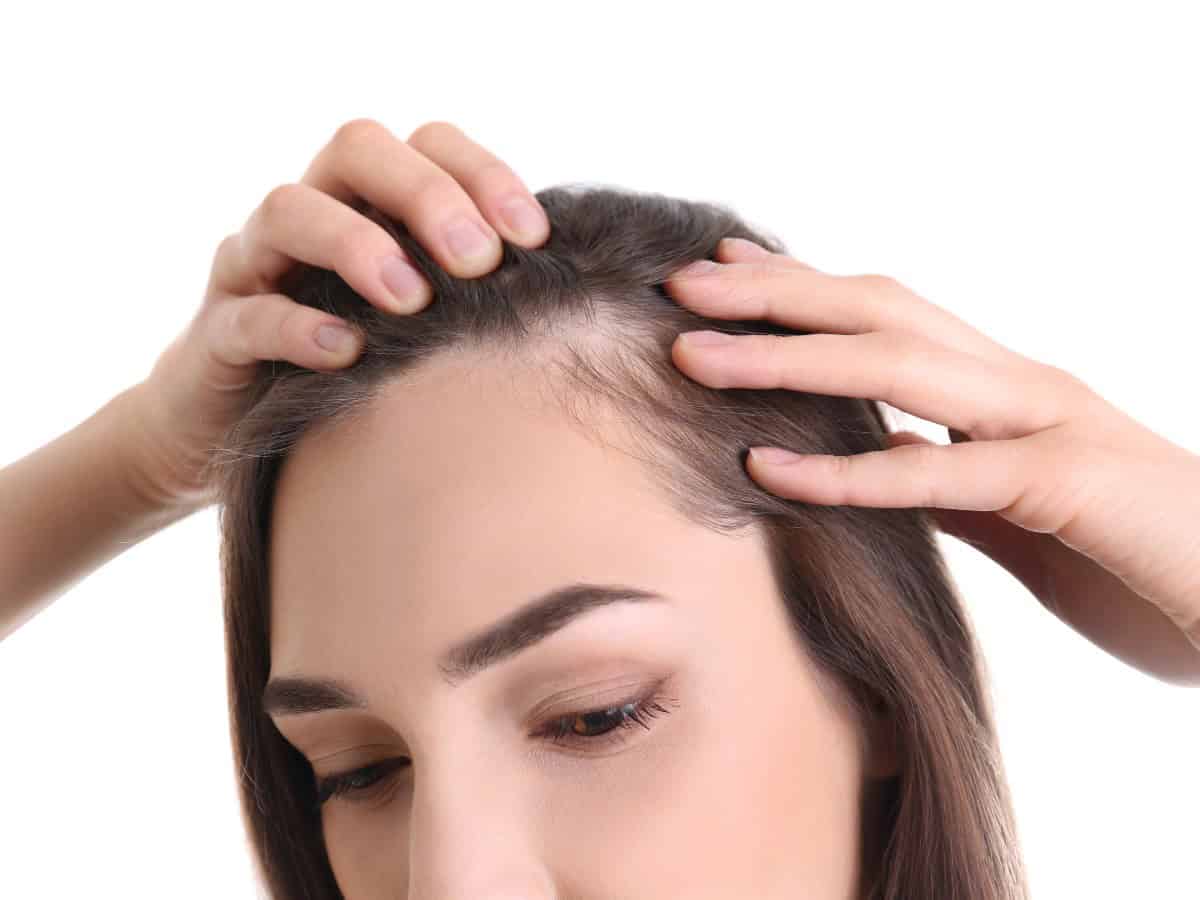

One of the most common things I hear from women during their first consultation is something like this: “I have been losing my hair for years and I do not know where to start. Is there even anything that can actually help me?” That question carries so much weight — the years of watching their hair change, the products tried and abandoned, the small moments of feeling less like themselves. I want to answer it honestly. In this guide, we will walk through everything you need to know about hair transplant for women cost, candidacy, and why female hair restoration is genuinely a different experience than most people imagine.
Key Takeaways
- The hair transplant cost for women varies based on the number of grafts needed, technique (FUE vs. FUT), and the clinic you choose — understanding these factors helps you plan with real confidence.
- Female hair loss follows different patterns than male hair loss, which means female hair transplant surgery requires more personalized evaluation, greater surgical precision, and a deeper understanding of how women experience thinning.
- Not every woman is a candidate for a hair transplant — and at Dr. Top Hair Hospital, we believe the most important thing we can do is give you an honest answer about whether surgery is right for you, and what your options are if it is not.
Understanding Female Hair Loss: It Is Not the Same as Men’s
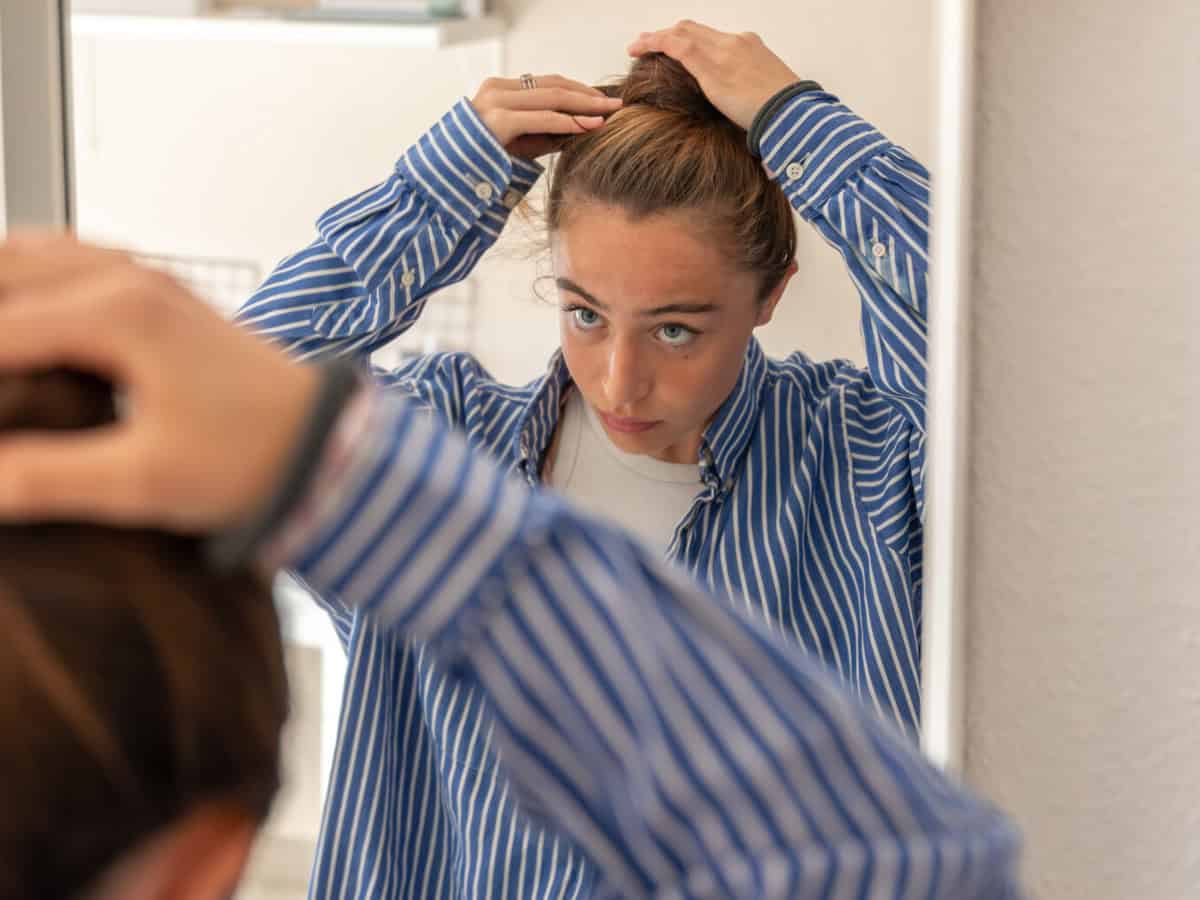
When we talk about hair loss in women, the first thing I want you to understand is that it rarely looks the way most people picture it. Men tend to experience receding hairlines and defined bald zones. Women, more often than not, deal with diffuse thinning across the crown and the top of the scalp — the kind that makes a ponytail feel noticeably thinner, or makes overhead lighting feel like an enemy. The frontal hairline often stays relatively intact, which means the loss can go completely unnoticed by others even as it weighs heavily on you every single day.
This pattern is what is known as female pattern baldness, and it is mapped using the Ludwig scale — a classification system that grades the gradual overall thinning of women’s hair rather than tracking distinct bald patches. Because the thinning is so widespread, identifying a stable and viable donor area becomes a much more nuanced task, which is exactly why understanding the full picture of your hair loss is always the first step before anything else.
Hormonal shifts play a massive role here too. Conditions like PCOS, menopause, and postpartum recovery can all trigger or worsen female hair loss. Stress, nutritional deficiencies, and certain medications are also contributing factors that often go unexamined. This is precisely why a thorough consultation — not just a visual check, but a complete review of your health history and hormonal status — matters so much. Addressing the underlying cause of your hair loss alongside exploring a surgical solution is not optional. It is essential. I have seen too many women invest in a procedure before that groundwork was done, and it rarely leads to the outcome they deserved.
Free Assessment
Not Sure How Many Grafts You Need?
Get a personalized treatment plan from Dr. Top's team. Takes 2 minutes to complete — no cost, no obligation.
I also want to say this plainly: the experience of losing your hair as a woman is often deeply isolating. Many of the women I work with have spent years quietly managing this on their own before seeking help. That kind of silent resilience deserves to be met with honesty and care, not a sales pitch.
Hair Transplant for Women vs. Men: Why It Is Different
The honest answer to “Is a female hair transplant really that different?” is yes — significantly.
In a typical male hair transplant procedure, the goal is usually well-defined. Surgeons extract hair follicles from donor-stable areas — the back and sides of the scalp — and transplant them into receding zones. The pattern is predictable. The donor area is generally reliable. The target is clear.
With women’s hair transplants, every one of those variables shifts. Most women are not restoring a receding hairline — they are trying to improve overall hair density across thinning zones and achieve coverage that looks natural and full. This requires a more meticulous, evenly distributed approach. It also demands a higher level of surgical precision, because the transplanted follicles need to blend seamlessly with the hair that is already there — not simply fill in empty patches, but integrate into an existing landscape of varying density.
One of the practical concerns women ask about most is shaving. In many FUE hair transplant cases for women, we do not need to shave the full donor area. For most of our female patients, this means they can return to daily life with their existing hair length largely intact, which matters enormously for those who need discretion throughout recovery — whether for work, social commitments, or simply personal comfort.
Recovery and styling are real concerns too. Women often want to know: when can I wear my hair the way I normally do? Will anyone be able to tell I had something done? These are not vanity questions. They are entirely reasonable concerns about navigating identity and daily life during a healing process. We factor all of this into the planning conversation from day one.
And then there is the emotional side, which I think deserves more attention than it usually gets in clinical content. I have worked with women who stopped attending family events because they felt ashamed of their thinning. Women who started wearing hats every day of the week. Women who told me during their consultation that this was the first time they had talked openly about it with anyone. A good clinic does not just perform a procedure — it holds space for all of that, and it takes that weight seriously
FUE vs. FUT: Which Type of Hair Transplant Is Right for Women?
There are two primary techniques used in hair transplantation today: Follicular Unit Extraction (FUE) and Follicular Unit Transplantation (FUT), also known as the strip method. Each has real advantages, and the right choice depends on your specific situation, donor availability, and personal goals.
FUE involves harvesting individual hair follicles one by one from the donor area and implanting them into the recipient site. It leaves no linear scar, has a faster recovery time, and allows for greater flexibility in how you wear your hair during and after healing. For most female candidates, FUE is the preferred method — and the one we perform most frequently at Dr. Top Hair Hospital. Our FUE graft survival rate is approximately 90%, which reflects the precision of our extraction process and the use of our ATP graft preservation solution, which maintains greater than 95% cell viability during the critical window between extraction and implantation.
FUT involves removing a strip of scalp tissue from the donor area, which is then dissected into individual follicular unit transplants for placement. It can yield a higher number of grafts in a single session, which may be worth considering for women with more extensive thinning who need broader coverage. However, it does leave a linear scar at the back of the scalp — which is worth discussing openly if you prefer shorter hairstyles or want the procedure to remain private.
It is also worth knowing: FUE is generally more costly per graft than FUT due to the labor-intensive nature of individual follicle extraction. That said, it remains the more popular choice among our female patients because of the minimal scarring, faster healing, and greater discretion it allows throughout the recovery period.
The right technique is ultimately a decision made together after evaluating your specific donor availability, degree of thinning, and personal priorities. There is no universal answer — only the right answer for your case.
How Much Does a Hair Transplant for Women Cost?
Let us talk numbers honestly, because the hair transplant cost question is often what drives the research in the first place — and vague answers do not help anyone plan.
Internationally, the average cost of a female hair transplant typically ranges from approximately USD $4,400 to over $15,000, depending on graft count, technique, and location. At Dr. Top Hair Hospital in Bangkok, our pricing reflects the international standard of care we maintain — including a surgical team led by an ABHRS Diplomate, ATP graft preservation protocols, and more than 20 years of experience across over 10,000 procedures. We provide transparent, consultation-based quotes once we have assessed your specific graft requirements and treatment goals, because a number without context does not serve you well.
Several factors directly shape the overall cost:
- Number of grafts needed — The more extensive the thinning, the more grafts required. Procedures for women typically involve anywhere from 500 to over 2,500 grafts, priced per graft based on the technique used.
- Technique used — FUE is generally more costly per graft than FUT due to the manual precision involved in individual follicle extraction.
- Surgeon experience and clinic credentials — An ABHRS-certified surgeon operating within internationally accredited protocols will reflect that standard in pricing. This is a medical procedure, and the expertise behind it is a meaningful part of what you are investing in.
- Geographic location — Bangkok offers a strong combination of internationally recognized surgical quality and accessible pricing compared to clinics in the US, UK, or Australia, which is part of why we see patients travelling from over 11 countries including the UK, Germany, Australia, Canada, France, and across Asia.
- Degree of hair loss and case complexity — Women with more diffuse thinning often require more precise graft placement across a broader area, which adds time and technical complexity to the procedure.
- Pre- and post-operative care — Some clinics bundle aftercare, follow-up sessions, or supportive treatments into their pricing. Always clarify exactly what is included in any quote you receive before comparing figures.
Hair transplant surgery is almost universally classified as a cosmetic procedure, which means it is rarely covered by insurance. We offer financing options and payment plans to help make the process more financially manageable. Please ask our team about available options when you reach out.
One framing that helps many patients think clearly about the cost of a hair transplant: when weighed against years of ongoing spending on topical treatments, wigs, or styling products, a transplant is a one-time investment with long-term results. Transplanted follicles — once established — are designed to be permanent. That is a different kind of value from anything you apply and wash out.
Am I a Candidate? The Honest Assessment
Not every woman experiencing thinning is a good candidate for a hair transplant, and I think the most important thing a clinic can do is say that clearly, early, and without any pressure.
The foundation of candidacy for a female hair transplant is the donor area. For a transplant to work, your donor follicles must be healthy, stable, and dense enough to support extraction and reimplantation. If female pattern thinning has already compromised the donor zone — which is more common in women than in men — a transplant may not deliver the results you are hoping for. That is not a failure. It simply means a different path may serve you better.
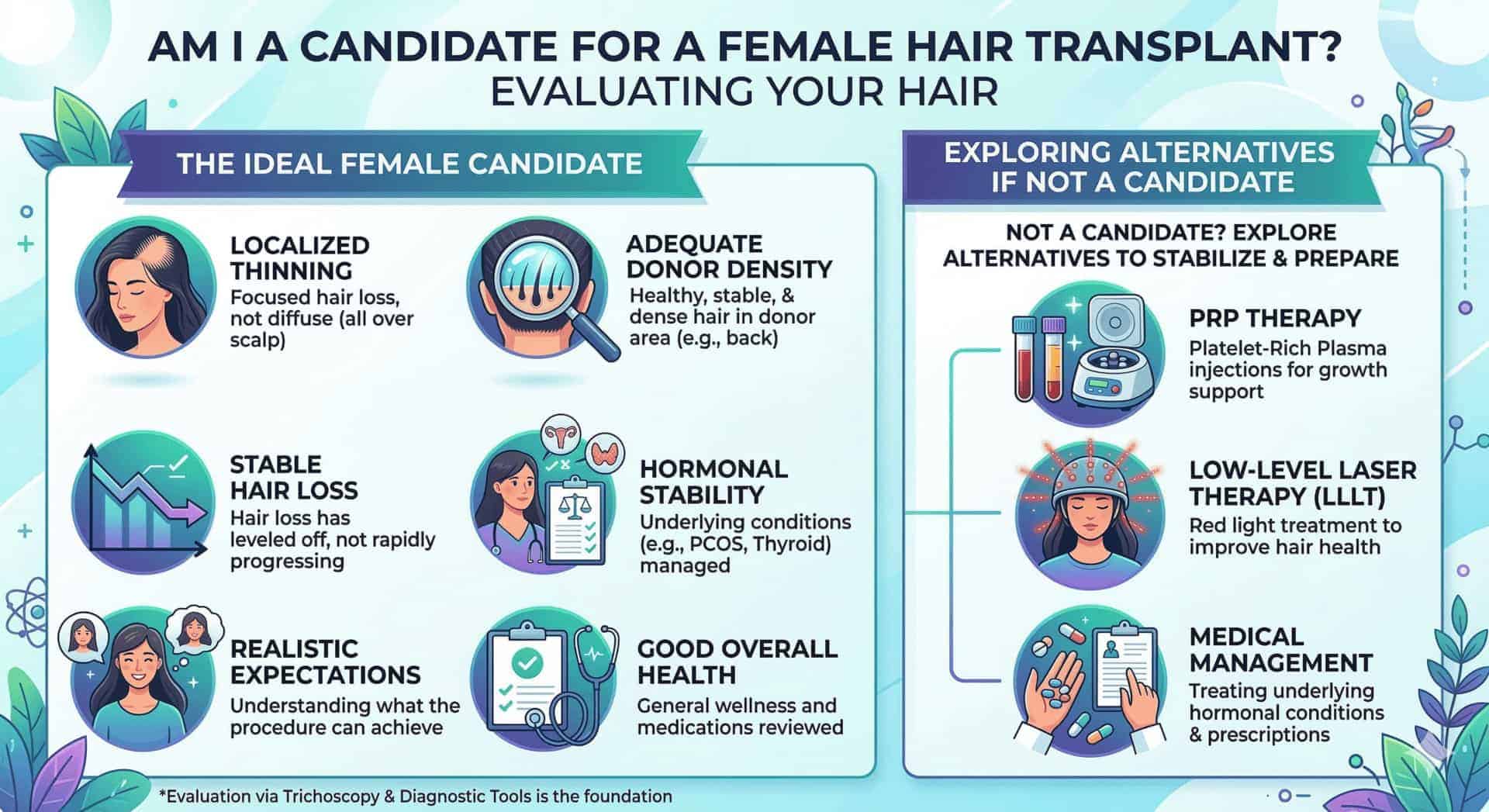
Here are the general criteria that make for a strong female candidate:
- Localized thinning rather than diffuse loss affecting the entire scalp including the donor zone
- Adequate donor density with healthy, non-miniaturized follicles available for extraction
- Stable hair loss — meaning the shedding has plateaued rather than actively progressing
- Hormonal stability — underlying conditions like PCOS or thyroid disorders should ideally be managed before surgery
- Good overall health — since the procedure is performed under local anesthesia, your general health and current medications are reviewed as part of the assessment
- Realistic expectations about what surgery can and cannot achieve
During your consultation, we use trichoscopic analysis and detailed scalp mapping to evaluate follicle health, density, and miniaturization across both donor and recipient zones. This step is non-negotiable — it protects you from investing in a procedure that will not serve you well, and it gives us the clearest possible picture of what is actually happening with your hair.
Our complication rate is approximately 2% or less, and our failure rate is approximately 5% or less. Those numbers reflect procedures where candidacy was properly established. Proper patient selection is what makes those outcomes possible.
What If I Am Not a Candidate Yet?
For women who do not currently meet the criteria for a transplant, there are genuinely effective, clinically supported alternatives we offer at Dr. Top Hair Hospital:
- Exosome Therapy — A regenerative treatment that uses growth factors to stimulate dormant hair follicles and support scalp health at a cellular level. Exosome therapy is one of the most promising non-surgical options available for women with diffuse thinning who are not yet surgical candidates.
- Regenera Activa — A minimally invasive treatment that uses autologous micrografts from your own scalp to stimulate natural hair regeneration. It is particularly well-suited for early-to-moderate female pattern hair loss, and results can begin to show within 30 to 60 days of treatment.
- ERP (Enhanced Regenerative Protocol) — Our clinic data shows approximately 30% visible improvement with ERP — roughly three times more effective than standard PRP, which typically delivers approximately 10% improvement.
These are not consolation alternatives. For many of our female patients, non-surgical treatment is the right starting point — and sometimes the right long-term solution. The goal, always, is to find what genuinely works for your hair and your life, not to put everyone through a surgical procedure.
Real Patient Experiences
Data tells part of the story. The rest comes from the women themselves.
One patient, a 38-year-old professional from Australia, came to us after nearly a decade of diffuse thinning that she had been quietly managing with volumizing products and careful styling. She had started declining certain social invitations because she felt self-conscious under bright lighting — something she had never told anyone before walking into our clinic. After her assessment, she was a strong FUE candidate. Approximately 1,800 grafts were placed across the crown and mid-scalp. By month 12, she described the result not just as more hair, but as feeling like herself again for the first time in years.
Another patient, a 45-year-old from the UK, came in hoping for a transplant but was found during assessment to have diffuse thinning that had also affected her donor zone. We recommended against surgery at that stage and began a course of Regenera Activa combined with ERP instead. Within several months, she had meaningful visible improvement and a clear, honest plan for where her hair restoration journey was heading. No false promises — just real progress and a path she could trust.
A third patient, a woman in her early 50s from Canada, had delayed seeking help for years because she assumed hair transplants were simply not something women did. Her consultation revealed strong donor density and localized crown thinning — an excellent candidate. Approximately 1,500 grafts were placed, and at 18 months she reported results that had genuinely exceeded what she had let herself hope for.
These are not exceptional outliers. They represent the range of women we see and the kind of honest, individualized care we try to bring to every single case.
What to Expect: The Hair Transplant Process
Here is a clear, honest overview of what getting a hair transplant looks like for women at our clinic:
- Consultation and assessment — We evaluate your degree of hair loss, donor area quality, hormonal history, and overall health. Candidacy is determined here, and if surgery is not the right fit, we discuss the alternatives that are.
- Pre-procedure preparation — You may be advised to pause certain medications and supplements in the weeks before surgery. Some patients benefit from a pre-treatment protocol to strengthen the scalp and optimize graft survival.
- The procedure itself — Performed under local anesthesia. Most patients rate their pain experience at approximately 2 out of 10 throughout the session. Procedures typically run 6 to 7 hours depending on the number of hair grafts being placed. Maximum graft count per session reaches up to 5,000 with our Long Hair FUE technique.
- Immediate post-op care — Some initial redness and mild scabbing is normal in the treated areas. We provide detailed aftercare instructions and our team remains available for questions throughout your recovery.
- The shedding phase — Transplanted hair typically sheds within the first two to four weeks. This is completely normal and expected. It is not a sign that the procedure has not worked — it is part of the natural growth cycle.
- Hair growth and long-term results — At approximately 4 months post-procedure, most patients see around 40 to 50% of their visible results. By 6 months, roughly 50% of growth is visible. By 12 months, patients can expect approximately 80 to 90% of their final result. Full results typically emerge between 12 and 24 months.
Patience is genuinely part of this process, and our team stays with you throughout all of it — not just on the day of the procedure.
Is a Hair Transplant Worth It for Women?

For the right candidate, with realistic expectations and a qualified surgical team behind them: yes, genuinely.
The success rate of hair transplants is high when proper candidacy is established and the procedure is carried out with precision. Our approach to female hair transplantation is built on the standards set by the International Society of Hair Restoration Surgery, and every member of our surgical team trains continuously in both Europe and Asia to stay current with the latest techniques and protocols.
What I notice more than the clinical numbers, though, is what happens to women after a successful transplant. The confidence that quietly returns. The small, everyday freedom of not thinking about your hair every time you walk into a room or catch a glimpse of yourself in a window. That is the real measure of whether it is worth it — and in my experience, for the right candidate, the answer is consistently yes.
Conclusion
If you have been sitting with this question for a while, wondering whether you are a candidate, whether it is worth it, whether anyone truly understands what you are going through, this is exactly the kind of conversation we welcome.
Hair loss is not a small thing. It touches identity, confidence, and the quiet moments of everyday life in ways that are genuinely difficult to put into words. You deserve honest, unhurried answers from a team that has seen what is possible and knows how to be straight with you when surgery is not the right fit, and equally, when it is.
The best place to start is a short personalized assessment. It takes about two minutes, there is no obligation, and it gives you a clearer sense of where you stand before committing to anything.
Wondering if you’re a good candidate? Take our free 2-minute assessment to find out — no obligation, and your details stay completely private.
Reviewed by Dr. Top, ABHRS-certified. Over 10,000 procedures performed across more than 20 years, with patients travelling from over 11 countries including the UK, Germany, Australia, Canada, France, and across Asia.
Whenever you are ready, we are here for it.