

If you have been noticing your hairline slowly creeping back or a thinning spot forming at the crown, you are probably already asking yourself: how bad is it, really? That is exactly what the Norwood scale is for. It gives your hair loss a name, a number, and most importantly, a direction for what to do next. Let’s walk through it together.
Key Takeaways
- The Norwood scale is the most widely used classification system for male pattern baldness, mapping hair loss from Stage 1 (no recession) all the way to Stage 7 (severe loss around the entire top of the scalp).
- Knowing your Norwood stage is the first step toward choosing the right treatment, whether that is medical management, a hair transplant, or a combination of both.
- Hair restoration outcomes vary significantly by stage, and early intervention almost always leads to better, more natural-looking results.
What Is the Norwood Scale and Why Does It Matter?
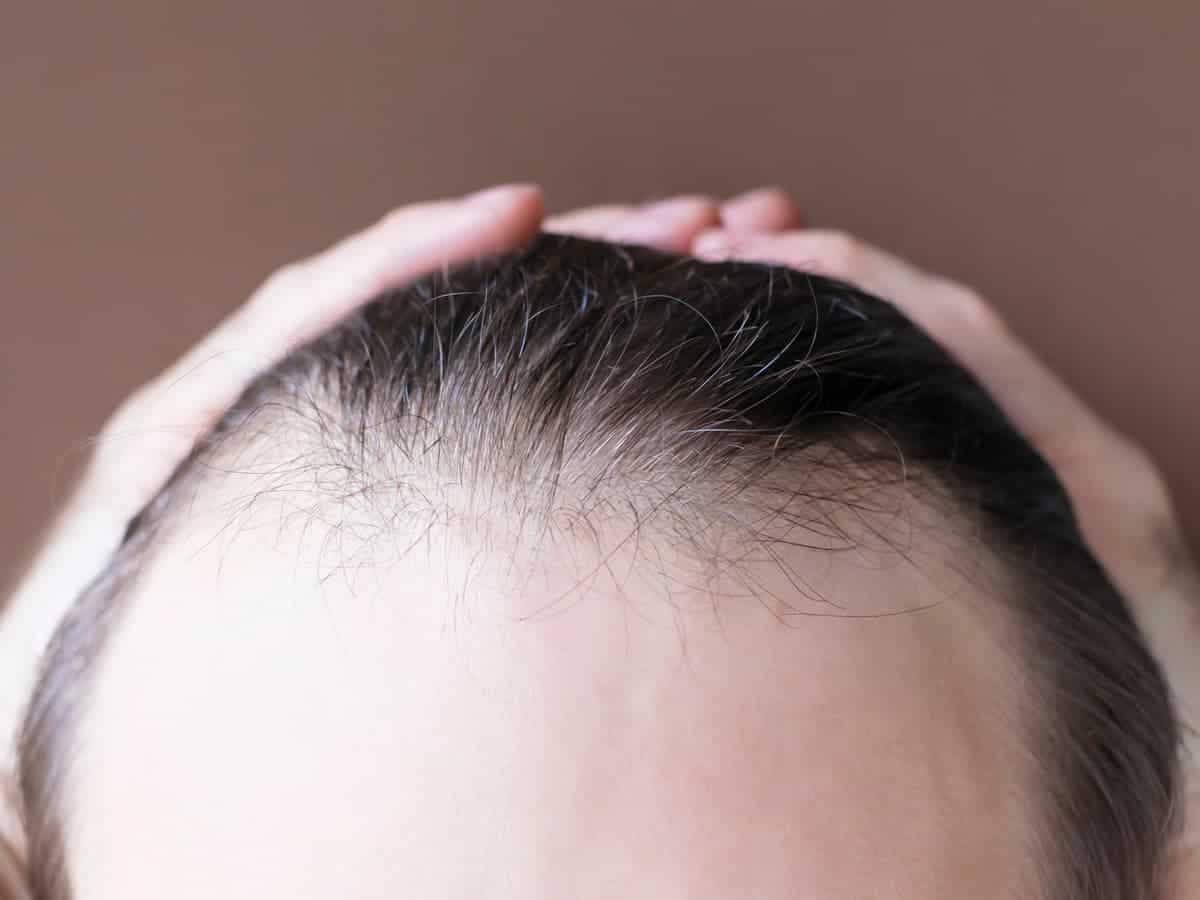
The Norwood scale, formally known as the Hamilton-Norwood scale, is the most widely recognized classification system used in dermatology to measure the progression of male pattern baldness, also called androgenetic alopecia. It was originally developed by Dr. James Hamilton in the 1950s and later revised and expanded by Dr. O’Tar Norwood in the 1970s, giving the scale its current name.
The system maps patterned hair loss across seven primary stages, with a few sub-variants that capture less common patterns. For anyone experiencing hair loss in men, the Norwood scale is essentially the first tool a qualified hair transplant surgeon will use to assess the degree of hair loss, evaluate available donor hair, and map out a realistic treatment plan.
What makes it especially useful is its universality. Whether you are consulting a specialist in Bangkok or visiting a clinic anywhere in the world, the Norwood classification speaks the same language. It removes guesswork from the conversation and gives both patient and doctor a clear, shared reference point.
Free Assessment
Not Sure How Many Grafts You Need?
Get a personalized treatment plan from Dr. Top's team. Takes 2 minutes to complete — no cost, no obligation.
The Stages of Male Pattern Baldness Explained
Here is a full breakdown of every Norwood stage, so you can identify where you currently stand on the hair loss chart.
Norwood 1: The Baseline
At Norwood 1, there is no significant recession of the hairline and no visible thinning. This is generally considered a normal adult male hairline. No treatment is needed at this stage, though some men with a strong family history of androgenetic alopecia may want to consider early preventative measures.
Norwood 2: The First Sign
Norwood 2 is where most men first notice something is changing. There is a slight recession at the temples, giving the hairline a subtle triangular or “M” shape. The rest of the scalp remains unaffected. This is often called a mature hairline, and while it is technically the earliest stage of hair loss classification, many men live comfortably at this stage for years without significant progression.
Norwood 3: Where Balding Begins
Norwood 3 represents the minimum threshold for clinically significant balding. The temples recede more deeply, and the frontal hairline takes on a more pronounced M, U, or V shape. Hair in the receded areas may be sparse or completely absent. For the 3 vertex subtype, the hairline stays roughly at Stage 3, but thinning also begins at the crown. This is often when men start actively seeking advice on hair loss treatments.
Norwood 4: Two Areas of Concern
At Norwood 4, the hairline recession is clearly more severe than Stage 3. Sparse hair or no hair at all covers the vertex, and the two areas of hair loss are separated by a band of hair connecting to the sides of the scalp. The scalp is visibly exposed across both the frontal region and the crown, making this stage hard to conceal without styling effort.
Norwood 5: The Bridge Narrows
Norwood 5 is a transitional stage. The two areas of hair loss are larger, and the band of hair between them is becoming narrower and sparser. At this point, the frontal and vertex regions of hair loss are beginning to visually merge. The bridge of hair is still technically there, but it is thinning noticeably.
Norwood 6: The Bridge Disappears
By Norwood 6, the connecting bridge of hair that once separated the frontal and vertex regions is gone or barely visible. The balding areas have merged into one large bald area on the top of the scalp. The sides and back of the head still retain relatively dense hair, which becomes the primary donor zone for anyone considering a hair transplant.
Norwood 7: The Most Advanced Stage
Norwood 7 is the most severe stage of male pattern hair loss. Only a band of hair remains around the sides and back of the head, often described as a horseshoe shape. The entire top of the scalp, from the front hairline to the crown, is bald or has only very sparse hair. Treatment planning at this stage requires a highly experienced surgeon and a careful assessment of donor hair availability.
A Visual Overview of the Norwood Scale
| Norwood Stage | Primary Hair Loss Area | Key Characteristic |
|---|---|---|
| Stage 1 | None | Normal or mature hairline |
| Stage 2 | Temples (slight) | Early hairline recession |
| Stage 3 | Temples (deep) | Clinically significant balding begins |
| Stage 3 Vertex | Crown | Crown thinning with mild frontal recession |
| Stage 4 | Temples + Crown | Two separate bald areas with a band of hair between them |
| Stage 5 | Temples + Crown (larger) | Narrowing bridge of hair |
| Stage 6 | Merged frontal + vertex | Bridge of hair disappears |
| Stage 7 | Entire top of scalp | Only side and back hair remains |
Who Developed the Hamilton-Norwood Scale?
The scale was originally created by Dr. James B. Hamilton in the 1950s, who first categorized male-pattern hair loss into a systematic framework. Dr. O’Tar Norwood later refined and expanded the system in 1975, adding sub-variants and improving its clinical accuracy. Today, it is referenced across the fields of dermatology, hair restoration surgery, and general medicine as the standard hair loss classification tool.
The American Academy of Dermatology recognizes androgenetic alopecia as the most common form of hair loss, affecting approximately 50 million men in the United States alone. Globally, more than 50% of men over the age of 50 experience some degree of male hair loss, and research suggests around 25% of men begin losing hair before the age of 21.
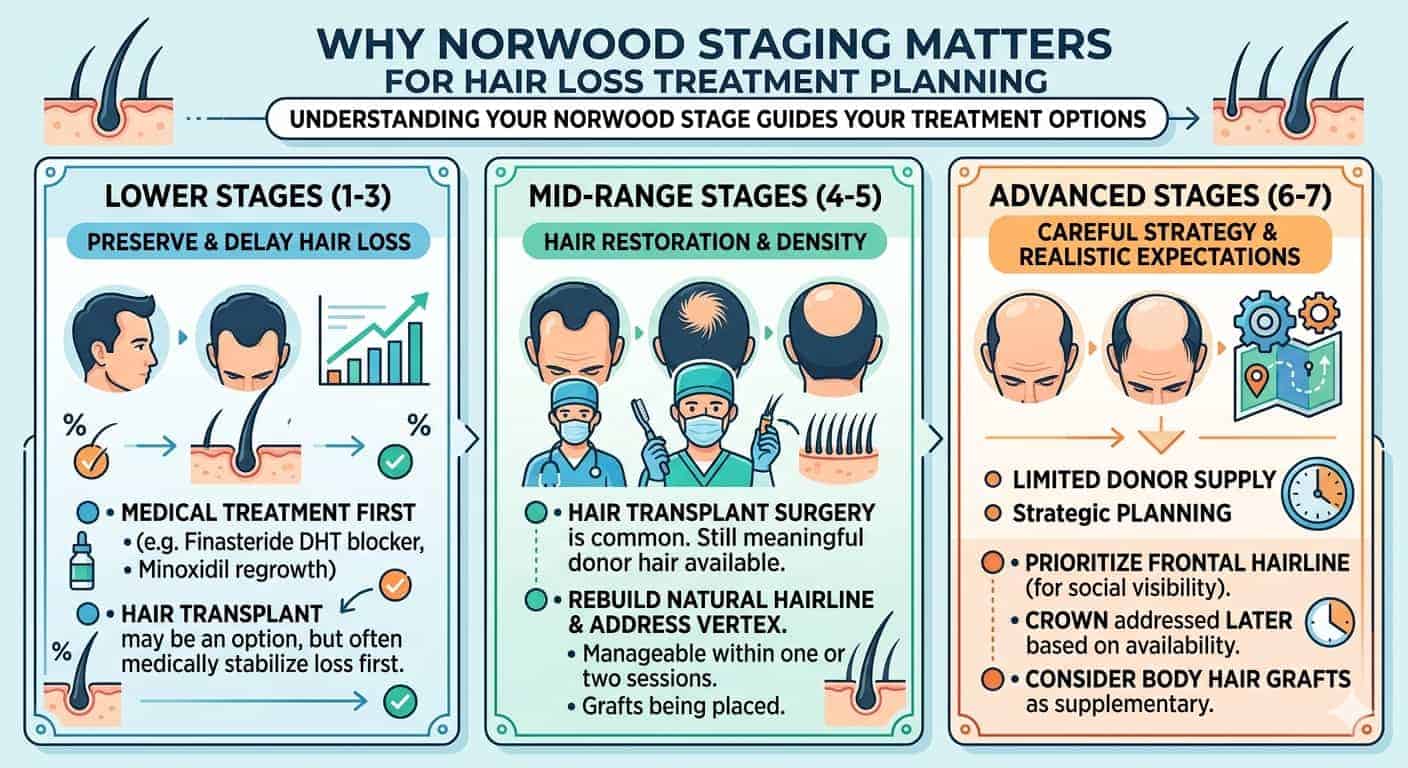
Why Norwood Staging Matters for Treatment Planning
Understanding your Norwood class is not just about labeling how much hair you have lost. It directly shapes the treatment options available to you and the strategies a surgeon uses to restore your hairline.
Lower Stages (Norwood 1 to 3)
At earlier stages, medical treatment is often the most appropriate first step. Options like finasteride, which blocks the hormone DHT responsible for shrinking hair follicles, have shown approximately a 70% response rate in patients with androgenetic alopecia. Minoxidil applied topically or taken orally can also help slow the progression of hair loss and in some cases promote regrowth.
The goal at these stages is to preserve existing hair and delay progression. A hair transplant may still be an option at Norwood 3, but surgeons will typically recommend stabilizing hair loss medically first before committing to a procedure, since future hair loss can affect long-term results.
Mid-Range Stages (Norwood 4 and 5)
Norwood 4 and Norwood 5 are where hair transplant surgery becomes a compelling solution for most patients. There is still a meaningful amount of donor hair available from the sides and back of the scalp, and the bald area, while significant, is still manageable within one or two sessions. A skilled surgeon can rebuild a natural-looking hairline while also addressing the vertex for a well-rounded restoration result.
Advanced Stages (Norwood 6 and 7)
Treatment planning at advanced stages requires careful strategy. The donor hair supply is more limited relative to the amount of scalp that needs coverage, so expectations must be realistic. Experienced hair transplant surgeons may prioritize the frontal hairline to restore the most socially visible area first, while the crown is addressed in subsequent sessions based on donor availability. In some cases, body hair grafts may be considered as a supplementary donor source.
Norwood Scale and Hair Transplant Feasibility
| Norwood Stage | Typical Transplant Candidacy | Notes |
|---|---|---|
| 1 to 2 | Not usually recommended | Medical treatment preferred |
| 3 to 3V | Good candidate | Stabilization of hair loss advised first |
| 4 to 5 | Strong candidate | High success potential with adequate donor hair |
| 6 to 7 | Feasible with proper planning | Realistic expectations and experienced surgeon required |
One important factor that often goes undiscussed is the quality and density of the donor zone. Two men at the same Norwood stage can have very different transplant outcomes depending on how dense their remaining hair is, how much scalp laxity they have, and how well their hair follicles respond to extraction and implantation.
At Dr. Top Hair Hospital, consultations involve a thorough assessment of both the recipient area and the donor zone before any treatment recommendation is made. The clinic performs approximately 300 or more hair transplant procedures annually and has treated patients ranging from 19 to 80 years of age, each with varying Norwood classifications and individual restoration goals.
How Progression Happens Without Treatment
One thing that trips up a lot of men is not knowing how quickly hair loss can advance. Without treatment, androgenetic alopecia tends to follow a slow but steady progression. Some men move through several Norwood stages over a decade; others notice rapid changes in just a few years. Genetics play the strongest role, with research indicating that sons have a significantly higher relative risk of significant hair loss if their fathers experienced baldness.
The key takeaway is this: the earlier you identify your Norwood stage and seek professional guidance, the more options you have. Once hair follicles miniaturize and eventually stop producing hair entirely, the window for medical treatment narrows significantly. That is why understanding the classification system is not just academic but genuinely actionable.
Getting an Accurate Assessment

A self-assessment using a Norwood scale chart can give you a rough idea of where you stand, but it is not a substitute for a professional consultation. Factors like diffuse thinning, hairline asymmetry, and rate of progression are best evaluated by a qualified specialist who can also examine donor hair quality.
Thailand has quietly established itself as one of the most respected destinations for hair restoration globally. The country offers significant savings compared to Western countries, backed by internationally certified medical facilities and highly skilled, English-speaking professionals. The Thai government has actively supported the country’s positioning as a medical tourism hub, making it an increasingly popular choice for patients traveling from the UK, Europe, Australia, and beyond.
Dr. Top Hair Hospital is led by a Diplomate of the American Board of Hair Restoration Surgery (ABHRS). With more than 20 years of experience and over 10,000 procedures performed, the team approaches every case by starting with one foundational question: where are you on the Norwood scale, and where do you want to be?
Know your Norwood level? See what it costs to treat in Thailand.
Conclusion
The Norwood scale gives your hair loss a clear, honest starting point. Once you know your stage, the path forward becomes a lot less overwhelming. Whether you are noticing the first signs of a receding hairline or already dealing with advanced hair loss, identifying where you stand on the chart is what makes everything else, from choosing the right treatment to setting realistic expectations, actually make sense. The good news is that more options are available today than ever before, and the right approach depends entirely on your specific situation, not a one-size-fits-all answer.
Wondering if you are a good candidate for a hair transplant? Take our 2-minute hair assessment to find out where you stand and what your options look like. No obligation, and your details stay completely private. Reviewed by our ABHRS-certified surgeon, with patients successfully treated from over 11 countries worldwide.