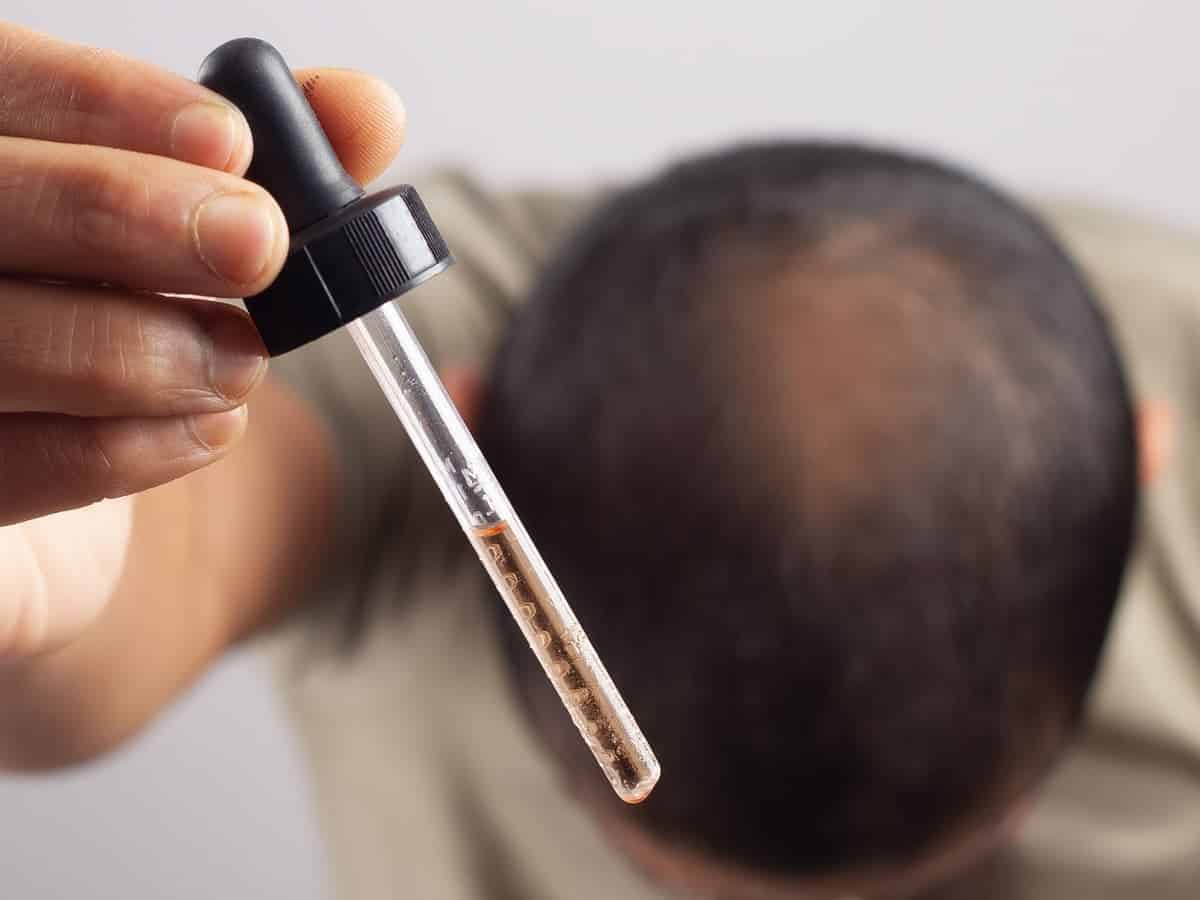

Figuring out the right hair loss treatment can feel overwhelming, especially with so many options thrown at you online. Minoxidil, finasteride, or a hair transplant? Each one works differently, and choosing the wrong approach can cost you time, money, and results. Let us break it all down in plain language so you can make a confident, informed decision.
Key Takeaways
- Minoxidil and finasteride are the only two FDA-approved hair loss medications, and they work best in the early stages of pattern hair loss to slow thinning and support regrowth.
- A hair transplant is the only treatment that can permanently restore hair to areas where follicles have already been lost, making it the go-to solution for advanced hair loss or a receded hairline.
- For many patients, the most effective long-term strategy combines all three: medications to protect existing hair and a transplant to restore what is already gone.
Understanding Hair Loss First
Before comparing treatments, it helps to understand what is actually happening when hair starts to thin.
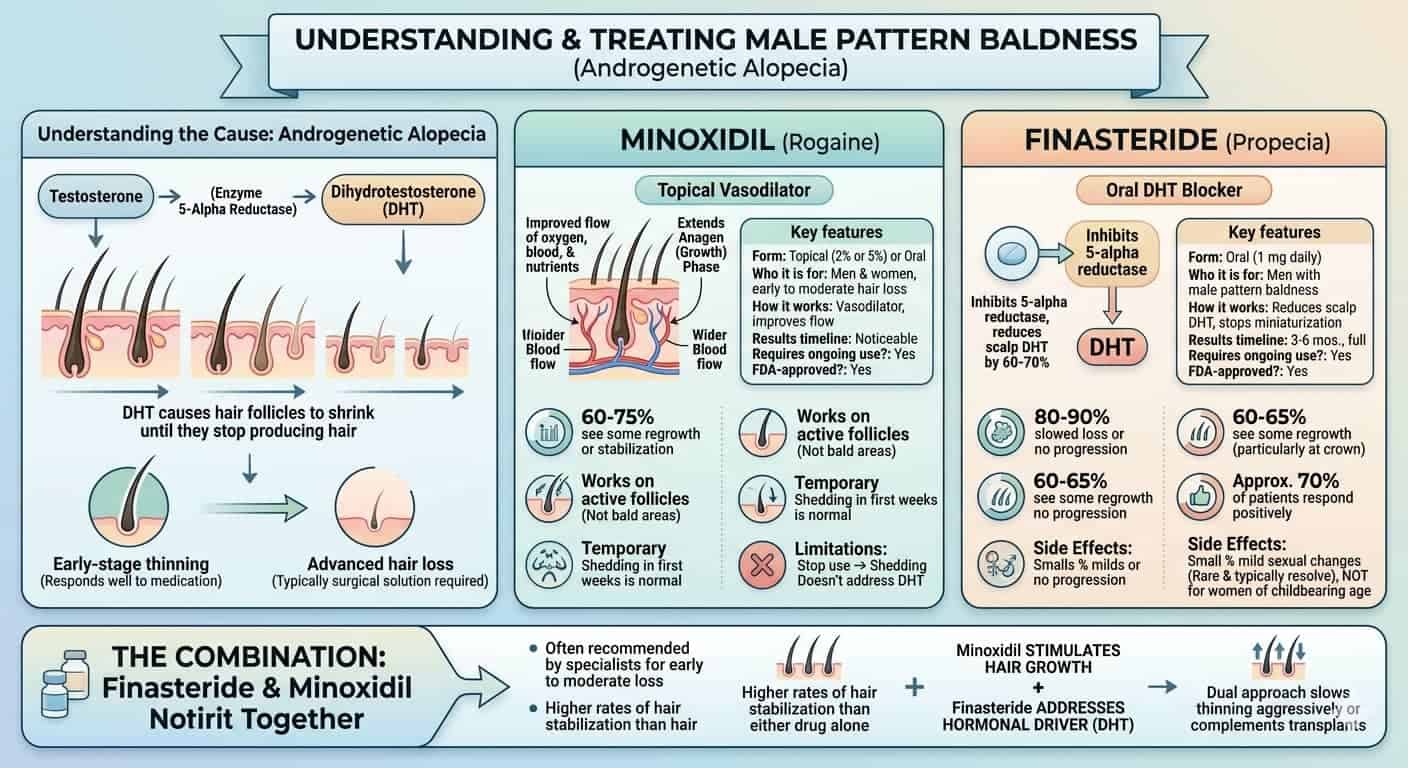
Most hair loss in men comes down to a condition called androgenetic alopecia, more commonly known as male pattern baldness. It is driven largely by a hormone called dihydrotestosterone (DHT), which is produced when the enzyme 5-alpha reductase converts testosterone to DHT. Over time, DHT causes hair follicles to shrink through a process called miniaturization, making each hair strand progressively thinner until the follicle stops producing hair altogether.
Free Assessment
Not Sure How Many Grafts You Need?
Get a personalized treatment plan from Dr. Top's team. Takes 2 minutes to complete — no cost, no obligation.
The stage of your hair loss matters enormously when deciding on treatment. Early-stage thinning responds well to hair loss medication, while advanced hair loss or a significantly receded hairline typically requires a more permanent, surgical solution.
What Is Minoxidil (Rogaine)?
Minoxidil, widely recognized under the brand name Rogaine, is one of the most commonly used topical hair loss treatments in the world. It was the first FDA-approved treatment for androgenetic alopecia and remains a frontline option for both men and women experiencing pattern hair loss.
How Topical Minoxidil Works
Minoxidil works as a vasodilator, meaning it widens blood vessels around the hair follicle to improve the flow of oxygen, blood, and nutrients to the scalp. This extends the anagen (growth) phase of the hair cycle, which helps existing hair grow thicker and longer over time. Topical minoxidil is applied directly to the scalp, typically twice daily.
Here is what the evidence actually shows:
| Feature | Minoxidil Detail |
|---|---|
| Form | Topical (2% or 5%) or oral |
| Who it is for | Men and women, early to moderate hair loss |
| How it works | Vasodilator; improves blood flow to follicles |
| Results timeline | Noticeable regrowth in 3–6 months |
| Requires ongoing use? | Yes, lifelong |
| FDA-approved? | Yes |
Studies show that around 60–75% of men who consistently use topical minoxidil see some degree of hair regrowth or stabilization. That said, it works best on areas of the scalp where follicles are still active. If an area is completely bald, minoxidil alone will not bring back dead follicles.
One thing many people do not expect: minoxidil can cause a temporary shedding phase in the first few weeks of use. This is normal. The follicles are cycling into a new growth phase, and the old hairs shed to make room for new growth.
Minoxidil Limitations
Minoxidil is not a permanent fix. The moment you stop using it, any hair gained tends to shed within a few months. It also does not address the root cause of hair loss, which is DHT activity. That is where finasteride steps in.
What Is Finasteride (Propecia)?
Finasteride, marketed under the brand name Propecia, is an oral hair loss medication that targets the actual hormonal cause of male pattern baldness. It is FDA-approved specifically for treating androgenetic alopecia in men and is taken daily at a dose of 1 mg.
How Finasteride Works
Finasteride inhibits 5-alpha reductase, the enzyme responsible for the conversion of testosterone to DHT. By blocking this enzyme, finasteride reduces DHT levels in the scalp by approximately 60–70%, which helps slow or stop the miniaturization of hair follicles. Because it targets the root cause of the problem, many specialists consider it the more effective of the two medications for male patients.
Clinical data shows that approximately 80–90% of men taking finasteride experience either slowed hair loss or no further progression, and around 60–65% see some degree of actual regrowth, particularly at the crown. At Dr. Top Hair Hospital, approximately 70% of patients who begin finasteride respond positively to the treatment.
| Feature | Finasteride Detail |
|---|---|
| Form | Oral (1 mg daily) |
| Who it is for | Men with male pattern baldness |
| How it works | Inhibits 5-alpha reductase; reduces scalp DHT |
| Results timeline | Noticeable change at 3–6 months, full at 12 months |
| Requires ongoing use? | Yes, lifelong |
| FDA-approved? | Yes |
Finasteride Side Effects to Know
A small percentage of men report mild sexual side effects such as reduced libido or erectile changes. These are generally rare and typically resolve after stopping the medication. It is also important to note that finasteride is not for women of childbearing age due to risks during pregnancy. The American Academy of Dermatology provides a helpful overview of what to expect from both medications.
Finasteride and Minoxidil Together
Using finasteride and minoxidil together is a combination that many hair restoration specialists often recommend for early to moderate pattern hair loss. The logic is straightforward: minoxidil stimulates hair growth while finasteride addresses the underlying hormonal driver. Studies suggest that combination therapy can outperform either medication alone, with higher rates of hair stabilization compared to using one drug by itself.
This dual approach is particularly useful for men in the early stages of androgenetic alopecia who want to slow hair thinning aggressively and buy time before considering surgery, or to complement the results of a hair transplant by protecting native hair in surrounding areas.
What Is a Hair Transplant?
A hair transplant is a surgical hair restoration procedure that permanently moves DHT-resistant hair follicles from a donor area (typically the back and sides of the scalp) to areas experiencing significant hair loss. Unlike medications, which can only slow or partially reverse thinning, hair transplantation is the only clinically proven way to restore hair to areas where follicles are no longer active.
FUE: The Gold Standard in Hair Transplant Surgery
Follicular Unit Extraction (FUE) is currently the most widely used technique in modern hair transplant surgery. Individual grafts are extracted one by one from the donor area and implanted precisely into the recipient site, allowing for natural-looking density and a hairline that suits your facial structure.
At Dr. Top Hair Hospital, the FUE process is guided by over 20 years of experience and more than 10,000 procedures performed. The team achieves approximately 90% graft survival rate using ATP graft preservation solution, which maintains greater than 95% cell viability throughout the procedure. A critical part of this process is implanting donor hair within six hours of extraction to preserve follicle integrity.
Here is a realistic timeline for what to expect after hair transplant surgery:
| Timeframe | Expected Result |
|---|---|
| 4 months post-transplant | Approximately 40–50% visible results |
| 6 months | Approximately 50% visible results |
| 9 months | Significant growth visible |
| 12 months | 80–90% of final result |
| 12–24 months | Full final results |
Why Thailand Is a Leading Destination for Hair Transplants
Thailand has become one of the most sought-after destinations for hair transplant surgery, and it is not just about cost. Thai clinics, particularly those based in Bangkok, are known for combining advanced surgical techniques with internationally trained medical teams, meticulous patient care, and transparent pricing.
Dr. Top Hair Hospital is one of the clinics at the forefront of this. Their lead surgeon is a Diplomate of the American Board of Hair Restoration Surgery (ABHRS). The clinic has been recognized at major international medical conferences including the AMWC Monaco as a top-3 finalist selected from over 1,000 submissions across 60 countries, the HOFS Awards 2024, and as an invited speaker at the IMCAS World Congress 2026 in Paris. Patients travel from over 11 countries including the UK, Germany, Australia, and France for treatment, drawn by the quality and the significantly lower cost compared to Western clinics.
Minoxidil vs Finasteride vs Transplant: Which Is Right for You?
The honest answer is: it depends on where you are in your hair loss journey. Here is a clear breakdown to help you figure that out:
| Minoxidil | Finasteride | Hair Transplant | |
|---|---|---|---|
| Best for | Early diffuse thinning, women | Early to moderate male pattern baldness | Advanced hair loss, receded hairline |
| Addresses root cause? | No | Yes (DHT reduction) | N/A (uses DHT-resistant follicles) |
| Permanent results? | No | No | Yes |
| Works on bald areas? | No | No | Yes |
| FDA-approved? | Yes | Yes | N/A (surgical procedure) |
| Requires lifelong use? | Yes | Yes | One-time (touch-ups optional) |
| Downtime | None | None | Minimal (Long Hair FUE: 24 hours) |
Use Medication If…
- You are in the early stages of hair loss (Norwood scale 1–3)
- Your hair is thinning but follicles are still active
- You want to slow hair thinning and are not ready for surgery
- You want to protect existing hair after a hair transplant
Consider a Transplant If…
- You have advanced hair loss or significant balding
- Your hairline has receded noticeably
- You want a permanent, one-time solution
- Medications alone have not delivered satisfying results
The Ideal Combination Approach
For most patients dealing with progressive alopecia, the smartest strategy is not either-or. A hair transplant restores lost hair permanently, while ongoing use of minoxidil and finasteride after surgery protects the surrounding native hair from further miniaturization. This combination helps preserve both transplanted hair and existing hair, giving you the most complete and lasting result.
Advanced Hair Loss and the Transplant Advantage

When hair loss has progressed to a Norwood scale of 4 or above, hair loss medication alone is rarely enough to achieve a meaningful cosmetic result. At this stage, the follicles in affected areas have already stopped producing hair, and no amount of topical application or DHT suppression will bring them back.
This is where surgical hair restoration offers a clear advantage. By transplanting DHT-resistant donor hair into the affected areas, a skilled surgeon can reconstruct a natural hairline and restore density in areas that would otherwise remain permanently bald. At Dr. Top Hair Hospital, procedures can involve up to 5,000 grafts per session using Long Hair FUE, with standard density placement of 40–50 grafts per cm² and high-density options reaching 60–70 grafts per cm² for patients who need greater coverage.
If a transplant is the right choice, here’s what it costs in Thailand.
Still Not Sure Which Path Is Right for You?
Here is the bottom line: if you are still in the early stages of hair thinning, starting with finasteride and minoxidil is a smart, clinically backed move. If you are dealing with significant balding or a receded hairline, a hair transplant is likely the most effective route to lasting results. And if you want to protect every strand you have and everything you restore, combining both is the gold standard approach most specialists would recommend.
Wondering if you are a good candidate? Take our quick 2-minute hair assessment to find out which treatment fits your situation best. No obligation, and your details stay completely private. Reviewed by our ABHRS-certified surgeon, it is the easiest first step you can take toward real, lasting results.