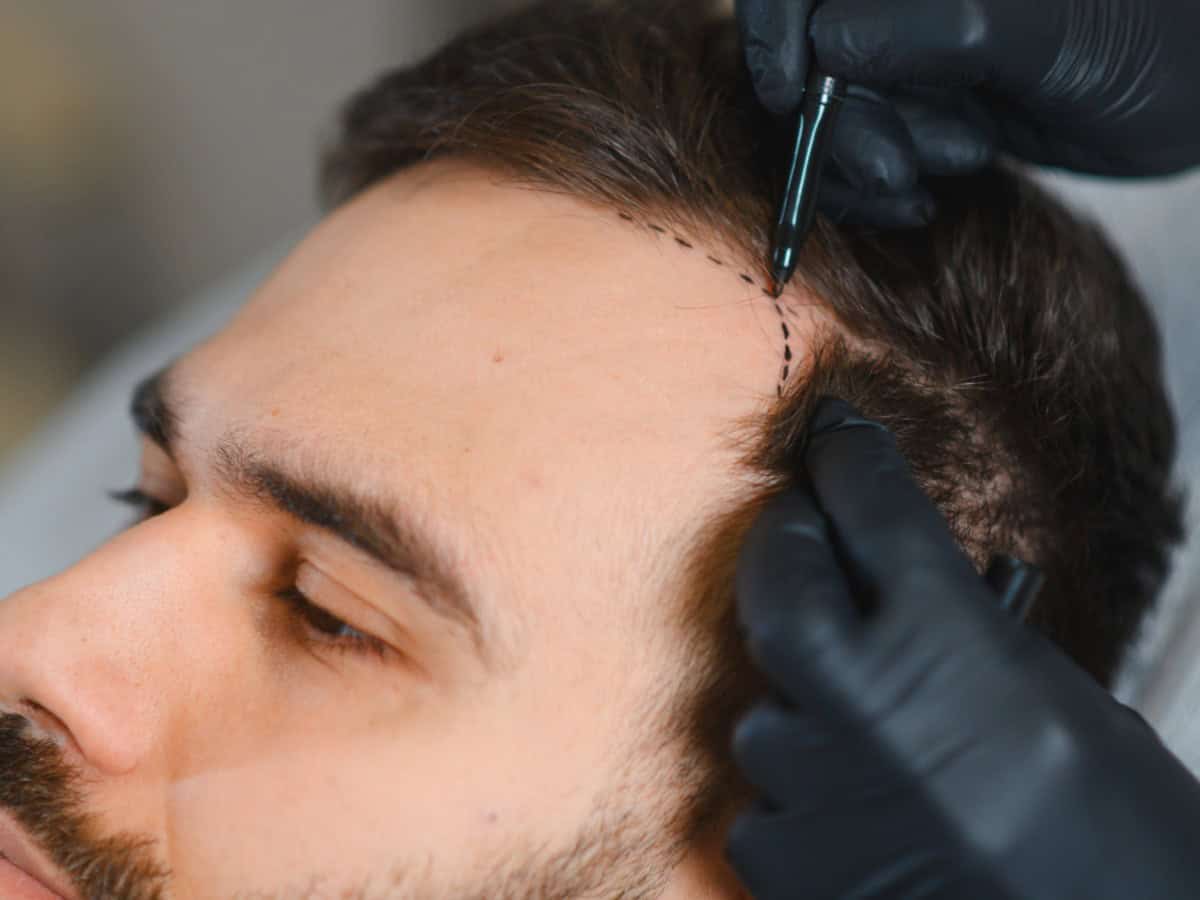

Thinking about getting a hair transplant abroad? Thailand and Turkey are consistently two of the most searched destinations, and for good reason. But beyond pricing and before-and-after photos, what actually separates these two countries when it comes to safety, accreditation, and regulation? If you are serious about making a sound decision, this guide covers everything you need to know about hair transplant safety in Thailand vs Turkey before you book anything.
Key Takeaways:
- Thailand’s hair transplant safety is anchored in a nationally regulated healthcare system and internationally accredited hospitals, giving patients institutional-level oversight with every procedure.
- Turkey enforces a procedure-specific licensing framework for hair transplant clinics, including mandatory Ministry of Health inspections and minimum pricing rules designed to protect patients from unqualified operators.
- Regardless of the country you choose, what ultimately determines your outcome is the specific clinic’s accreditation, surgeon credentials, and post-operative care structure, not just the destination.
Why Patients Compare Hair Transplant Thailand vs Turkey
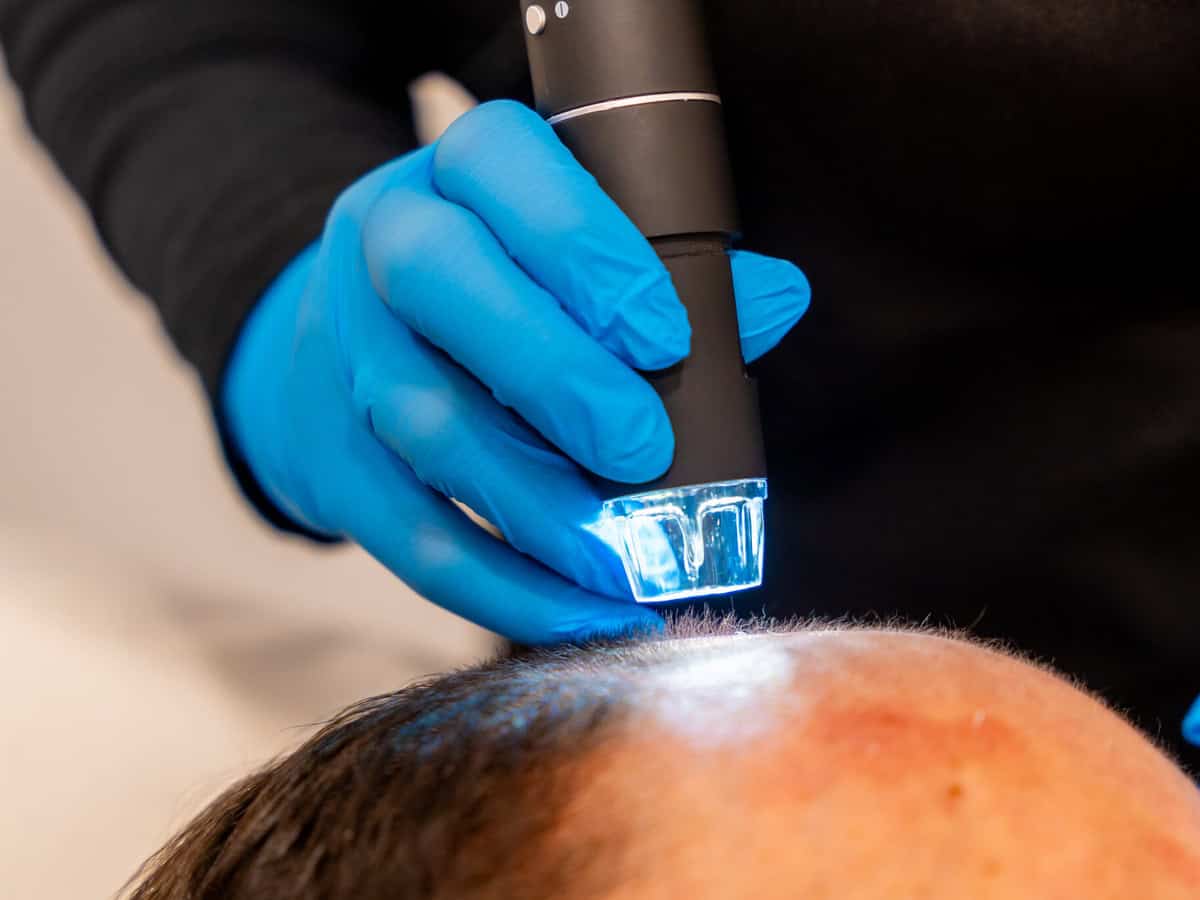
Over the past decade, both Thailand and Turkey have grown into leading countries for hair transplants, but for different reasons. Turkey has become one of the world’s top destinations for hair transplant tourism, drawing close to one million patients per year, largely because of competitive pricing and a well-developed network of dedicated transplant clinics. Thailand, meanwhile, has built its reputation on the strength of its private hospital infrastructure and a healthcare system consistently ranked among the best in Southeast Asia.
The comparison between hair transplant Thailand vs Turkey is valid because both countries have the technical capability and clinical experience to deliver quality results. What often gets overlooked, however, is how safety standards, accreditation, and regulatory frameworks differ between them. Those differences matter far more than most patients realize when they first start researching.
Free Assessment
Not Sure How Many Grafts You Need?
Get a personalized treatment plan from Dr. Top's team. Takes 2 minutes to complete — no cost, no obligation.
For patients based in Asia or the Asia-Pacific region, traveling to Thailand also carries a geographic and logistical advantage that Turkey simply cannot offer. Shorter travel times, easier logistics, and a familiar cultural setting all contribute to a smoother overall experience.
Hair Transplant Regulations in Thailand and Turkey
Regulations are the backbone of any safe hair transplant industry. The two countries take meaningfully different approaches, and understanding both gives you a clearer picture of what to expect when comparing hair transplant safety in Thailand vs Turkey.
Turkey’s Regulatory Framework for Hair Transplant Clinics
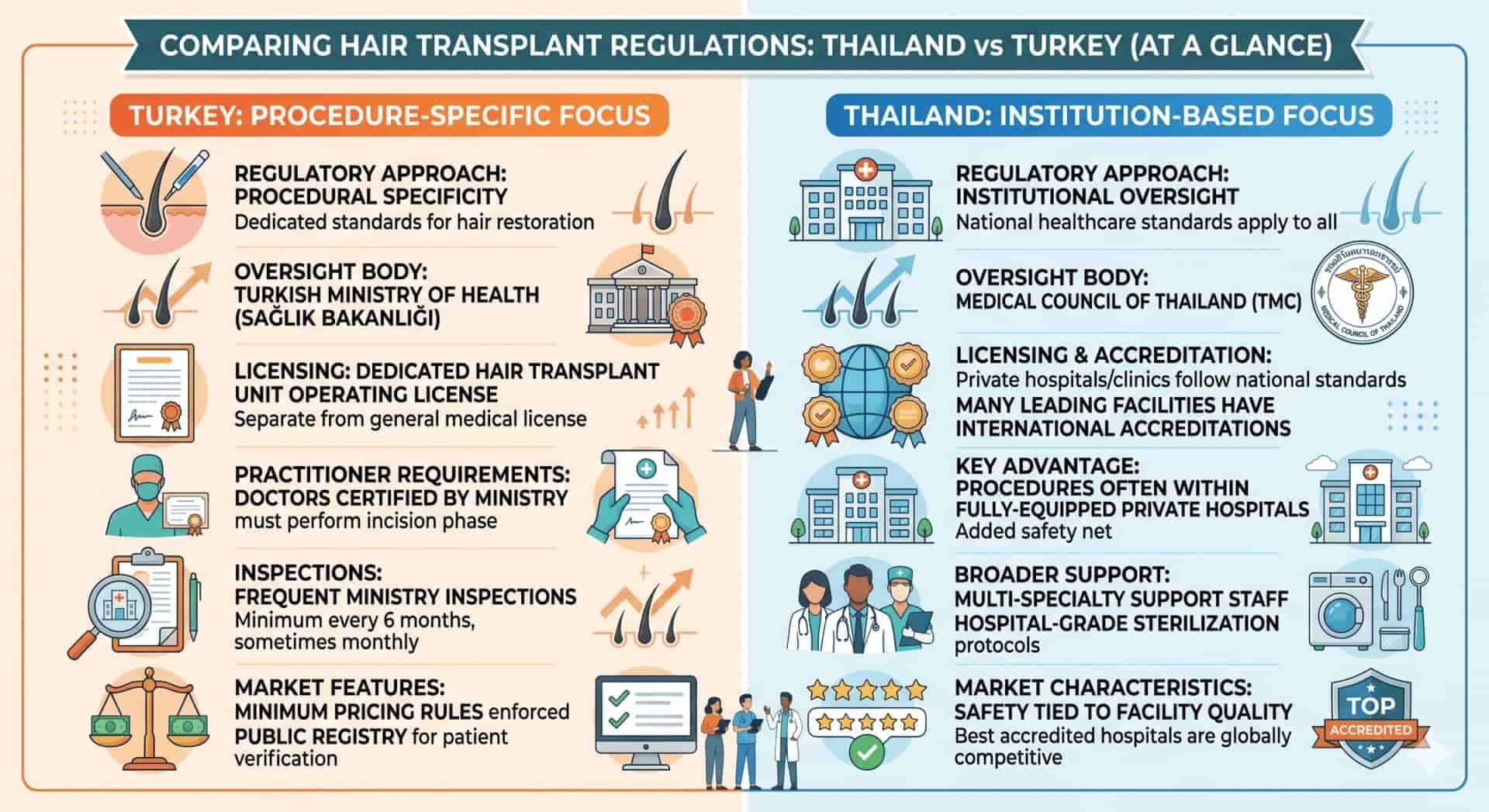
Turkey has developed one of the most procedure-specific regulatory environments for hair transplantation in the world. The Turkish Ministry of Health requires all hair transplant clinics to hold a dedicated Hair Transplant Unit Operating License, which is entirely separate from a general medical license. It applies specific standards to the practice of hair restoration surgery at every level.
Key elements of Turkey’s regulations include:
- Only doctors certified by the Ministry of Health may perform the incision phase of a hair transplant procedure
- Clinics serving international patients must hold a separate medical tourism license
- Ministry inspections are carried out at a minimum every six months, with some facilities reviewed monthly
- Minimum pricing rules are enforced to prevent unqualified operators from undercutting the market with dangerously cheap procedures
- Licensed clinics are listed in a publicly accessible registry that patients can verify independently
This level of procedural specificity is one of the clearest reasons why hair transplant safety in Turkey is frequently cited as a strength. That said, the sheer volume of Turkey’s hair transplant industry means clinic quality still varies considerably. Independent verification remains essential regardless of how established a clinic claims to be.
Thailand’s Medical Standards for Hair Restoration Surgery
Thailand’s regulatory approach is institution-based rather than procedure-specific. All licensed physicians practicing in the country operate under the oversight of the Medical Council of Thailand, which governs clinical conduct and professional standards across all specialties. Private hospitals and clinics must comply with national healthcare standards, and many leading facilities hold internationally recognized accreditations that go well beyond local requirements.
One of Thailand’s genuine structural advantages is that a significant number of hair transplant procedures here are performed within fully equipped private hospitals rather than standalone clinics. That institutional setting adds multi-specialty support staff, hospital-grade sterilization protocols, and a broader clinical safety net to every procedure. It is a meaningful difference that does not always exist in dedicated transplant-only facilities, wherever they operate.
What this means in practice is that safety in Thailand’s hair transplant landscape is closely tied to the quality of the facility you select. At properly accredited hospitals, where procedures are carried out alongside the full infrastructure of a regulated medical institution, the standards are fully competitive with the best anywhere in the world.
Accreditation in Thailand vs Turkey: What the Credentials Mean
Accreditation is the clearest, most verifiable indicator of safety and quality in any medical setting. Here is how the two countries compare across the most important markers:
| Accreditation Factor | Thailand | Turkey |
|---|---|---|
| Hospital-Level Accreditation | JCI-accredited hospitals available | JCI-accredited hospitals available |
| Procedure-Specific Licensing | Not mandated by law; varies by facility | Required by Turkish Ministry of Health |
| ISHRS Membership | Available at select leading clinics | Common across established clinics |
| Government Inspection Frequency | Aligned with general healthcare standards | Minimum every 6 months; some monthly |
| International Patient Licensing | Not separately mandated | Required for clinics serving foreign patients |
Joint Commission International (JCI) accreditation is widely regarded as the gold standard in global healthcare quality. Both Thailand and Turkey have JCI-accredited facilities, but not every hair transplant clinic in either country holds this status. Confirming JCI accreditation independently is always a smart step before committing to any clinic.
Membership in the International Society of Hair Restoration Surgery (ISHRS) is one of the strongest indicators of surgeon-level quality. The ISHRS is the largest international medical association dedicated to hair restoration surgery, and its position is clear: all critical aspects of a hair transplant procedure, from diagnostic evaluation to hairline design and graft placement, should only be performed by a licensed and appropriately trained physician. Surgeons who hold and maintain ISHRS membership demonstrate a consistent commitment to that standard.
Hair Transplant Techniques in Thailand and Turkey
Both countries offer the leading techniques in modern hair transplantation, and this is one area where the two are fairly evenly matched.
- FUE (Follicular Unit Extraction): The most widely performed hair transplant method globally, minimally invasive and suited to most hair loss patterns and hair types
- DHI (Direct Hair Implantation): Uses a specialized implanter pen for more precise graft placement, particularly effective for hairline refinement and density restoration
- Sapphire FUE: A refinement of standard FUE using sapphire-tipped blades for smaller, cleaner incisions; widely offered across Turkey and available at select accredited clinics in Thailand
The technique itself is only one part of the equation. The surgical environment, sterilization standards, and the experience of the surgeon are what determine how well a technique translates into actual results. At a fully accredited facility in Thailand, these procedures are performed within clinical environments that meet hospital-grade standards, which adds a layer of safety and oversight that smaller standalone clinics elsewhere may not always be able to match.
Hair Transplant Cost Thailand vs Turkey
Cost is one of the biggest factors driving the Thailand vs Turkey hair transplant conversation. The two countries sit at noticeably different price points, and it is worth looking at that honestly.
| Cost Factor | Thailand | Turkey |
|---|---|---|
| Average Procedure Cost | $3,000 to $8,500 | $1,700 to $5,000 |
| All-Inclusive Packages | Available at select clinics | Very common across the industry |
| Typical Package Inclusions | Varies by clinic | Often includes accommodation and transfers |
| Pricing Transparency | Generally clear in accredited facilities | Varies; some packages lack full breakdown |
| Regulatory Price Floor | Not mandated | Enforced by Ministry of Health |
Turkey is notably more affordable, and hair transplant packages in Turkey frequently bundle accommodation, airport transfers, and follow-up care into a single all-inclusive price. That said, the lowest-priced options in Turkey warrant scrutiny. Minimum pricing rules were introduced specifically because extremely cheap procedures were being linked to unqualified practitioners operating outside legitimate clinical settings.
Hair transplant cost in Thailand is generally higher, but the price typically reflects a procedure carried out in a fully accredited hospital-grade facility with experienced medical staff and consistent care standards throughout. When you look at the full picture, total value carries far more weight than the headline number.
Success Rates and Hair Transplant Results in Thailand vs Turkey
Success rates offer a useful benchmark, provided they come from accredited facilities rather than promotional content. Looking at published data across reputable clinics:
- Turkey: Well-established clinics report hair transplant success rates between 90 and 95 percent, with graft survival rates reaching 90 to 98 percent at the best-equipped facilities. The high volume of procedures performed annually gives Turkish surgeons broad exposure across different hair types and hair loss patterns.
- Thailand: Accredited clinics typically report success rates in the 85 to 92 percent range, with results closely tied to the specific clinic and surgical team. Surgeons at leading Thai facilities often carry deep specialty experience and maintain international professional memberships.
Hair transplant results in Thailand are fully competitive with international benchmarks when the procedure is performed at the right facility with a properly qualified surgeon. The scale of Thailand’s hair transplant industry is smaller than Turkey’s, but that also means patients at dedicated Thai clinics often receive a higher level of individual surgeon involvement throughout the entire process.
Aftercare is another dimension worth evaluating carefully. Turkish clinics have invested in structured remote follow-up systems, including digital check-ins and bundled post-procedure support. Leading clinics in Thailand offer equivalently strong follow-up care, and the hospital-based clinical setting gives patients ongoing access to multi-specialty support if any post-procedure concerns arise.
Medical Expertise in Thailand vs Turkey
Surgeon Qualifications and Credentials
In Turkey, hair transplant surgeons are required by law to hold a Ministry of Health-issued practitioner certificate before they can perform the incision phase of any procedure. Assistants must hold their own certified qualifications and work under direct physician supervision at all times. This creates a clearly defined chain of clinical accountability for every procedure.
In Thailand, hair transplant surgeons typically come from plastic surgery or dermatology backgrounds. Surgeons at established clinics pursue continuous international training to stay current with evolving techniques and patient care standards. At Dr. Top Hair Hospital, our medical team undergoes ongoing training in both Europe and Asia, ensuring that the expertise we bring reflects best practices from multiple international clinical perspectives, not just a single regional approach.
Surgeon Volume and Exposure Compared to Turkey
Turkey handles a significantly higher volume of hair transplant procedures annually, which gives surgeons there broad hands-on experience across hair types, hair loss stages, and ethnicities. Thailand sees fewer international hair transplant patients overall, but the clinics that specialize in this area tend to offer a consistently more personalized experience, with the surgeon actively engaged at every stage of the patient journey. For patients who want that level of dedicated involvement, the difference is meaningful.
What to Check Before Choosing a Clinic
Regardless of whether you are considering Thailand or Turkey for your hair transplant, these are the non-negotiable checks before committing to any clinic:
- Facility accreditation: Confirm JCI accreditation or an equivalent national healthcare certification is current and independently verifiable
- Surgeon credentials: Verify the performing surgeon’s qualifications, specialty background, and any ISHRS or recognized board memberships
- Before-and-after documentation: Request documented case outcomes specific to your hair loss pattern and hair type, not just generic gallery images
- Pre-procedure consultation: Any reputable clinic will complete a thorough candidacy assessment before any payment or booking is processed
- Informed consent process: Risks, realistic outcomes, and alternatives should be clearly communicated before you agree to anything
- Post-operative care plan: Understand what follow-up looks like, how long it covers, and whether it applies once you return home after the procedure
- Transparent pricing: A full cost breakdown with no ambiguous fees or undisclosed charges is a basic standard at any legitimate provider
- Licensing verification: In Turkey, cross-check the Ministry of Health registry; in Thailand, confirm the hospital or clinic’s certifications directly before booking
Hair Transplant Tourism in Thailand vs Turkey
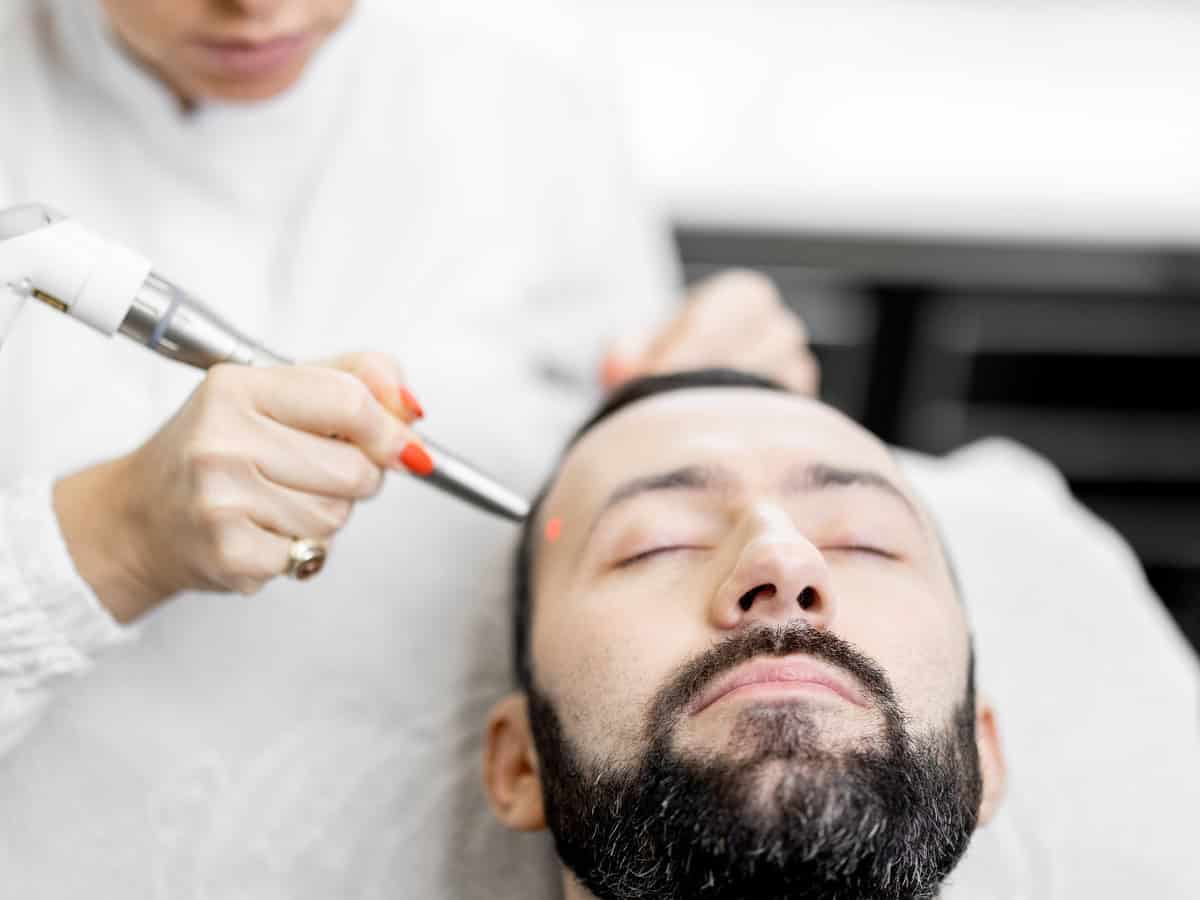
Both countries have built mature medical tourism ecosystems, but they offer meaningfully different patient experiences. Turkey, and Istanbul in particular, has become deeply specialized around hair transplant tourism. The infrastructure of patient coordinators, multilingual support staff, and all-inclusive packages is highly developed, and the volume of available clinics gives patients a wide range of options across different price points.
Traveling to Thailand offers something distinctly different. Thailand has one of Asia’s most respected medical tourism ecosystems, built over decades on world-class private hospitals and a patient care culture that consistently prioritizes thoroughness and comfort. For patients in Asia or the Asia-Pacific region, the practical advantages of traveling to Thailand over Turkey are considerable, from shorter travel times to simpler overall logistics.
The recovery environment matters too. Thailand’s combination of high-quality clinical care, comfortable surroundings, and accessibility to wellness services makes it a genuinely compelling choice for patients who want their hair restoration surgery experience to feel considered rather than rushed.
Conclusion
Both Thailand and Turkey bring real strengths to the hair transplant conversation. Turkey offers strong procedure-specific regulation and high surgical volume. Thailand offers hospital-grade clinical infrastructure, personalized care, and a healthcare system trusted by patients from around the world. The safest decision comes down to the clinic you choose, not just the country on the map.
If you are considering a hair transplant and want honest guidance from a qualified team that puts your results first, reach out to Dr. Top Hair Hospital. A short personalized assessment is the clearest first step. It takes about two minutes, there is no obligation, and it gives you a grounded starting point before any decisions are made.
Wondering if you’re a good candidate? Take our free 2-minute assessment to find out — no obligation, and your details stay completely private.
Your information stays private.
Reviewed by Dr. Top, Diplomate of the American Board of Hair Restoration Surgery (ABHRS).
The destination comes second. Your candidacy comes first.