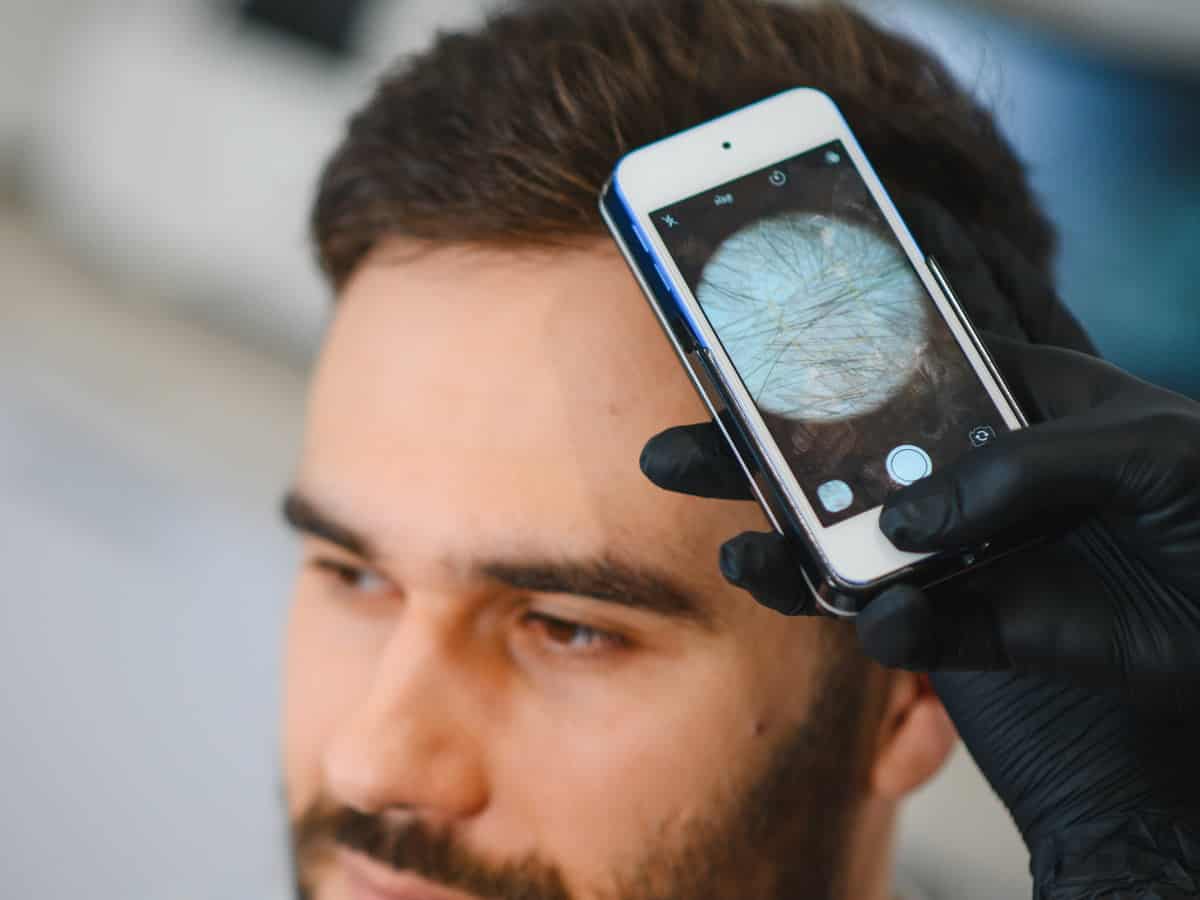

Scrolling through hair transplant before and after results can be exciting, but it can also create unrealistic expectations if you do not know what to look for. I like to think the best way to evaluate results is to focus on timeline, technique, and whether the outcome looks natural in real life. That is where honest reading matters most.
Key Takeaways
- Hair transplant results are not instant. Approximately 80-90% of the final result is usually visible by 12 months, with full results continuing to mature up to 24 months.
- Before-and-after photos are only useful when you know how to read them honestly. Timing, lighting, angle, graft count, and hair length can completely change what the result seems to show.
- A strong outcome depends on the right technique, a realistic treatment plan, and a healthy donor area, not just the number of grafts.
What Hair Transplant Before and After Photos Actually Show
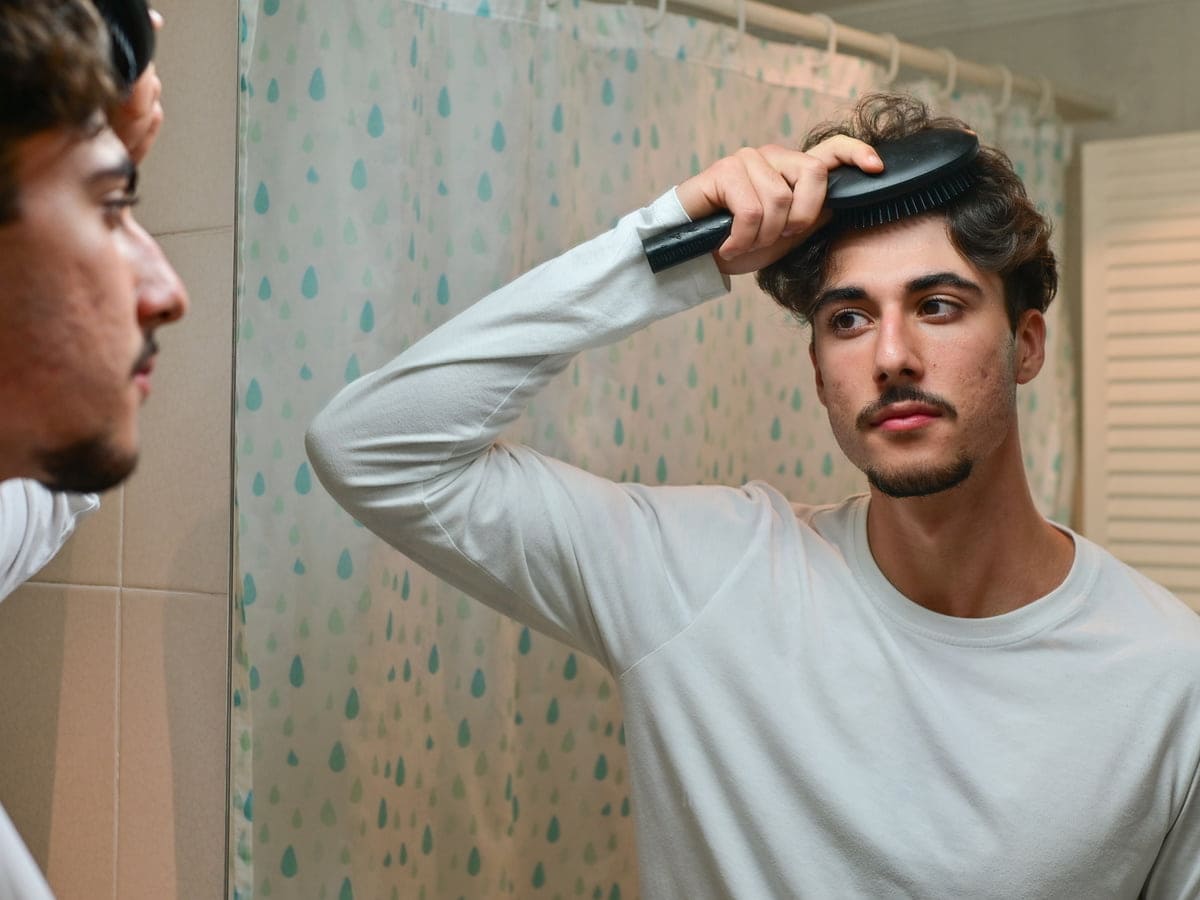
When I review transplant before and after photos, I do not look at the images alone. I look at the full context behind them, because a photo set without timing, lighting, and graft details can be misleading. A good comparison should tell a full story, not just show a dramatic change.
The “before” photo usually reflects the starting point, such as a receding hairline, thinning hair, or more advanced baldness. The “after” photo should ideally be taken at least 12 months after the hair transplant procedure, because that is when most patients reach about 80-90% of their final results. Full results can continue developing for 12 to 24 months, especially in cases involving lower density or more advanced hair loss.
You can also learn a lot from the quality of the photo itself. Natural lighting, consistent angles, and similar hair length matter because they make the comparison more honest. If one photo is wet hair and the other is styled, the result may look better or worse than it really is.
Free Assessment
Not Sure How Many Grafts You Need?
Get a personalized treatment plan from Dr. Top's team. Takes 2 minutes to complete — no cost, no obligation.
The Real Hair Transplant Results Timeline
A realistic hair transplant journey takes patience. Many patients expect new hair growth to appear quickly, but the process is gradual and follows a predictable pattern. Understanding the timeline helps make the experience feel less stressful.
At Dr. Top Hair Hospital, our timeline is typically explained like this:
| Timeframe | Expected Progress |
|---|---|
| 4 months post-transplant | Approximately 40-50% visible results |
| 6 months post-procedure | Around 50% visible results |
| 9 months | Significant growth and better density |
| 12 months | About 80-90% of the final result |
| 12-24 months | Full final results |
It is also normal for transplanted hair to shed during the first few weeks. This does not mean the transplant failed. The follicle remains under the scalp and starts a new growth cycle later. For many people, the most noticeable improvement begins between months 6 and 9, when the hairline and density become much easier to see.
How to Read FUE Hair Transplant Results Honestly
FUE, or follicular unit extraction, is one of the most widely used hair transplantation methods because it removes individual follicular units rather than a strip of tissue. That usually means less visible scarring in the donor area and a more natural-looking result when done well. But even with FUE hair transplant, the result depends on the surgeon’s skill, planning, and implantation technique.
When I look at FUE results, I pay attention to more than the headline number of grafts. I want to know how the grafts were placed, whether the hairline looks soft and natural, and whether the donor area still looks healthy. A good result should blend with the patient’s existing hair and never look forced.
Here are a few things worth checking in real hair transplant results:
- Does the hairline match the face and age of the patient?
- Does the density look balanced across the frontal area and midscalp?
- Is the donor area preserved without obvious scar or overharvesting?
- Does the result still look natural from different angles?
For reference, Dr. Top Hair Hospital typically works with a standard density of 40-50 grafts per cm², and in high-density cases may go up to 60-70 grafts per cm². The clinic can also perform up to 5,000 grafts in a session for Long Hair FUE when appropriate. The critical implantation window is within 6 hours of extraction, so precision and workflow matter a great deal.
What Makes a Natural-Looking Result
The most convincing hair transplant results are usually the ones that look understated. A natural hairline is rarely perfectly straight. It should follow the patient’s existing hair pattern, facial shape, and long-term hair loss pattern. If it looks too sharp or too dense in the front, it can start to look artificial.
Angle and direction are just as important as density. Real hair does not grow in one uniform direction, so the transplanted hair should not either. A skilled hair restoration plan accounts for the crown, frontal zone, temples, and any thinning areas separately, rather than treating the scalp like one flat surface.
At Dr. Top Hair Hospital, that process is supported by more than 20 years of experience in hair restoration, ABHRS-certified surgical leadership, and ongoing training in Europe and Asia. Those details matter because good results are usually the product of careful planning, not just advanced equipment.
Red Flags in Before-and-After Photos
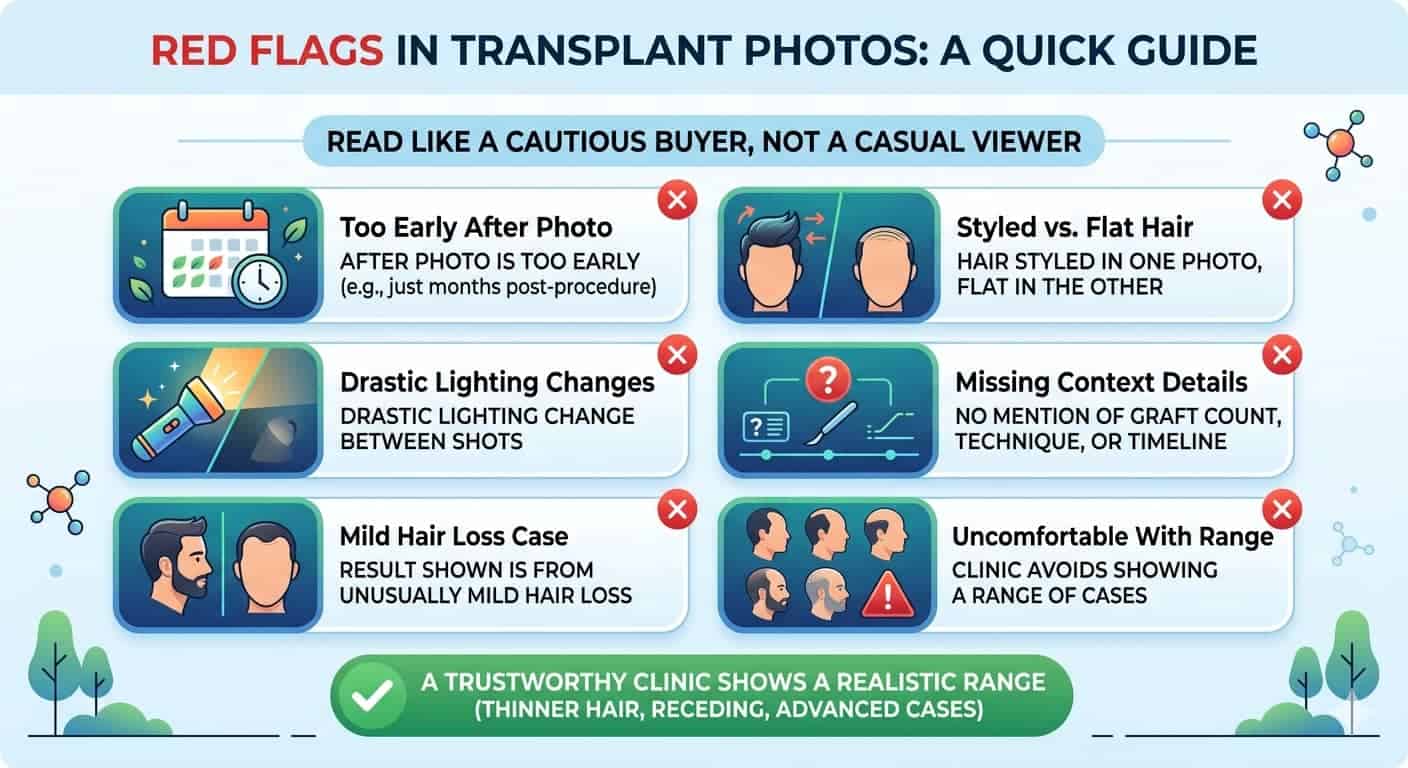
Not every clinic presents transplant before and after photos in a transparent way. Some image sets are honest, but others leave out key context that makes the result look stronger than it really is. That is why I always suggest reading images like a cautious buyer, not a casual viewer.
A few common red flags include:
- The after photo is taken too early, such as only a few months post-procedure.
- The lighting changes dramatically between the before and after shots.
- The patient’s hair is styled in one image and flat in the other.
- There is no mention of graft count, technique used, or timeline.
- The result shown is unusually mild hair loss, which makes the change look bigger than it is.
A trustworthy clinic will usually be comfortable showing a range of cases, including thinner hair, receding hairlines, and more advanced cases. That gives you a more realistic picture of what patients can expect.
Graft Count and Hair Density
A lot of people focus on the number of grafts, but graft count alone does not explain the full result. A graft can contain one to four hairs, so 2,000 grafts can produce very different coverage depending on the donor hair and the pattern of loss. What matters more is whether the grafts were used strategically.
For example, a patient with a receding hairline may need fewer grafts than someone with extensive thinning across the entire scalp. Some patients only need work in thinning areas, while others may need a broader restoration plan. That is why the initial consultation should focus on the whole picture, not just the visible bald spot.
It also helps to think in terms of hair density rather than graft count alone. A carefully designed transplant can create a natural appearance even if the patient does not have a full head of hair restored in a single session. A good result is not always about maximum coverage. It is about placing hair where it creates the most believable improvement.
Supporting Treatments and Long-Term Care
A hair transplant is often only one part of the full restoration process. Depending on the patient, supportive treatments can help protect existing hair and improve the visual result over time. That includes treatments such as PRP, SMP, and medical therapy for ongoing hair loss.
PRP, or platelet-rich plasma, is often used to support scalp health and recovery. At Dr. Top Hair Hospital, ERP is also used as an enhanced regenerative option, and the clinic reports approximately 30% visible improvement on average, with performance typically stronger than standard PRP. SMP, or scalp micropigmentation, can also help create the appearance of density or camouflage a scar in selected cases.
Medication may also be part of the plan. Finasteride is often used for androgenetic alopecia, and the response rate is typically around 70% of patients. Dutasteride can suppress DHT by approximately 98%. These treatments do not replace transplantation, but they can help preserve original hair and support longer-lasting results.
Why Thailand Is a Strong Choice
Thailand has become a major destination for hair restoration because patients can access advanced medical care in a setting that is often more convenient and cost-effective than many Western markets. That matters especially for international patients who want a quality procedure without a long waiting period or excessive travel complexity.
Dr. Top Hair Hospital is based in Bangkok and serves patients from more than 11 countries, including the UK, Germany, Australia, New Zealand, Italy, France, Spain, India, Kenya, Canada, and across Asia. The center is backed by globally recognized certifications, and the team has been trained continuously in Europe and Asia to stay aligned with international standards.
For patients comparing options, Thailand often stands out because it combines skilled surgical expertise, a strong medical tourism infrastructure, and access to modern hair transplant techniques. It is a practical choice for patients who want a professional experience with careful follow-up and a strong focus on natural-looking outcomes.
What to Expect at Consultation
A good consultation should feel informative, not rushed. The goal is to understand your hair loss pattern, the condition of your donor area, and the level of coverage that is actually realistic for your goals. That is where a customized treatment plan becomes important.
During an initial consultation, I would expect a clinic to discuss the number of grafts needed, the likely recovery process, the expected growth timeline, and whether you are a strong candidate for FUE, SMP, or a combination approach. A no-obligation consultation is especially helpful because it gives you space to ask questions before making a decision.
For many patients, the most useful part of the consultation is simply getting a realistic expectation of what is possible. If the plan matches your hair loss pattern and your donor area is healthy, the result is usually much easier to trust.

Conclusion
Hair transplant before and after results are most useful when you know how to read them honestly. Check out our real patient results gallery, and see that the best way to judge them is by looking at timeline, graft count, hair density, and whether the final result still looks natural in everyday life.
Wondering if you’re a good candidate? Take our Get My Personalized Hair Assessment (2 minutes) to find out, no obligation, and your details stay completely private. Reviewed by Dr. Top, ABHRS-certified.