Staring at more hair in the shower drain than on your head is stressful, and narrowing down treatments feels even harder. You have probably heard about PRP therapy and hair transplants, but it is not always clear which one actually works for your situation or if you even need surgery. Let us cut through the confusion and break down PRP vs hair transplant in plain language so you can choose the right path with confidence.
Key Takeaways
- PRP therapy uses your own blood’s growth factors to stimulate existing hair follicles and works best in the early stages of hair loss, but it is not a permanent fix and requires ongoing maintenance sessions.
- A hair transplant is a surgical procedure that permanently relocates healthy donor hair to thinning or bald areas, making it the most effective solution for significant hair loss where follicles are no longer active.
- For many patients, PRP and hair transplant are not an either/or decision; combining both can improve graft survival, accelerate recovery, and produce fuller, longer-lasting results.
What Is PRP Hair Restoration?
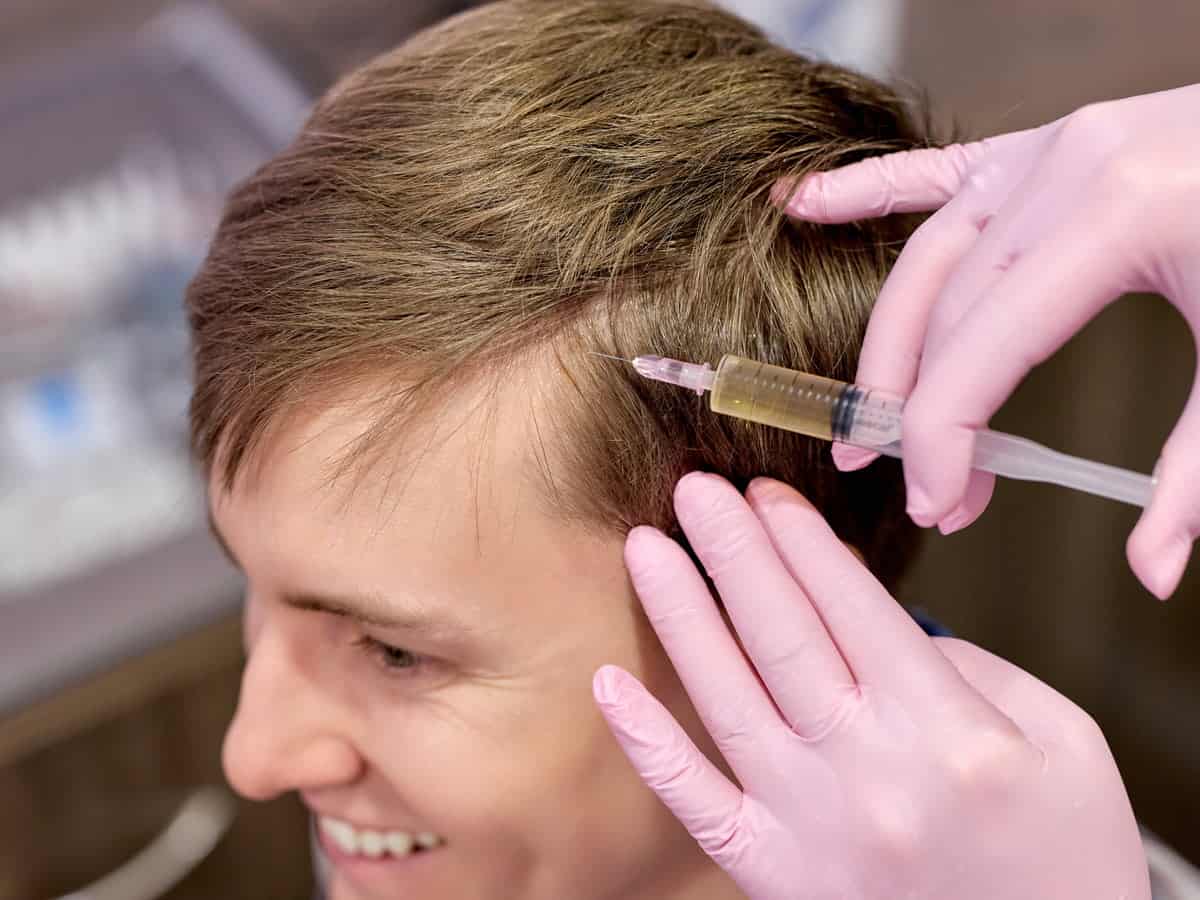
PRP stands for platelet-rich plasma. The process starts by drawing a small amount of your own blood, spinning it in a centrifuge to concentrate the platelets, and then injecting that platelet-rich plasma directly into your scalp. Platelets are packed with growth factors that encourage hair follicles to become more active, improve blood supply to the scalp, and extend the natural growth phase of your hair cycle.
In plain terms, PRP does not create new hair where none exists. Instead, it wakes up follicles that are still alive but underperforming. That is what makes PRP therapy a strong non-surgical treatment for people in the early stages of hair thinning or early stages of hair loss where the follicles are still present and viable.
Free Assessment
Not Sure How Many Grafts You Need?
Get a personalized treatment plan from Dr. Top's team. Takes 2 minutes to complete — no cost, no obligation.
What PRP therapy generally involves:
- A blood draw (typically from your arm)
- Centrifuge processing to isolate the platelet-rich plasma
- Scalp injections targeting areas of thinning or hair loss
- An initial phase of approximately 3 to 4 sessions, spaced 4 to 6 weeks apart
- Maintenance sessions every 3 to 6 months to sustain results
Results from PRP therapy are gradual. Most patients start noticing reduced hair shedding and improved hair thickness within 3 to 6 months of beginning their sessions.
What Is a Hair Transplant?
A hair transplant is a surgical procedure that involves moving hair follicles from a donor area (usually the back or sides of your scalp, where hair is genetically resistant to loss) to thinning or bald areas. The most widely used technique today is FUE (Follicular Unit Extraction), which involves extracting individual hair follicles one by one and implanting them precisely where new hair growth is needed.
Unlike PRP, which works with your existing hair follicles, a hair transplant physically relocates healthy hair follicles from a donor area to areas where hair has already been lost. This makes it the only permanent solution to hair loss for people with advanced thinning or complete baldness in certain areas.
An FUE hair transplant is minimally invasive compared to older strip methods, and at a clinic like Dr. Top Hair Hospital, procedures can cover up to 5,000 grafts in a single session with a graft survival rate of approximately 90%, thanks to strict implantation protocols and advanced graft preservation solutions.
PRP vs Hair Transplant: The Core Differences
Understanding the key differences between PRP and hair transplant surgery helps set realistic expectations before you commit to either path.
| Feature | PRP Therapy | FUE Hair Transplant |
|---|---|---|
| Type of treatment | Non-surgical | Minimally invasive surgical procedure |
| How it works | Stimulates existing hair follicles | Moves donor hair follicles to bald areas |
| Best for | Early stages of hair thinning | Significant or advanced hair loss |
| Permanence | Requires ongoing maintenance | Permanent results |
| Downtime | Minimal (hours) | Short recovery (days to weeks) |
| Results timeline | 3 to 6 months | Visible at 4 months; fuller results at 12 to 24 months |
| Sessions needed | Multiple, ongoing | Typically one session |
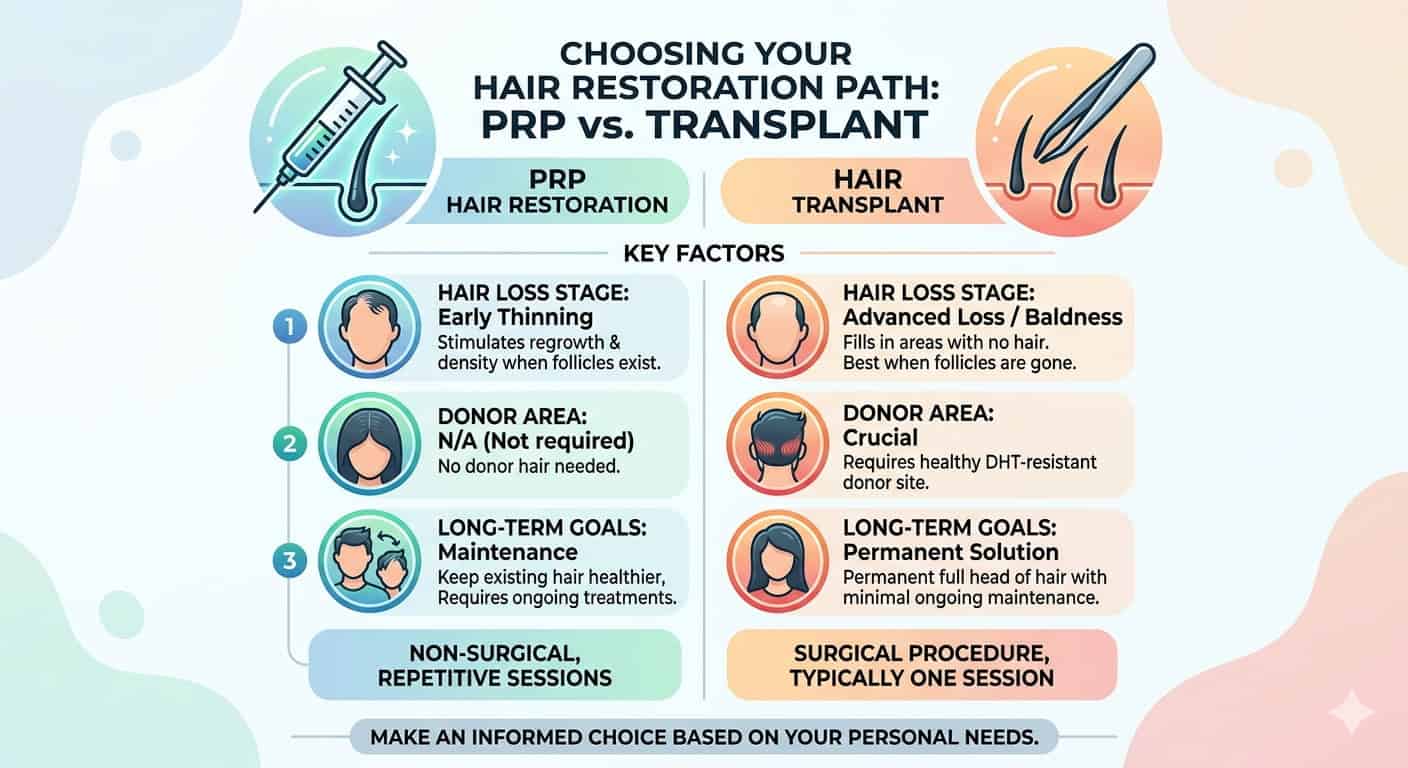
The biggest difference between PRP and hair transplant is not just how they work, it is who they work for. PRP therapy is a strong option for those in the early stages of hair loss with active, albeit weakened, follicles. A hair transplant is designed for individuals with significant hair loss where those follicles are no longer functioning and need to be replaced entirely.
Is PRP Therapy Alone Enough, or Do You Still Need a Transplant?
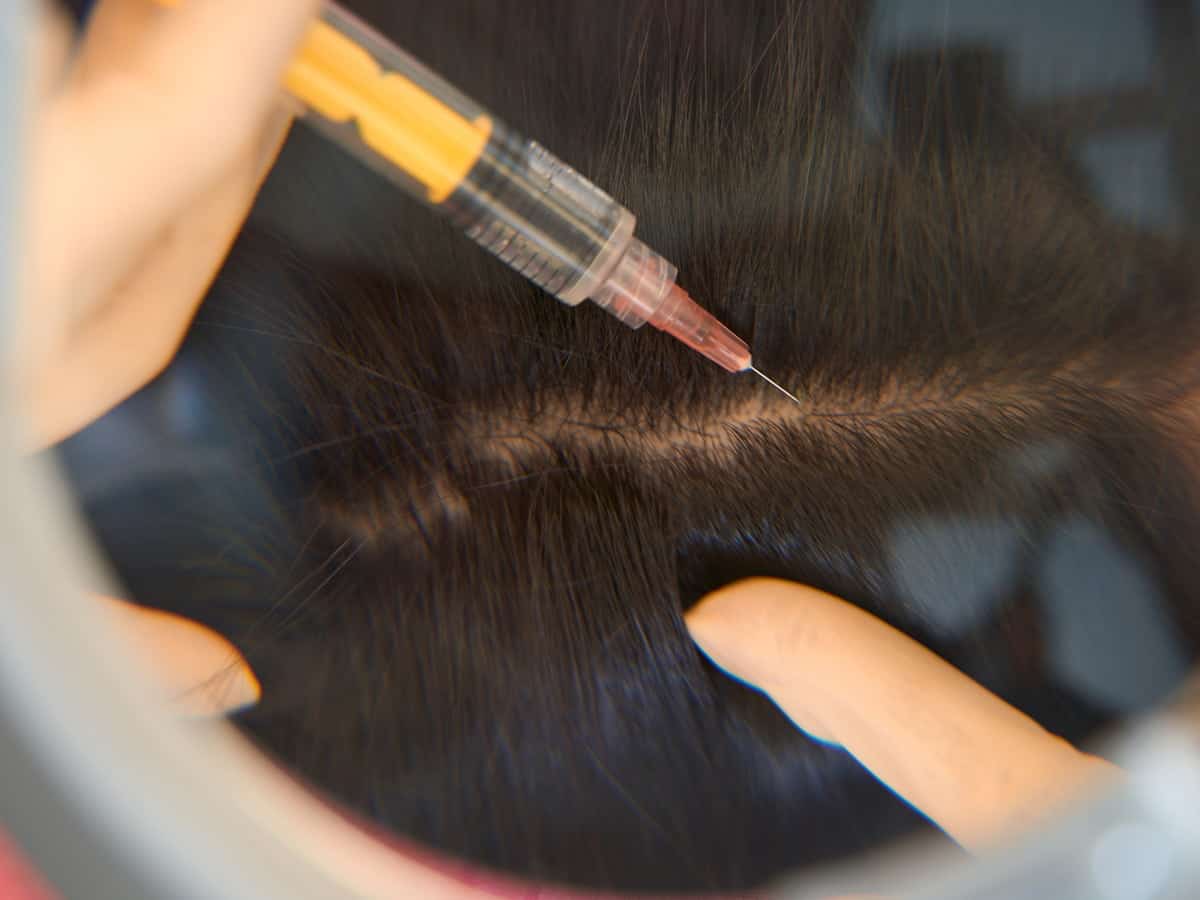
This is the question most people really want answered. And honestly, the answer depends on where you are in your hair loss journey.
When PRP Therapy Alone Can Work
PRP is best suited for patients who are still in the early stages of hair loss. If your hair is thinning but you still have a reasonable density of follicles on your scalp, those follicles can still respond to the growth factors in PRP. You are essentially giving weakened follicles the biological boost they need to grow stronger, thicker hair.
PRP therapy can be used effectively for:
- Early-stage androgenetic alopecia (pattern baldness) in both men and women
- Thinning hair with visible scalp but no large bald patches
- Hair loss that is more diffuse rather than concentrated in one area
- Patients who are not yet ready for or eligible for surgery
Women experiencing hair loss are often good candidates for PRP hair restoration because their hair loss is commonly more diffuse across the scalp rather than concentrated in one area, and they may not qualify for a transplant if the donor area is also affected.
However, there is a ceiling to what PRP can achieve. If your hair follicles have been dormant or gone for too long, there is simply nothing left for the growth factors to stimulate. In those cases, PRP alone will not be enough.
When You Still Need a Transplant
If you are experiencing significant hair loss with clearly visible bald patches, or if PRP sessions have not delivered the results you hoped for, a hair transplant becomes not just a better option but often the only effective one.
A hair transplant is the right step when:
- You have advanced hair loss with large areas of baldness
- Your existing hair follicles are no longer active or healthy enough to respond to PRP
- You want a permanent solution to hair loss rather than ongoing treatments
- You have a stable donor area with healthy hair follicles available for harvesting
Hair transplant results, particularly from a well-performed FUE procedure, are permanent. The transplanted follicles are genetically resistant to the hormone DHT, which is the primary cause of androgenetic hair loss, meaning they continue to grow naturally for life.
Can PRP and Hair Transplant Work Together?
Yes, and this is actually where some of the most exciting results come from. PRP and hair transplant are not mutually exclusive, and combining both is increasingly common in advanced hair restoration practice.
Clinical research has shown that when PRP is used alongside an FUE hair transplant, it can improve follicle survival rates, increase hair growth rates, and strengthen the transplanted hair. The growth factors in PRP help the newly transplanted grafts integrate more successfully into the scalp while also supporting any existing hair follicles surrounding the treatment area.
At Dr. Top Hair Hospital, this combined approach aligns with the clinic’s commitment to internationally recognized standards. Their proprietary ERP (Enhanced Regenerative Plasma) solution has shown approximately 30% visible improvement, roughly 3 times more effective than standard PRP at approximately 10%. This is one reason the clinic was recognized at the HOFS Awards 2024 and was invited as a speaker at the IMCAS World Congress 2026 in Paris.
Benefits of combining PRP with a hair transplant:
- Supports graft survival in the critical post-transplant window
- Promotes healthier, faster hair growth over time
- Helps protect existing hair follicles surrounding the transplant zone
- Can reduce post-procedure shedding and support natural hair growth
Choosing Between PRP Hair Restoration and a Transplant: Key Factors
Choosing between PRP hair restoration and a hair transplant ultimately comes down to a few personal factors. Here is a straightforward way to think about it.
Your Stage of Hair Loss Matters Most
The stages of hair loss matter significantly when choosing your treatment. In the early stages of hair thinning, PRP therapy can be enough to maintain density and stimulate hair regrowth. But once hair loss progresses to the point where follicles are gone and the scalp is visible, no amount of PRP will bring them back. That is when a transplant is right.
The Donor Area Plays a Role
A hair transplant depends on having a healthy donor area, typically the back of the scalp, where follicles are DHT-resistant. If the donor area is too thin or sparse, it limits the number of grafts available and may affect whether a transplant is viable.
Long-Term Goals
If your goal is a permanent, full head of hair with minimal ongoing maintenance, a transplant is the more strategic choice. If you are managing early thinning and want a non-surgical treatment that keeps your existing hair healthier and thicker, PRP hair restoration makes a lot of sense, especially as part of a broader hair restoration plan.
Why Thailand Is a Smart Choice for Hair Restoration
Thailand has quietly become one of the world’s leading destinations for hair restoration, and it is not just about cost. Clinics like Dr. Top Hair Hospital operate at an international standard, with the lead surgeon holding ABHRS Diplomate status. With over 20 years of experience, more than 10,000 procedures performed, and patients traveling from over 11 countries including the UK, Germany, Australia, and France, Dr. Top Hair Hospital combines world-class results with the accessibility and warmth Thailand is known for.
Treatments at internationally certified Thai clinics like Dr. Top offer FUE procedures covering up to 5,000 grafts per session, with standard density at 40 to 50 grafts per cm² and high-density options reaching 60 to 70 grafts per cm². Patients typically report a pain rating of just 2 out of 10 and can return to normal life within 24 hours for Long Hair FUE procedures.
Hair Growth Timeline After a Transplant
One of the most common questions patients have after a transplant is: when will I see results? Here is what you can typically expect:
| Timeframe | Expected Progress |
|---|---|
| 4 months | Approximately 40 to 50% visible results |
| 6 months | Approximately 50% visible results |
| 9 months | Significant visible growth |
| 12 months | 80 to 90% of final result |
| 12 to 24 months | Full final results |
Patience is part of the process. The transplanted hair goes through a natural shedding phase before it begins growing again, and the final result builds gradually over the first year and beyond.
Conclusion
If you are in the early stages of hair loss and still have active follicles, PRP therapy is absolutely worth exploring as a non-surgical, natural way to combat hair loss and strengthen what you have. But if your hair loss is more advanced, a hair transplant is the only treatment that can truly give you permanent results. And if you want the best of both worlds, combining PRP and hair transplant is a well-supported approach that can take your results to the next level.
Wondering if you are a good candidate? Take our quick 2-minute assessment to find out what your hair loss stage means for your treatment options, no obligation, and your details stay completely private. Reviewed by Dr. Top, Diplomate of the American Board of Hair Restoration Surgery (ABHRS).